Around 8h, residents fishing near Tan Ly village, Dong Trach commune, discovered dead sardines floating. The fish were so dense in some areas they covered the sea surface.
Numerous dead sardines washed ashore on Dong Trach commune's beach, morning of 1/10. Video: Residents provided
By noon, strong winds and waves pushed the dead fish ashore. The fish were still fresh and had not yet started to decompose.
Concerned about decomposition and odor, residents notified local pig, fish, and crab farmers, who then collected the fish. Many people walked the beach with buckets, gathering the fish for animal feed.
By afternoon, all the dead fish washed ashore had been collected.
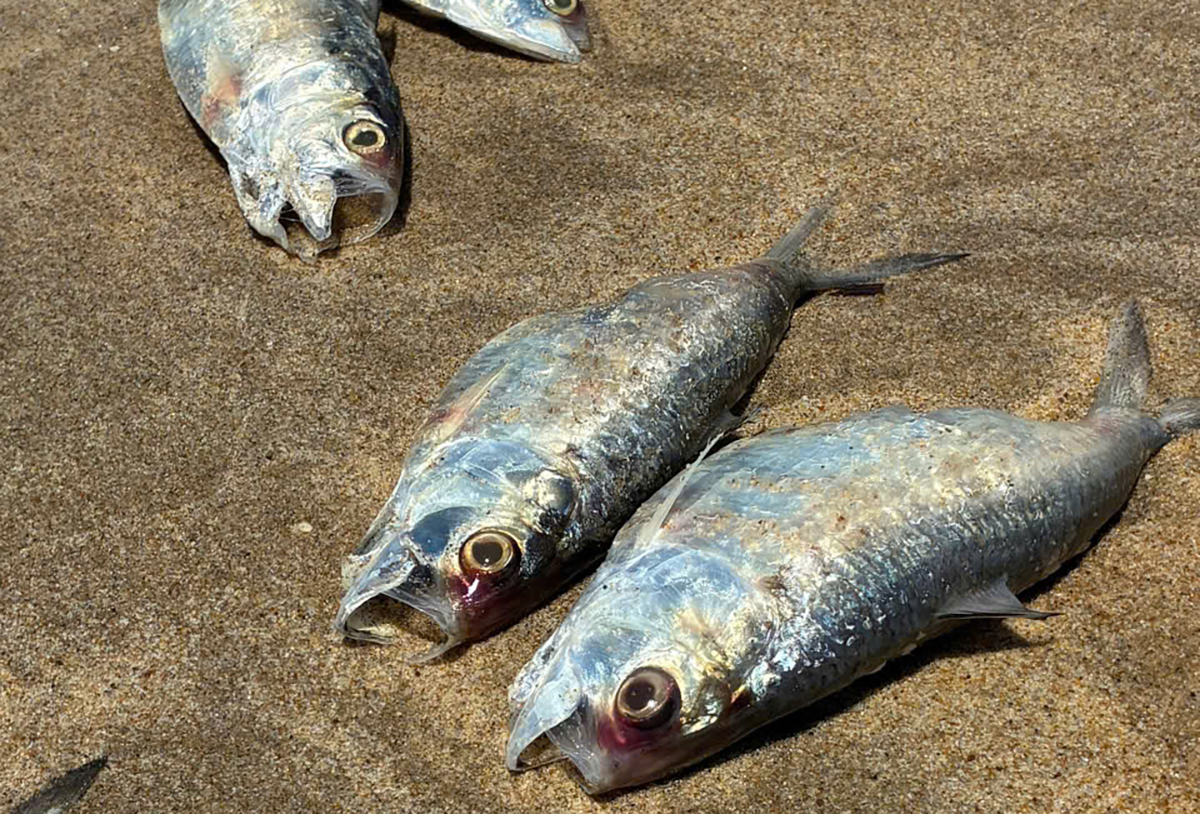 |
Sardines, larger than two fingers and over 10 cm long, washed ashore. Photo: Minh Anh
A similar phenomenon occurred in the area bordering Tan Ly village, Bac Trach commune, where residents also collected dead sardines for animal feed.
A Tan Ly village resident stated this was the first time the area had seen such an event. The fish reportedly drifted from Cua Gianh, north of the village, following currents to the coasts of Bac Trach and Dong Trach communes.
The Quang Tri Fisheries and Fishery Resources Surveillance Department is investigating the cause. The reason for the mass fish deaths remains undetermined.
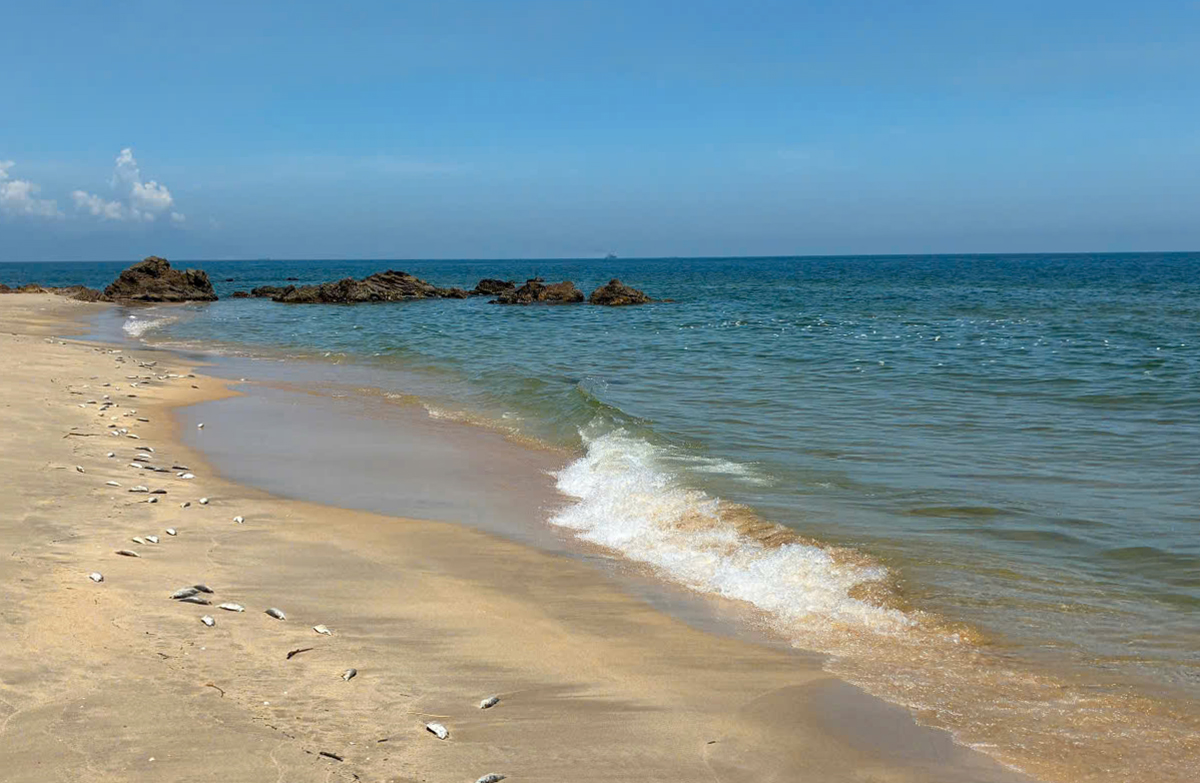 |
Dead fish washed ashore on the beach in Tan Ly village, Dong Trach commune. Photo: Minh Anh
Sardines, related to herring, are distinguished by their thicker bodies and larger size. They inhabit both saltwater and brackish environments, spending most of their lives feeding offshore.
During their breeding season, from February to May or September-October (lunar calendar), sardines migrate from the sea into large rivers to spawn. Adults typically reach about 25 cm in length, characterized by a flattened, silver-white body, small scales, and oily skin. Their soft meat, though containing numerous small bones, is often prepared by crisp-frying, charcoal-grilling, braising, or grinding into fish cakes.
Dac Thanh