Prime Minister Pham Minh Chinh recently signed a decision promulgating the list of state secrets in the field of science and technology. Accordingly, state secrets are divided into three escalating levels: confidential, secret, and top secret.
In the field of science and technology, top secret state secrets include information on special national science, technology, and innovation missions or programs directly serving national defense and security. These are critical to the country's defensive combat capabilities and the protection of the Fatherland.
This includes: programs, proposals, progress reports, summary reports, outcome reports, products; appraisal reports, approval decisions, mission assignment contracts, and other documents related to the formulation, approval, implementation, evaluation of results, effectiveness, and impact of such missions and programs.
Secret state secrets encompass information on special science, technology, and innovation missions or special national science, technology, and innovation programs that directly impact national defense, security, and the protection of national sovereignty.
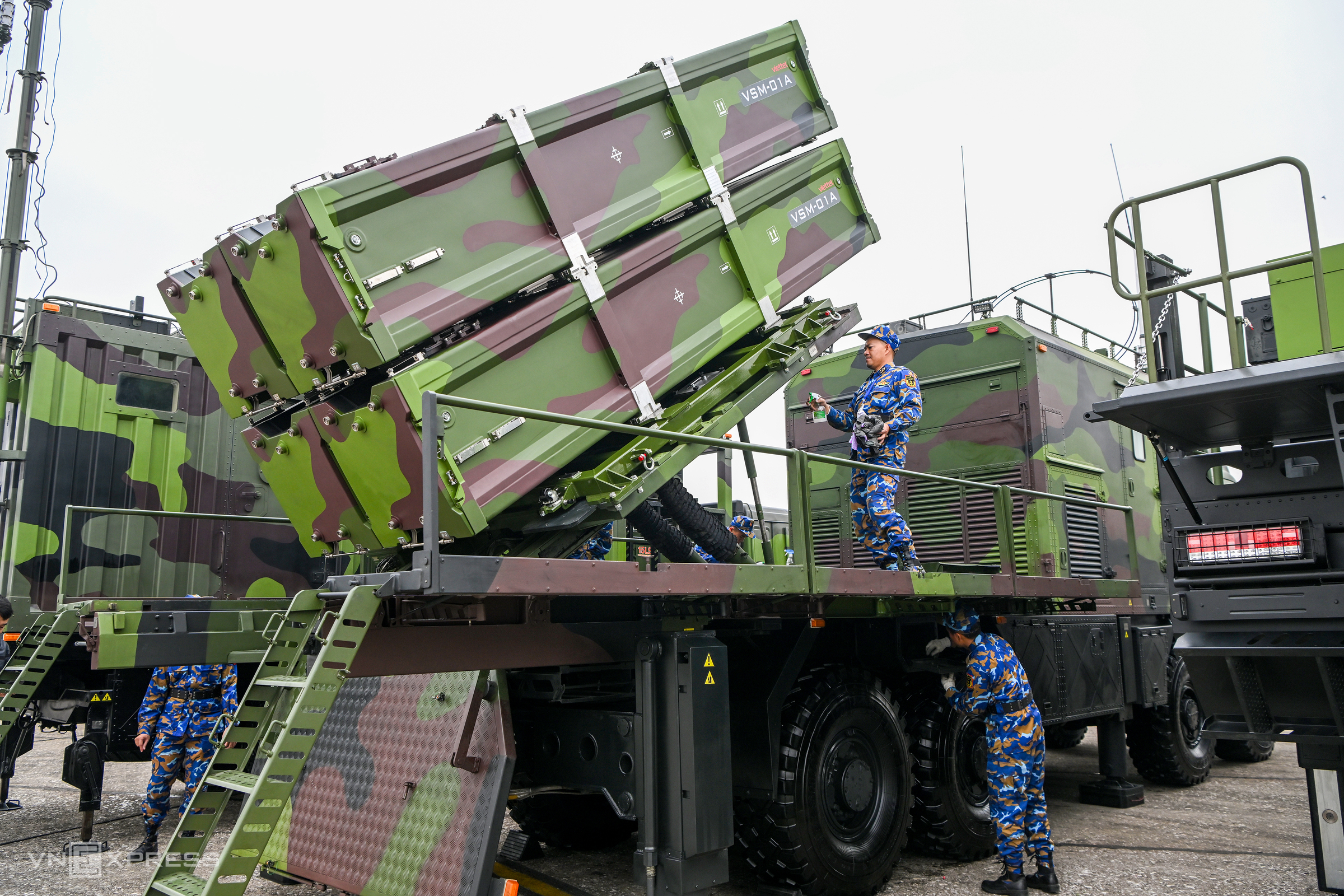 |
Some air defense equipment at the Defense Expo 2024. Photo: Giang Huy |
The confidential classification includes reports, proposals, and documents seeking opinions on new policies related to science, technology, innovation, and digital transformation activities serving national defense and security. It also covers strategies, master plans, plans, and cooperative programs between the Ministry of Science and Technology, the Ministry of National Defense, and the Ministry of Public Security that contain content serving national defense and security.
Furthermore, information on science, technology, and innovation missions of ministries, ministerial-level agencies, government agencies, other central agencies, and provincial People's Committees containing content related to national defense, security; territorial sovereignty, human rights; religion, ethnicity; and especially critical socio-economic and healthcare matters affecting national interests are also classified as confidential.
How is the disclosure of state secrets handled?
Anyone who discloses state secrets may face criminal prosecution for intentionally or unintentionally disclosing state secrets, depending on the act, specifically as follows:
The crime of intentionally disclosing state secrets is stipulated in Article 337 of the Penal Code. Accordingly, anyone who intentionally discloses state secrets faces a prison sentence of 2-7 years. A sentence of 5-10 years applies to intentionally disclosing secret state secrets, or causing harm to national defense, security, foreign relations, economy, or culture.
The maximum penalty is 15 years if top secret state secrets are disclosed, the crime is organized, or it causes harm to the political system, independence, sovereignty, unity, and territorial integrity. Anyone who unintentionally discloses state secrets faces non-custodial re-education for up to 3 years or a prison sentence of 6 months to 3 years.
Son Ha