 |
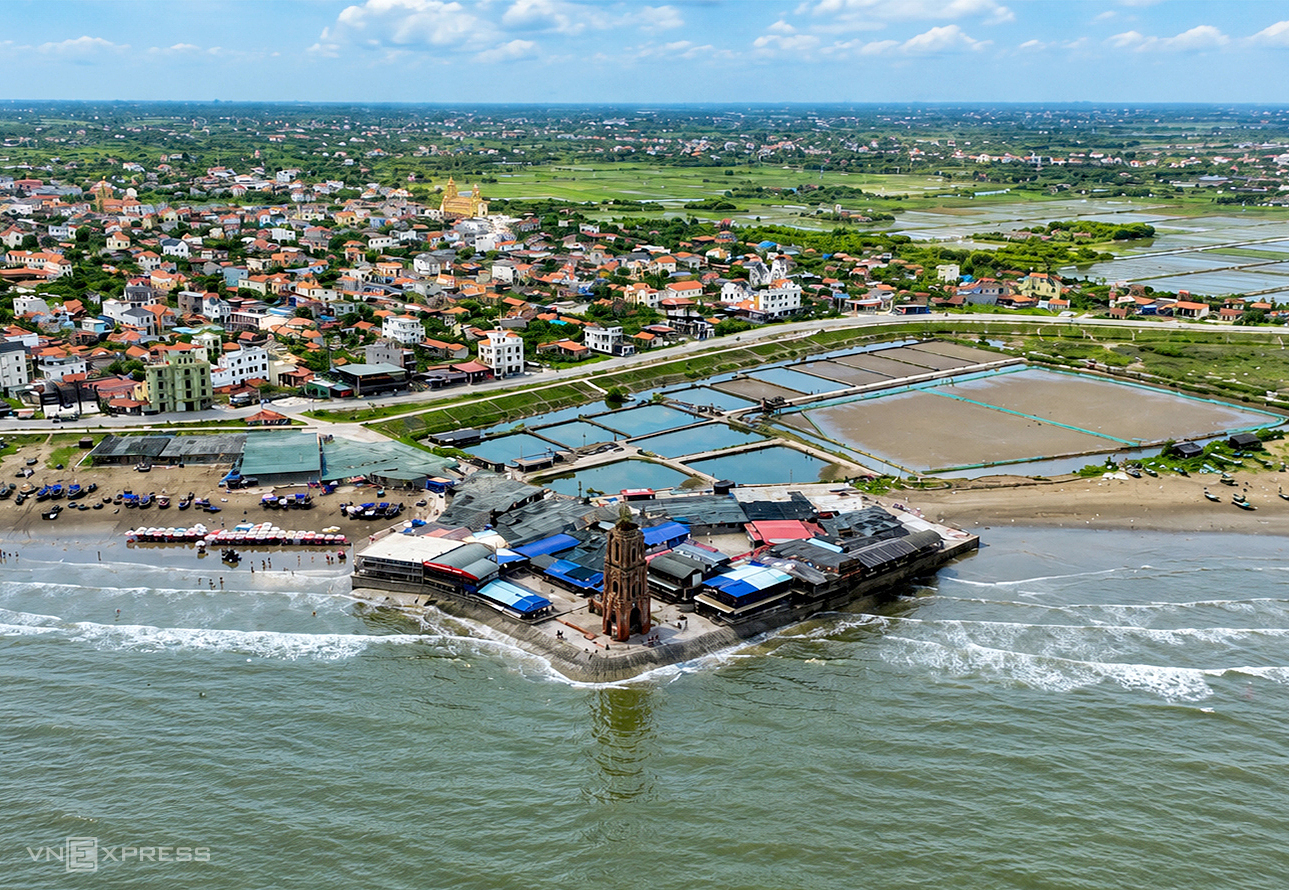
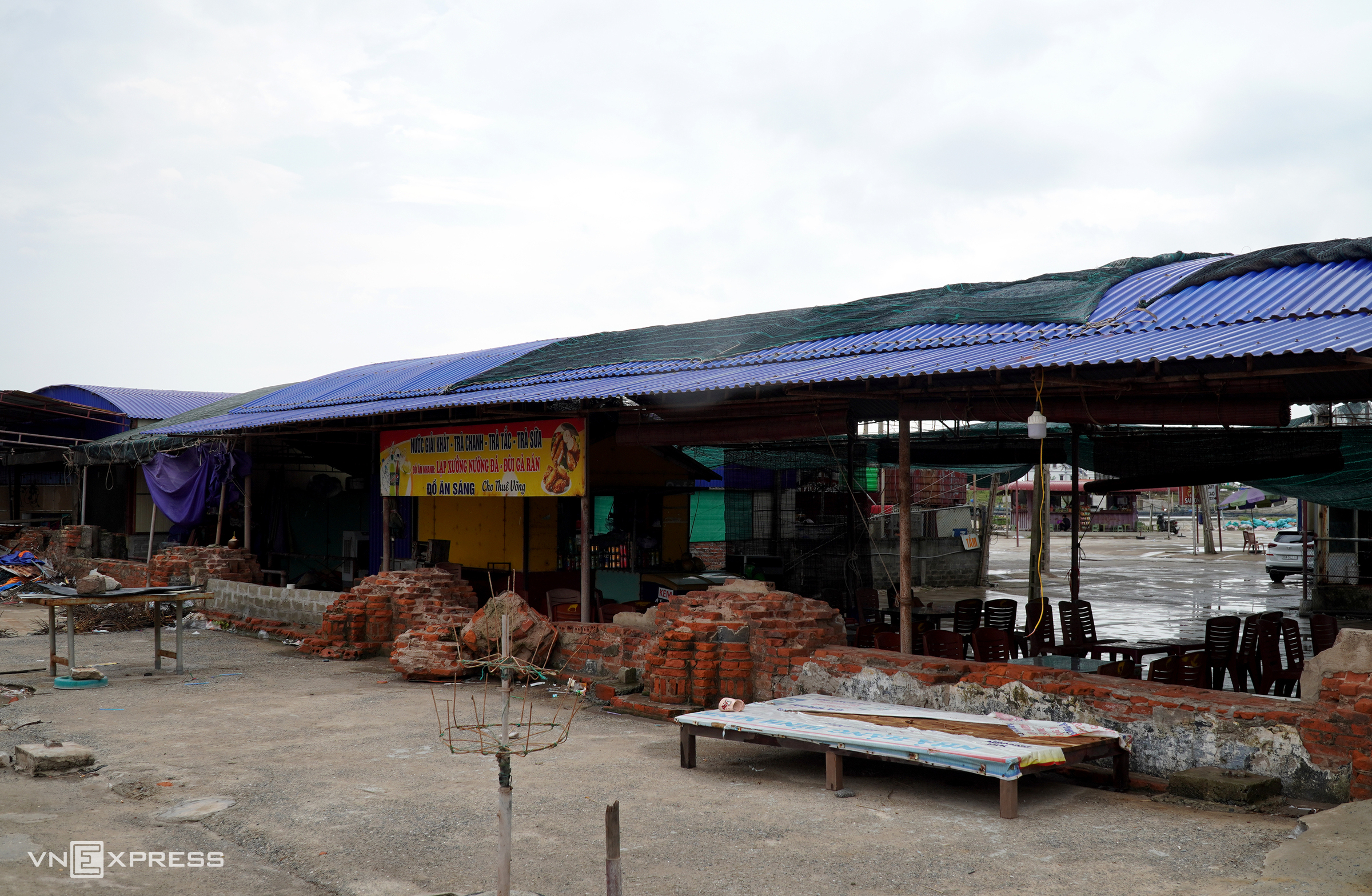
Makeshift stalls, built with iron frames and corrugated roofs, closely encircle the Hai Ly ruined church site. |
The area surrounding Hai Ly ruined church is currently marred by numerous unauthorized businesses, including restaurants and eateries. These spontaneous structures, often hastily erected with iron frames and corrugated roofs, are encroaching upon the historic site, creating an unsightly and potentially unsafe environment. Local authorities are taking action to address this issue, with plans to clear over 20 such illegal constructions.
Mai Duc Nghia, Vice Chairman of Hai Tien Commune People's Committee, confirmed that these structures are the result of residents spontaneously encroaching on land. They are not projects leased or tendered by local authorities. The commune will launch a public awareness campaign in August to encourage residents to voluntarily dismantle their illegal establishments. For those who do not comply, forced eviction will be implemented in September.
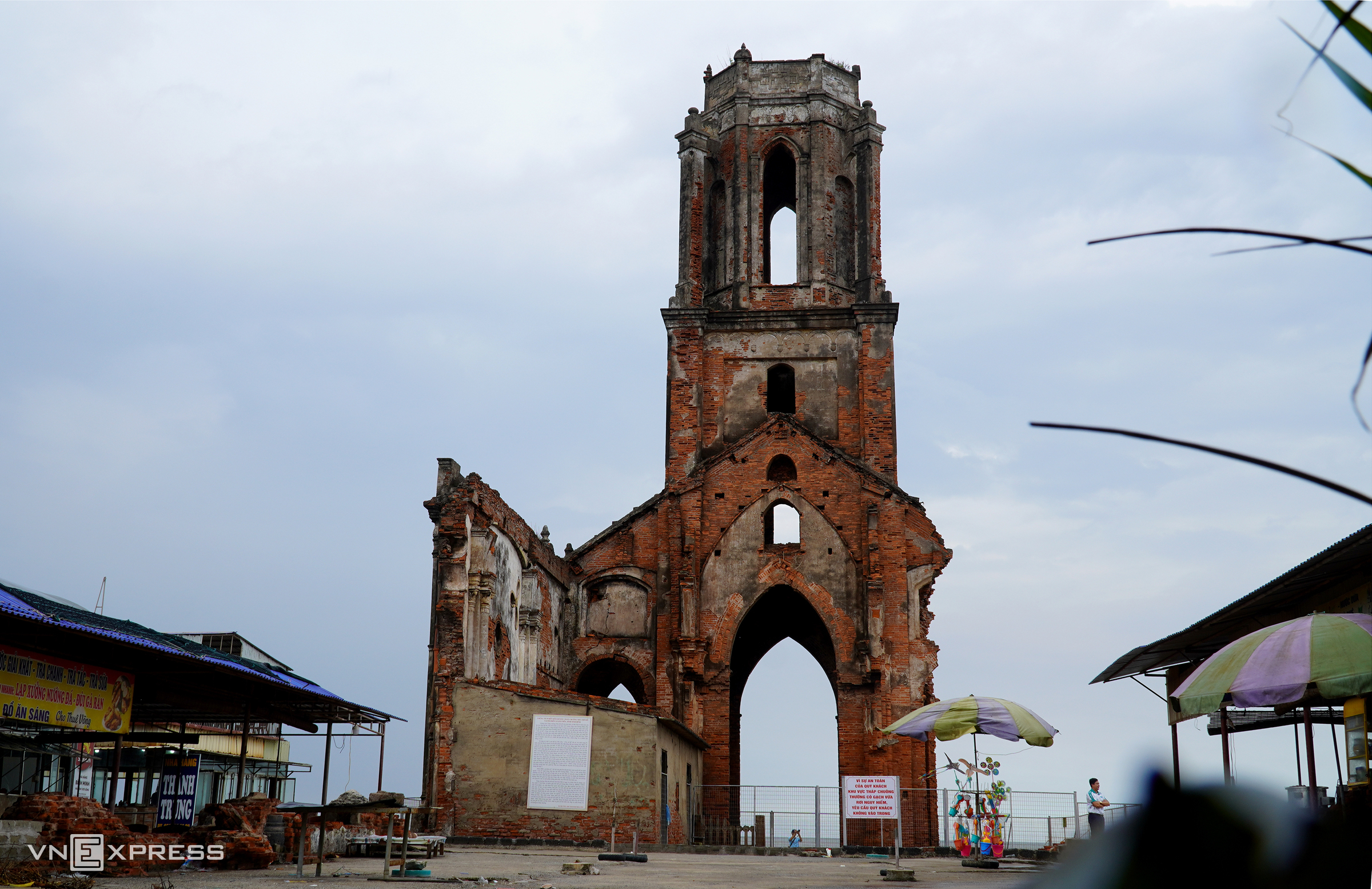 |
Residents also built brick walls directly onto the foundation of Hai Ly ruined church. Mai Duc Nghia, Vice Chairman of Hai Tien Commune People's Committee, stated that all these structures were spontaneously built by residents encroaching on land, not projects leased or tendered by local authorities. |
 |
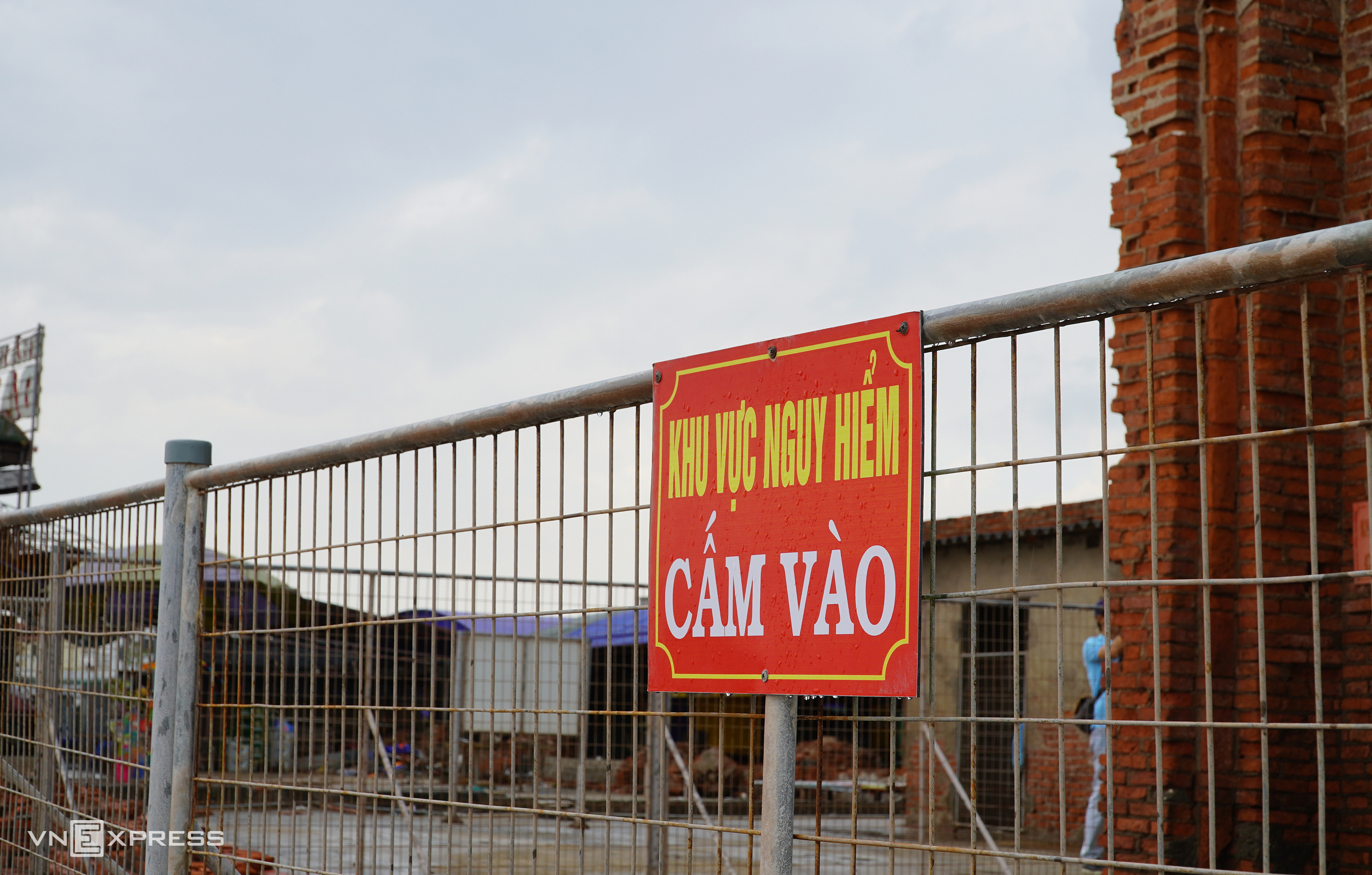
Fearing the church's collapse, authorities have fenced off the area and posted "no entry" signs within the Hai Ly ruined church grounds. |
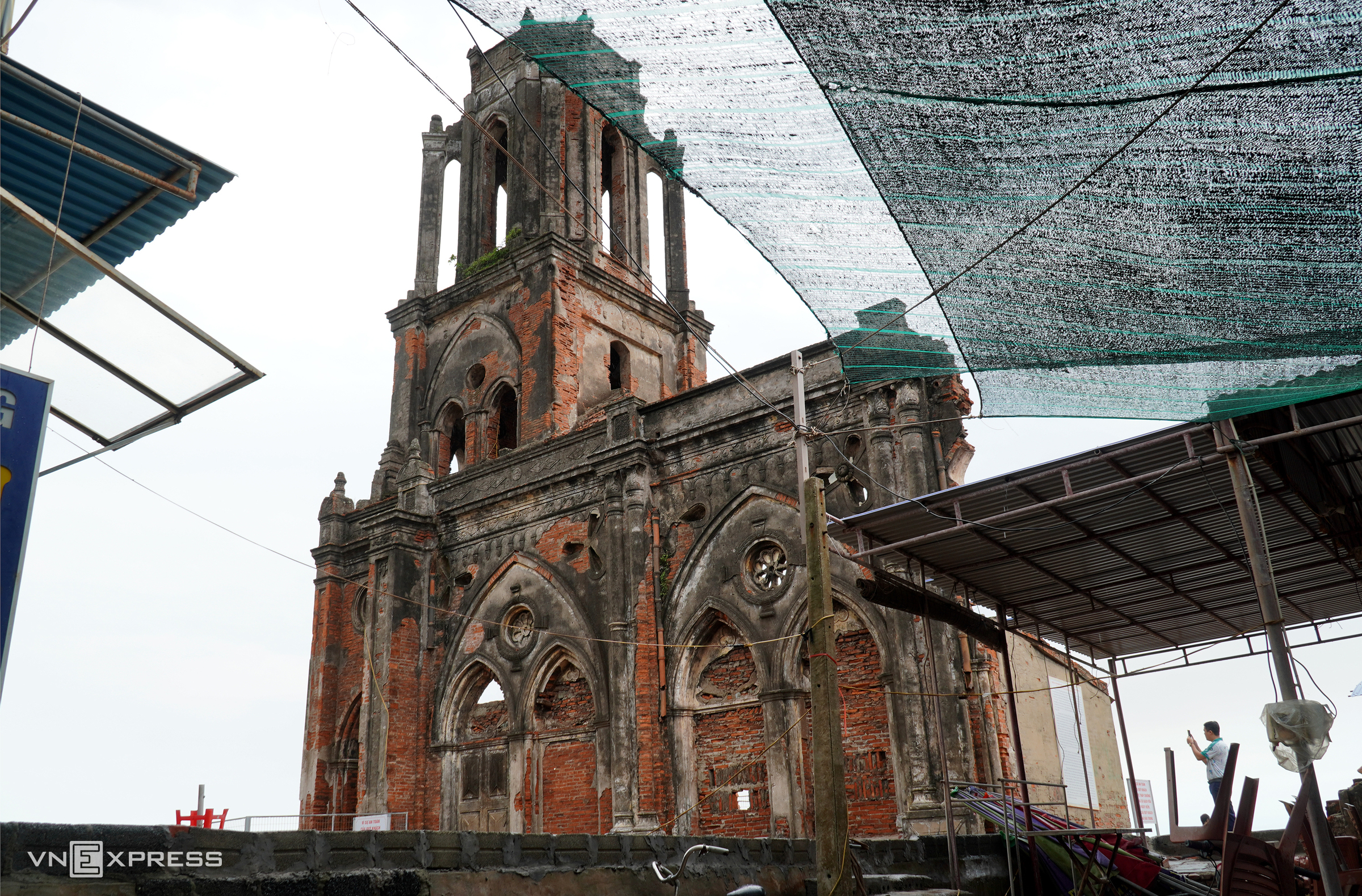
Corrugated roofs and sun/rain shelters are temporarily tethered right next to the side of the ancient church.
The Hai Ly church, originally named Trai Tim Chua (Sacred Heart Church), was first built in 1877 and rebuilt between 1917 and 1927. It stands on Xuong Dien beach, formerly Hai Ly commune, Hai Hau district, Nam Dinh province, now part of Hai Tien commune, Ninh Binh province. The church grounds span over 9,300 m2, with the main structure measuring 47 m long and 15 m wide, and its bell tower reaching 27 m. The architecture features arched doorways and European-style decorative details. Many of the illegal structures have been built directly onto the church's foundation, with some residents even constructing brick walls on the historic base.
 |
 |
Tourists take photos while visiting the church.
The church became "ruined" due to decades of sea encroachment. Parishioners were forced to relocate the active church further inland multiple times to continue religious activities. The old church was abandoned and has not been used for services or prayers for many years. A major storm in the summer of 2005 severely damaged the outer dike, causing significant harm to the Xuong Dien - Van Ly area. Today, only the bell tower, foundation, and a portion of the original wall remain. Due to concerns about collapse, authorities have fenced off the area and posted "no entry" signs.
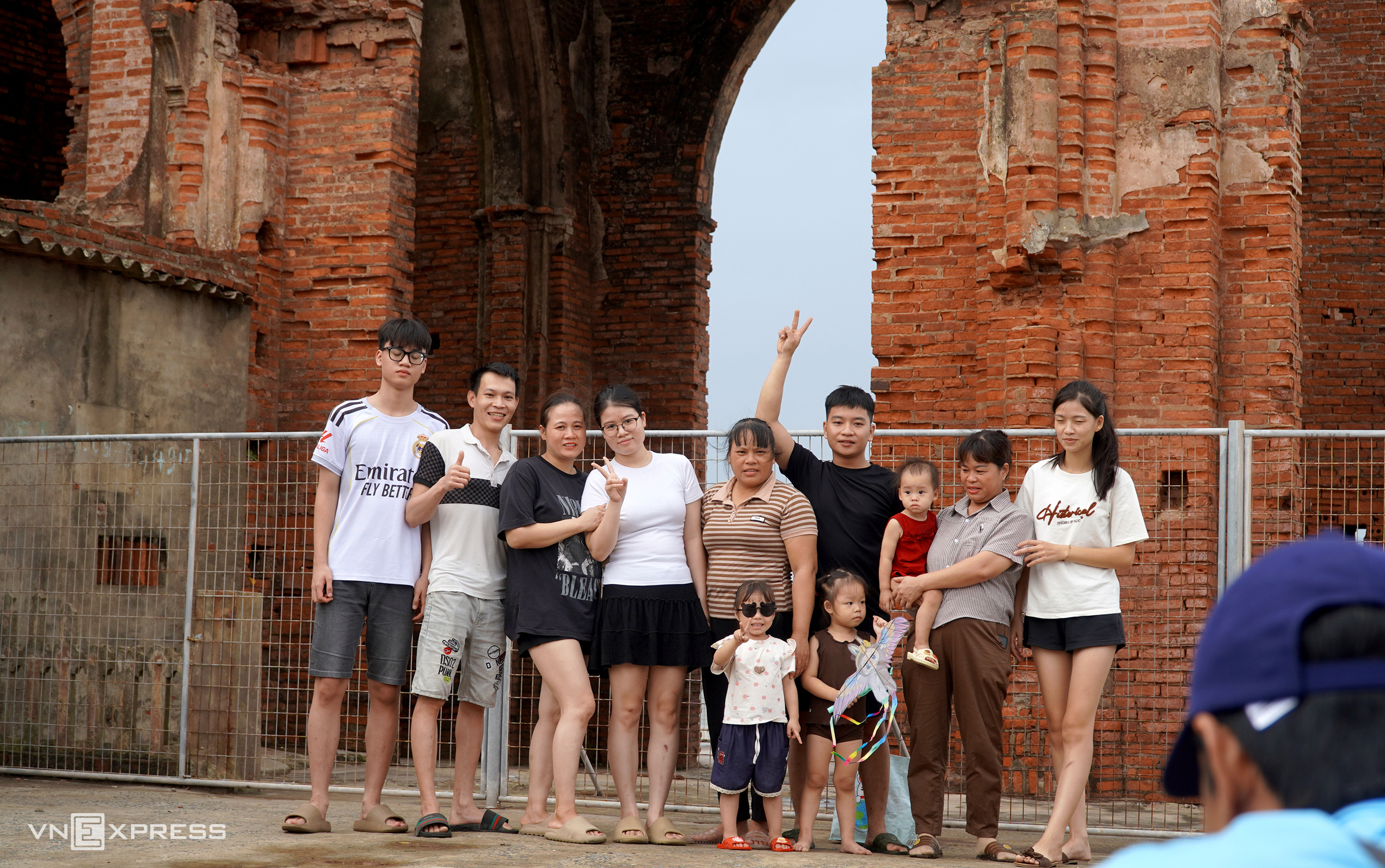 |
Despite its dilapidated state and the surrounding clutter, Hai Ly ruined church remains a popular destination, attracting many photographers and tourists, especially during the summer. In addition to the structures immediately surrounding the church, numerous temporary stalls selling food and drinks have been erected by residents along the dike adjacent to the beach, further detracting from the scenic view. Following the clearance efforts, the Hai Tien Commune People's Committee plans to designate the Hai Ly ruined church area as a site for preserving evidence of climate change. It will serve for scientific research, environmental education, and ecotourism development.
Le Hoang