On the afternoon of 20/8, the government submitted special policies for reclaimed urban area development projects to the National Assembly Standing Committee. These policies are intended to be added to the draft Law on Urban Development, which the National Assembly is expected to vote on 24/8.
Finance Minister Ngo Van Tuan stated that this policy aims to implement the initiative of making Vietnam a strong maritime nation, while unlocking resources for economic growth. Land reclamation and artificial island creation have been adopted by many nations to expand development space. Such projects typically require substantial capital, with extended implementation and capital recovery periods, thus necessitating a distinct legal framework.
Vietnam boasts over 3,260 km of coastline; however, coastal land funds in major urban areas are increasingly limited. Therefore, reclaimed urban development can create additional land and form new growth poles, attracting capital, technology, and high-quality human resources. This contributes to a pursuit of double-digit growth.
A review process revealed three distinct characteristics for this type of project. During planning, artificial islands have not yet formed on site, while current construction standards are primarily designed for mainland areas. Projects also demand substantial capital and infill materials, alongside lengthy capital recovery periods. Consequently, the new mechanism addresses specific issues related to establishing urban areas on artificial islands and does not apply to all reclamation activities.
The draft specifies this mechanism applies to projects with a total capital of 100 trillion VND or more. Projects below this threshold will continue to follow land law. Reclaimed urban areas must align with planning and be developed as modern, green, smart, with capabilities to adapt to climate change and rising sea levels.
Investors undertaking such projects must meet the criteria for strategic investors. For projects ranging from 100 trillion VND to 200 trillion VND, equity capital must account for at least 15% of the total investment, while projects exceeding 200 trillion VND require at least 10%.
Projects within reclaimed urban areas will apply controlled experimental mechanisms, policies on work permits for foreigners, and duty-free shops.
Strategic investors are authorized to organize the establishment and adjustment of zoning plans within approved project boundaries. When developing zoning and detailed plans, projects are exempt from the planning task formulation step.
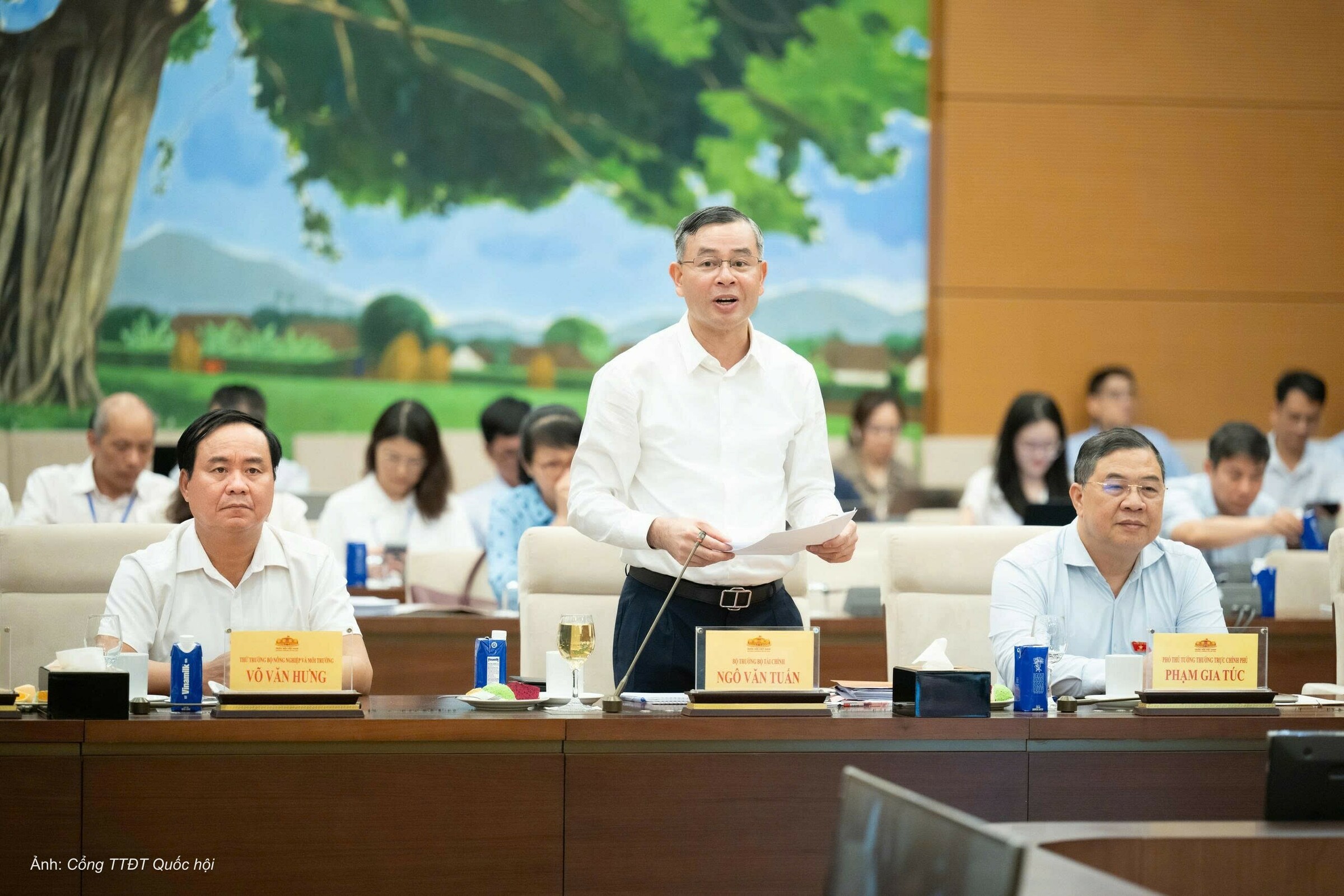 |
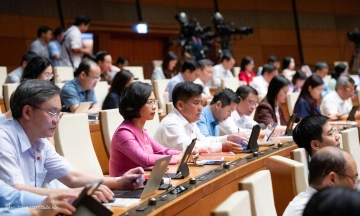
Finance Minister Ngo Van Tuan presented to the National Assembly Standing Committee on the afternoon of 20/8. Photo: National Assembly E-portal |
Finance Minister Ngo Van Tuan presented to the National Assembly Standing Committee on the afternoon of 20/8. Photo: National Assembly E-portal
Phan Chi Hieu, Chairman of the National Assembly's Law and Justice Committee, supported researching special policies for reclaimed urban areas but noted that many provisions differ from current laws and require thorough review.
The verification agency particularly highlighted regulations concerning land formed from reclamation activities and artificial island creation, along with the legal framework applicable to such land. This is to ensure consistency with land, sea, and island laws.
The new policies must not alter the people's collective ownership regime over land, resources, and maritime space. They must also ensure national defense, security, sovereignty, and maritime safety.
The Committee recommended that the draft Law on Urban Development only stipulate truly specific and necessary mechanisms for reclaimed urban areas, avoiding duplication of content already regulated by specialized laws.
Son Ha