The Civil Aviation Authority of Vietnam (CAAV) is establishing a specialized task force and investing in advanced equipment to detect and counter unmanned aerial vehicles (UAVs) at airports. This initiative comes in response to increasing incidents of UAVs and kites disrupting flight operations and posing significant safety risks.
Leaders of the CAAV stated that the task force will assist the runway safety team in receiving information, assessing risks, and making response decisions. The authority will equip the team with necessary devices, and it will coordinate with local authorities and police to detect abnormal flying objects. The primary goal is to shorten the time from UAV detection to risk assessment and the implementation of response plans.
Additionally, the CAAV has proposed that the Ministry of Construction invest in specialized equipment systems for early UAV detection and warning, and UAV jamming devices when necessary, moving beyond current visual verification or manual reporting methods. The agency also proposed adding sufficiently strong administrative and criminal penalties for organizations and individuals who violate regulations on unmanned aircraft management and use.
Currently, UAV detection primarily relies on information from flight crews. This method has limitations, as information regarding the position and trajectory of flying objects is sometimes inaccurate. According to the CAAV, Airports Corporation of Vietnam (ACV) is researching equipping airports with means and devices for early detection of flying objects. The early detection system will directly support the runway safety team in assessing risks and deciding to resume flight operations once safety conditions are ensured. Following this approach, detection technology will serve as an initial warning layer, providing information on the appearance and movement of objects for authorities to act upon. When necessary, information from the system can be combined with radar and data from military and police forces to enhance identification and tracking capabilities.
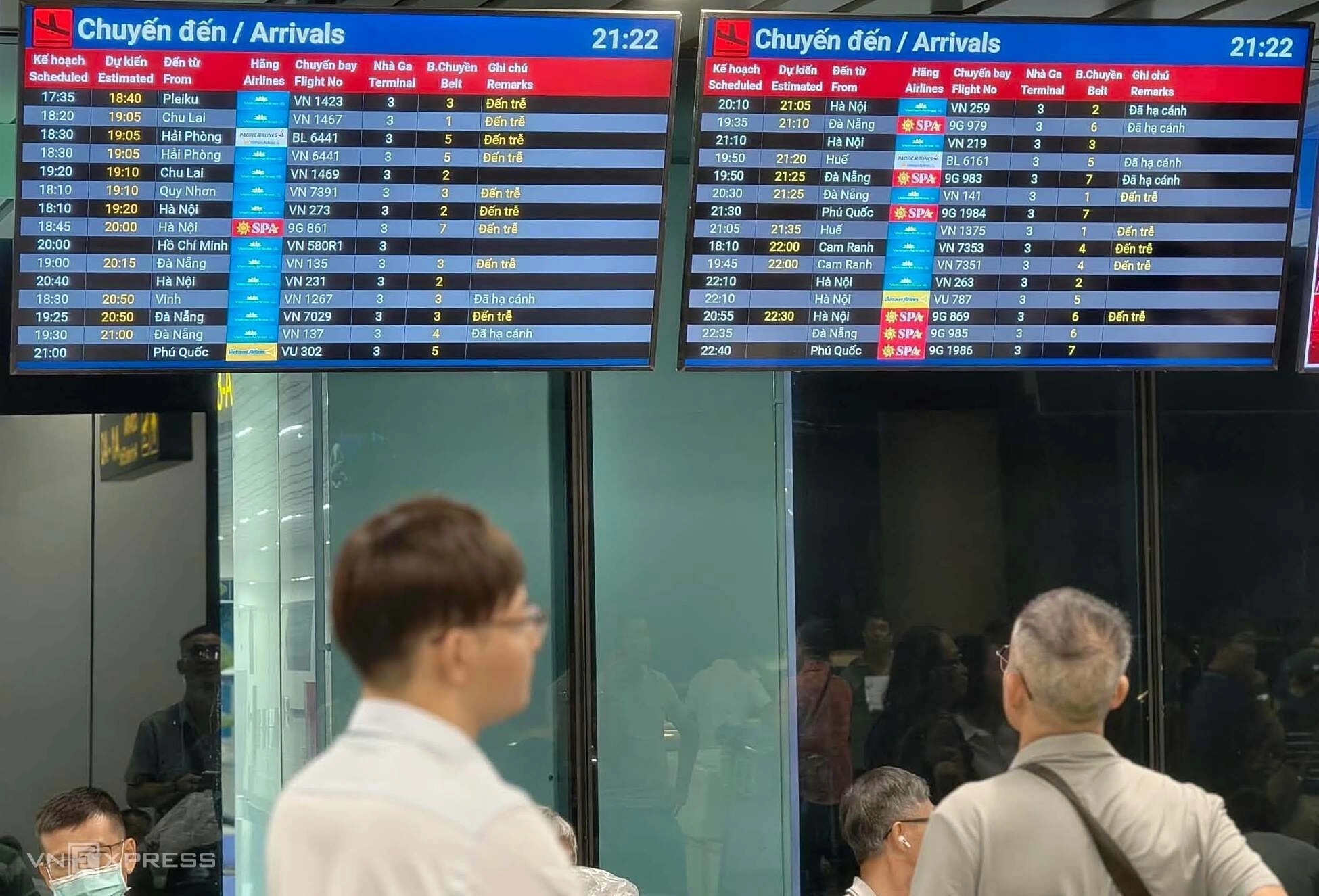 |
Passengers monitor delayed flights due to a UAV intrusion incident, evening of 11/8. *Photo: Dinh Van* |
On the evening of 13/8, at Tan Son Nhat Airport, TP HCM, Division 367 used radar to detect a flying object, then notified aviation units and local police. Having rapid detection tools provides authorities with more information for assessment and decision-making, thereby limiting impacts on flight operations. This is considered an important approach because relying solely on observations or reports from flight crews is insufficient in high-traffic environments. The objective is to shift from a passive stance – only responding after flight crews detect an object – to proactively detecting, tracking, and assessing risks early, thereby minimizing the need to suspend or reduce airport operations.
The CAAV also stressed the need to intensify public awareness campaigns to inform people about the dangers of operating UAVs or flying kites near airports. These seemingly recreational activities can pose a direct threat to aircraft and passengers.
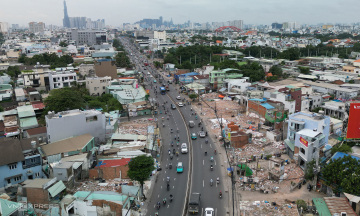
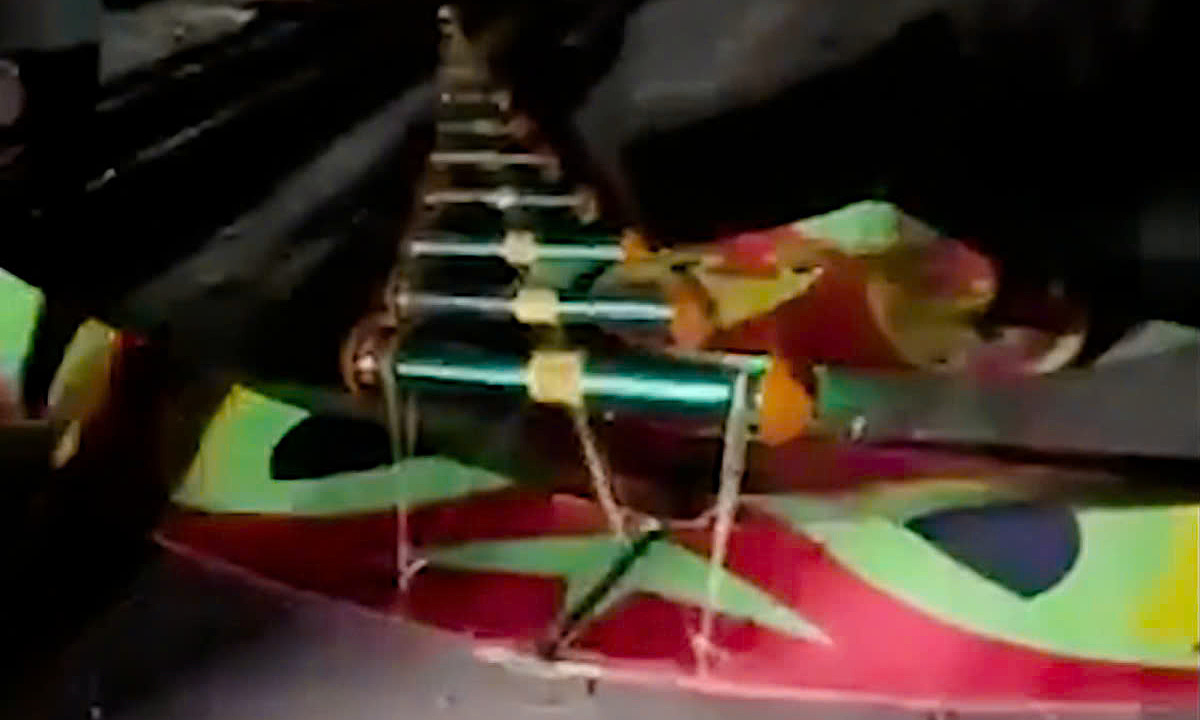
On 11/8 and 13/8, operations at Tan Son Nhat were repeatedly affected due to the detection of UAVs and kites with lights appearing near the airport. On 11/8, a UAV twice entered the restricted zone, causing over 100 flights to be delayed or have their departure times changed, affecting over 10,000 passengers. On the evening of 3/11, three large kites with flashing lights flew at nearly 400 m, 2,5 km from Tan Son Nhat, affecting 21 flights. Tan Son Nhat has high operational density, with an average of about 42 takeoffs and landings per hour. A flying object appearing in the operational area not only directly affects one flight but can also create a ripple effect, forcing many aircraft to hold or adjust their operational plans.
Anh Duy