On the afternoon of 19/8, Hieu waded through rice fields nearly one meter deep, pulling a small boat loaded with freshly cut rice towards the threshing machine.
"For the past few days, my wife and I haven't been able to eat or sleep, regretting the effort and money we put in for over three months", Hieu said sadly.
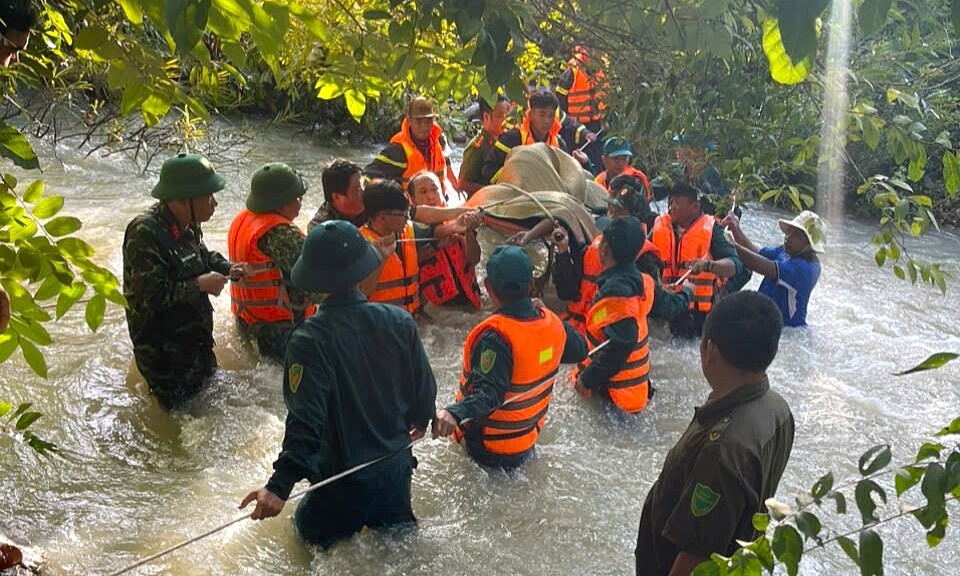
Across the field, dozens of small boats, along with hundreds of soldiers and militia, were mobilized, racing against the rising floodwaters to save the family's 10 hectares of rice.
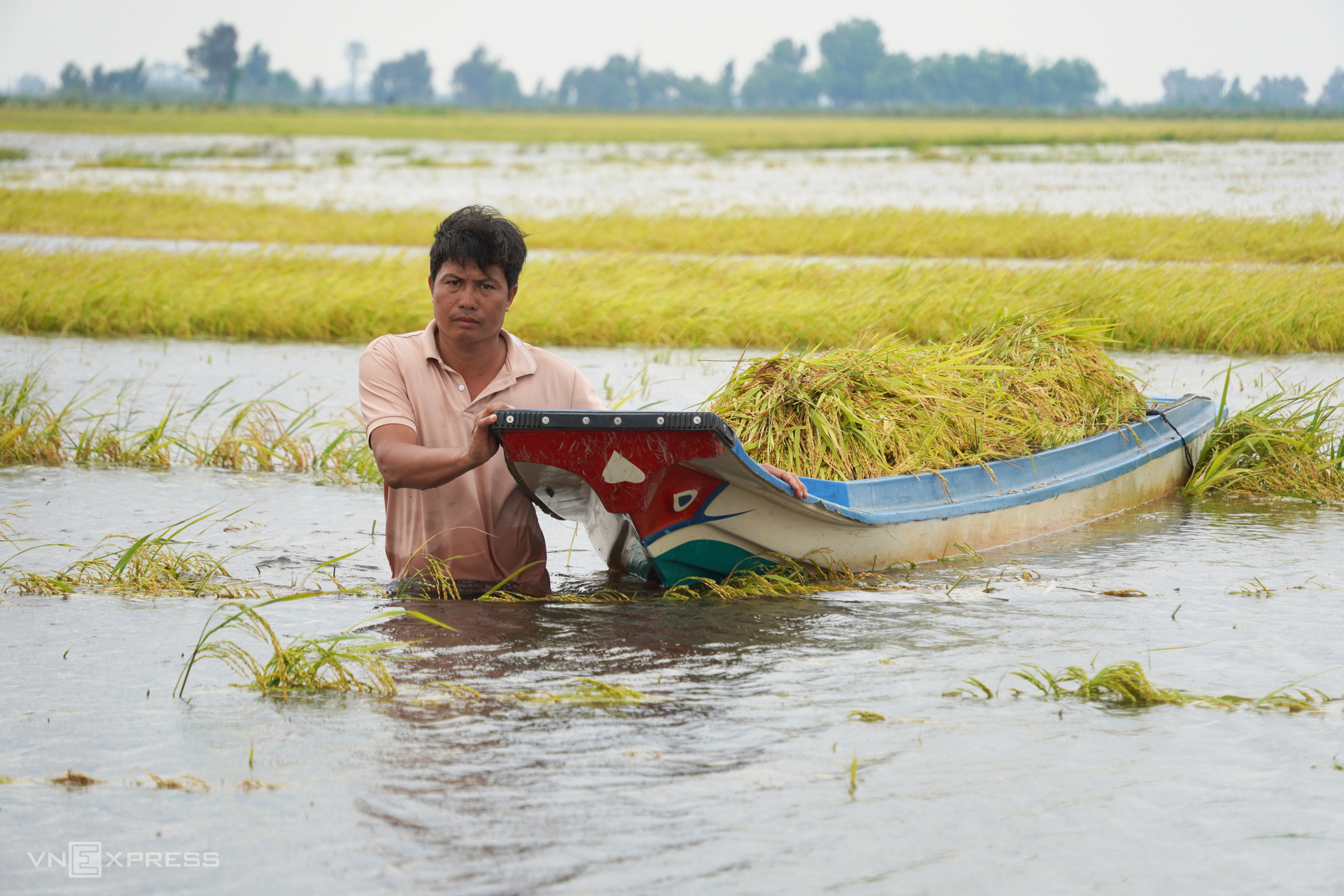 |
Hieu wades through the field, pulling the freshly harvested rice towards the threshing area to escape the flood. Photo: Hoang Nam |
Hieu and his wife are both teachers in Nhon Ninh commune and have a young child over two years old. The family has cultivated rice for many years, but only on a small plot of about 2,000 m2. To earn extra income during this year's summer break, Hieu discussed with his wife renting additional land for rice farming.
Through social media, they found land for rent in Go Bun hamlet, Vinh Thanh commune, about 70 km from their home, at a price of 8.2 million VND per hectare per crop.
The rental price was nearly half that in their hometown. The couple visited the fields, then borrowed money and pooled their savings to rent 10 hectares.
They calculated that even with the lowest yield of about 6 tons per hectare, at a rice price of 6,000 VND per kg, they could still make a profit of 50 million VND after deducting costs. This would be a significant income for the family during the summer months.
This crop, the glutinous rice yield was estimated at about 6.5 tons per hectare. With only one week left until harvest, river floodwaters began to rise by more than 10 cm daily, threatening the lower sections of dikes around the fields.
Anxious, Hieu hired an excavator to reinforce the embankments. However, the vast field was surrounded by floodwaters on all four sides. As soon as one section was reinforced, water would overflow another.
By the third day, the entire field was submerged.
With the fields deeply flooded, harvesting machines could not enter. Hieu had to mobilize dozens of relatives and friends to manually cut the rice. Upon hearing their plight, many acquaintances posted information on social media to find additional support.
After assessing the situation, the Vinh Thanh communal People's Committee (UBND) mobilized local militia, police, and military forces to assist the family with the harvest.
Nguyen Hong Kha, Chairman of the Vinh Thanh communal UBND, stated that this summer-autumn crop, the entire commune sowed about 9,000 hectares of rice, with over 90% already harvested. Approximately 30 hectares in low-lying areas are currently threatened by floods, and residents are urgently harvesting to minimize damage.
"The 10 hectares of submerged rice are in a low-lying area where local residents have avoided sowing during the approaching flood season for many years due to the high risk of inundation", Kha said, advising people from other areas who rent land to research thoroughly to avoid losses.
After nearly one week submerged, large areas of glutinous rice in the low-lying regions had sprouted, rotted, and sustained significant damage.
Over the past few days, about 100 people daily from various agencies, organizations, and military forces have been mobilized to support Hieu's family. However, the deeply submerged rice makes harvesting extremely difficult. Each day, the team can only cut about one hectare.
The water level in the river continues to rise by about 10 cm daily. The remaining over 3 hectares of rice are expected to take two more days to harvest. Hieu prioritizes cutting the deeper submerged areas first.
"The work requires continuous immersion in water, making it quickly cold and tiring. Many people unfamiliar with the work cut their hands on the first day, but we still try our best to support the residents", said Sergeant Le Quoc Duy, from Regiment 738, Tay Ninh Provincial Military Command.
As the entire surrounding area is flooded, the threshing machines must gather on a high mound by the river to process the rice.
Seeing the landowner's difficulties, the threshing machine owner reduced his fee by about half. For 10 hectares of rice, he only charged 18 million VND.
After being cut, the rice is transported by small boats to the threshing machine. Due to prolonged immersion, the wet rice prevents the machine from completely separating the grains. At noon, while everyone else rests, Hieu and his wife diligently shake each bundle of straw, hoping to salvage a bit more rice grain.
Aware of the family's situation, a company in Thanh Hoa commune contacted them to purchase all the submerged glutinous rice at a price of 5,700 VND per kg.
After threshing, the rice is bagged and transported by barge across the canal. Soldiers then continue to move it to trucks for delivery to the company.
"We hope to salvage whatever we can. If it weren't for everyone's generosity, our family's rice crop this season would have been lost to the fish", Hieu said.
Hoang Nam