 |
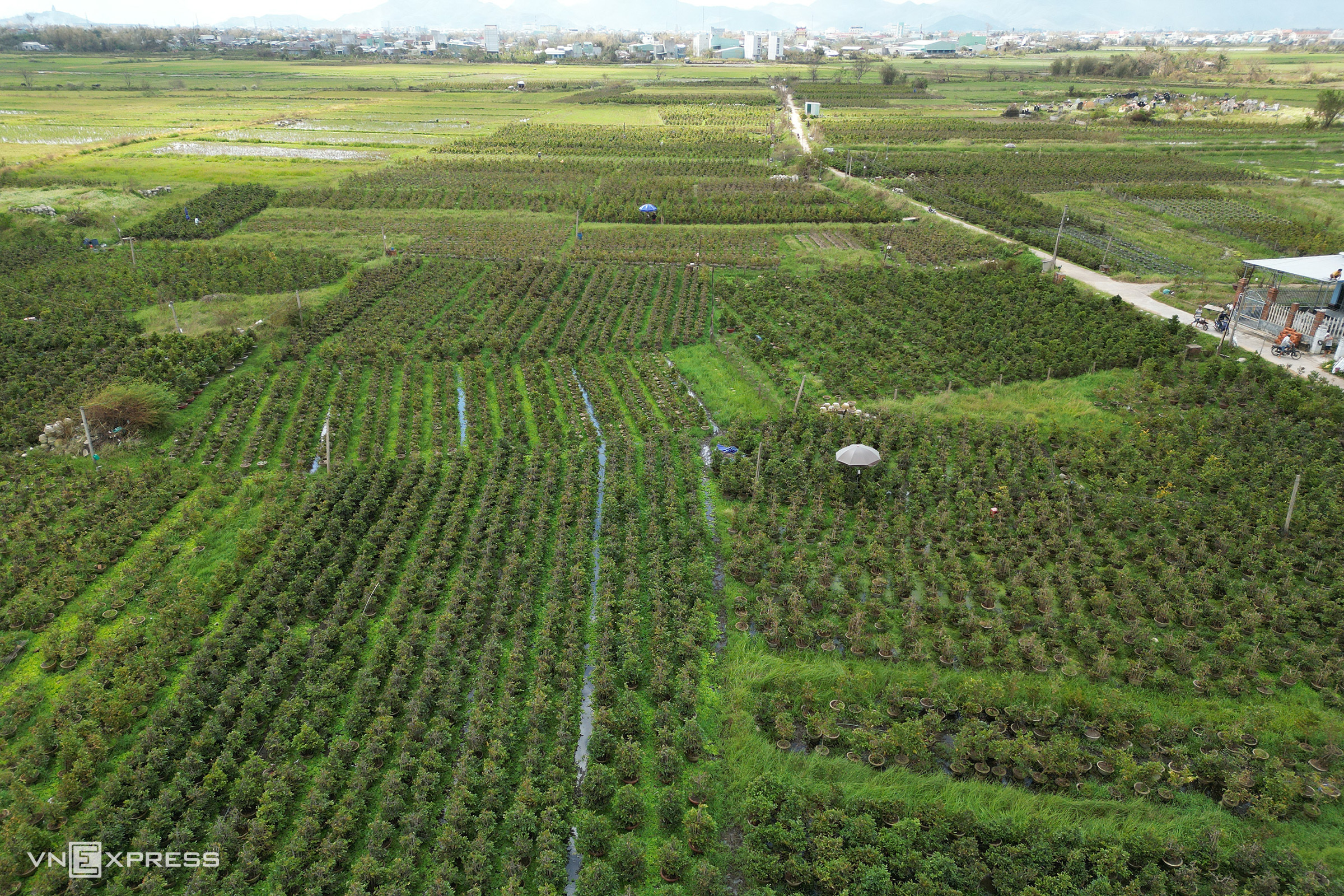
Mai gardens in An Nhon Dong ward were severely damaged by typhoon Kalmaegi, which made landfall 10 days ago.
An Nhon, previously a town in Binh Dinh province, was considered the largest mai cultivation area in Central Vietnam, spanning about 150 hectares. After a merger, the town was divided into 6 wards and communes. Mai flowers are concentrated in An Nhon Dong and An Nhon Bac wards, supplying the entire country for Tet.
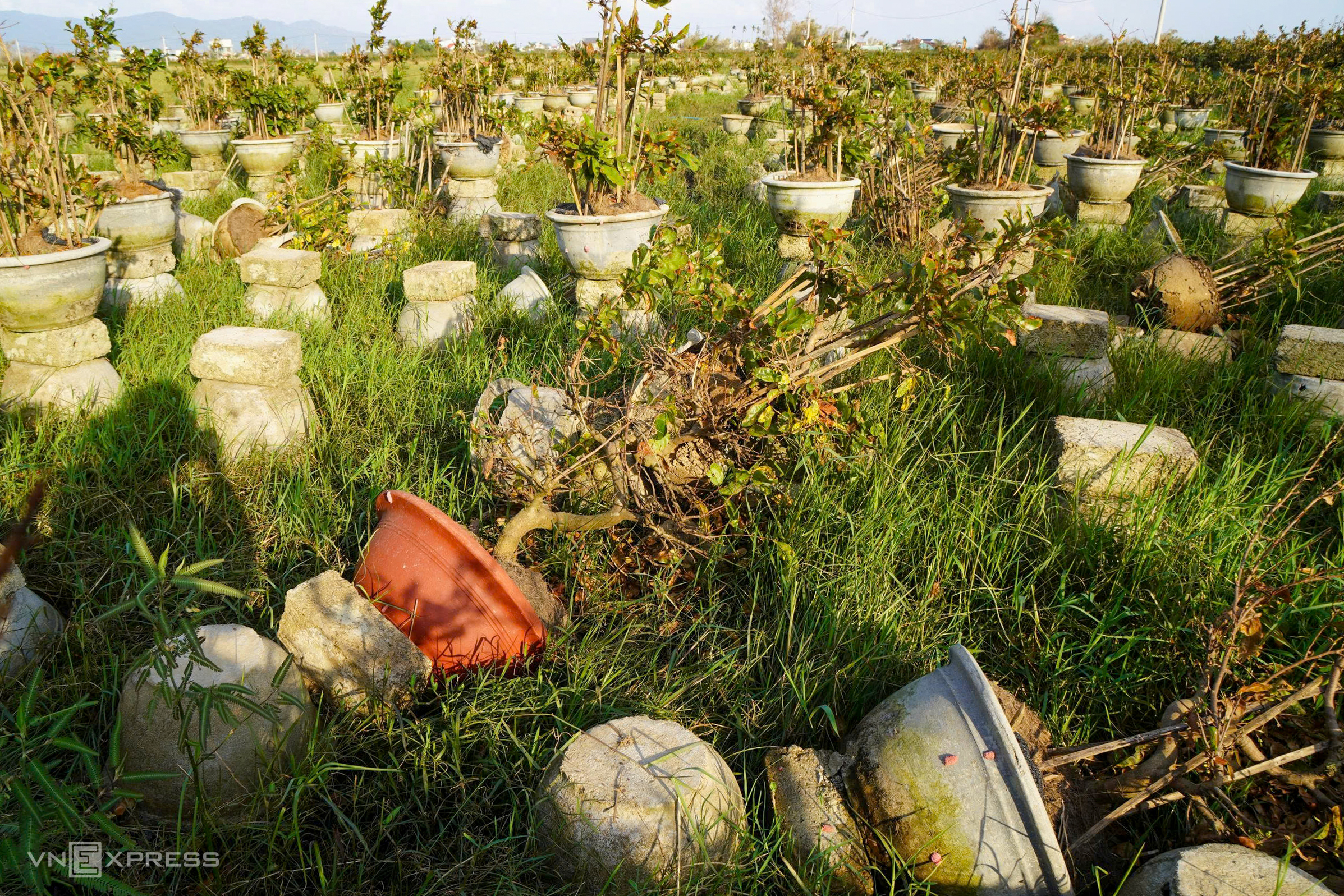
Tran Van Phuoc, 45, from Hao Duc village, An Nhon Dong ward, saw his garden of over 2,000 mai pots, 5 years old, suffer about 80% damage, with scorched leaves and buds. Many pots were knocked over and shattered, and the trees began to shed leaves and gradually die.
Phuoc stated he had invested over 600 million dong in the garden, expecting to sell each pot for 300,000-500,000 dong this Tet to repay debts and cover living expenses. The recent typhoon shattered all his plans, causing severe losses. He currently waters and sprays root stimulants daily to save the remaining plants.
 |
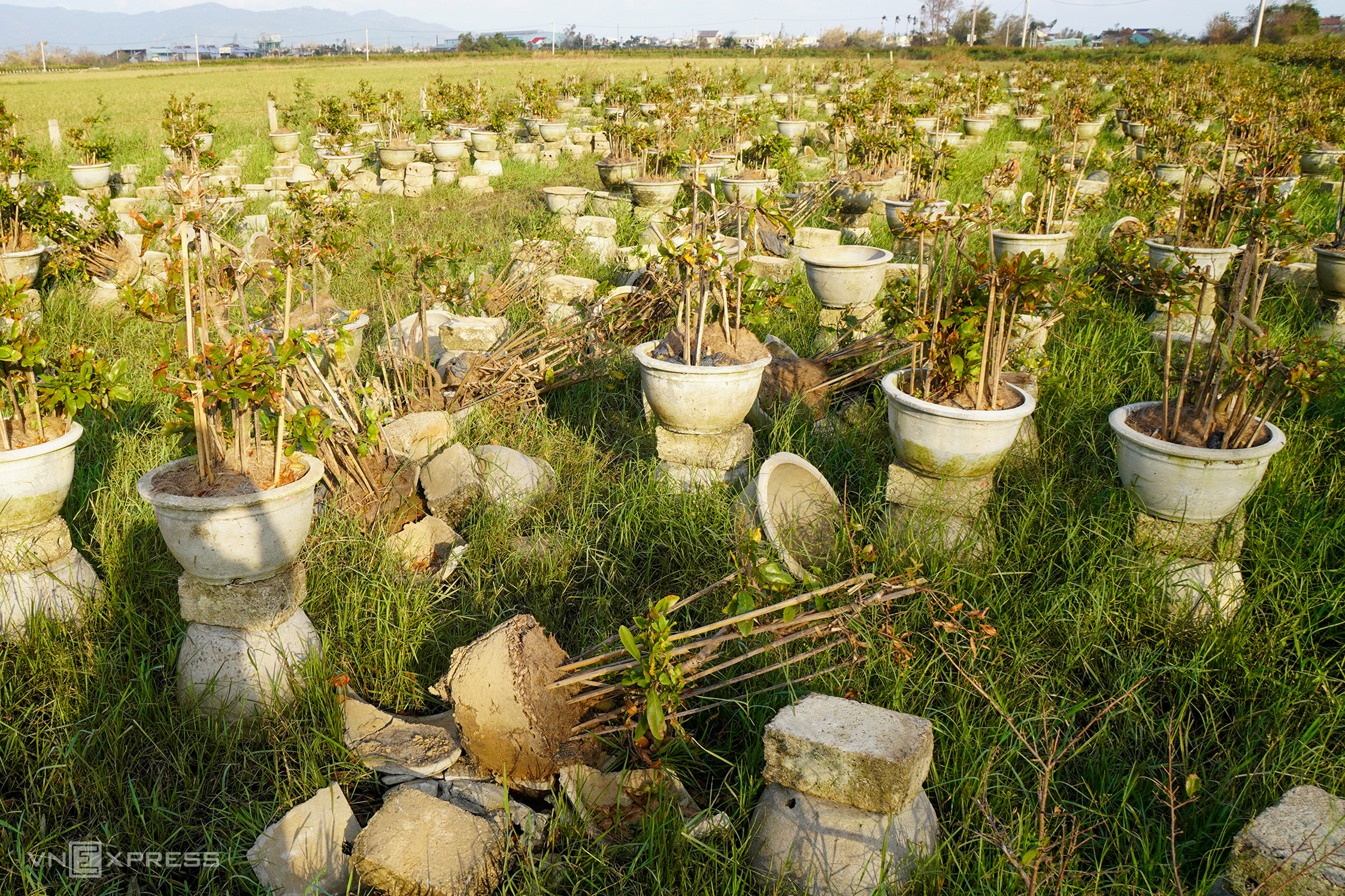 |
Damaged mai plants are collected by garden owners for transplanting into new pots.
One hundred meters away, Duc Phung, 45, faced a similar situation with his over 1,000 ornamental mai pots. In addition to watering and spraying root stimulants, Phung tied the branches of fallen mai trees to bamboo stakes.
Many mai trees suffered broken branches, scorched leaves, and premature blooming.
"Having grown mai for 20 years, I've never experienced such severe damage as this year", Phung said, explaining that while floodwaters might be manageable, scorched leaves, buds, and broken branches are very difficult to recover from.
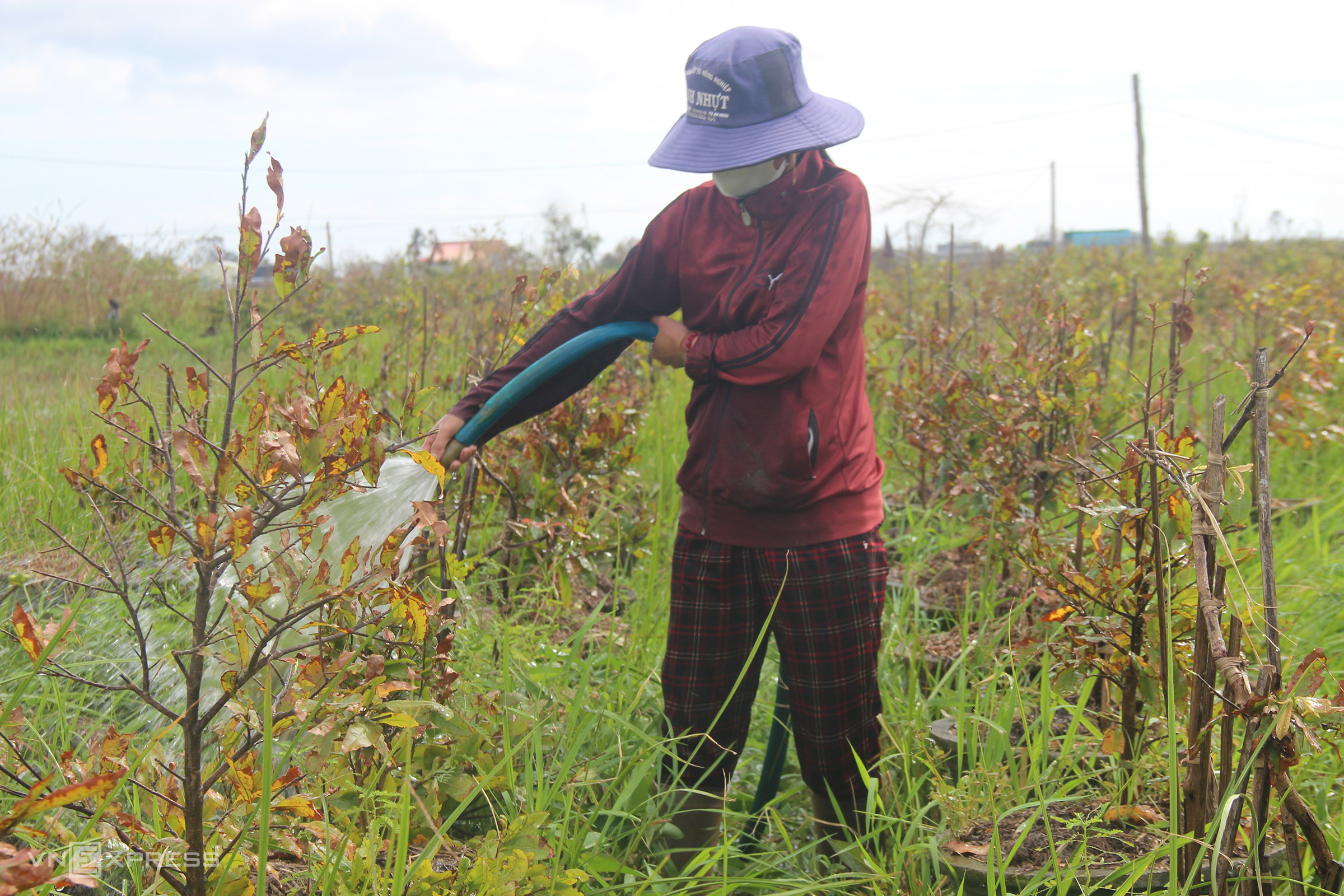 |
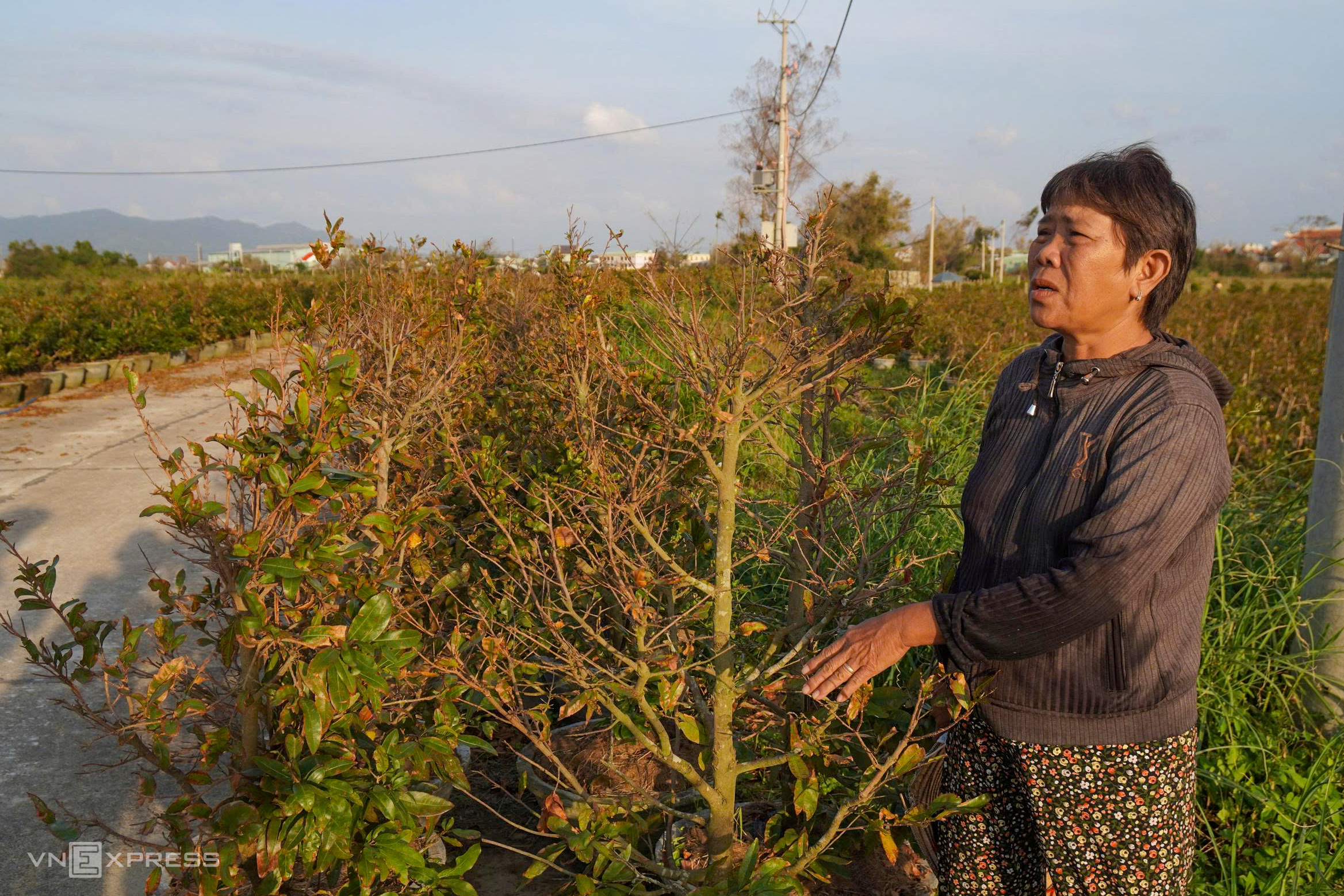
Next to Phung’s garden, Phan Thi Hiep, 44, was busy trying to save 2,000 mai pots, 3-5 years old. Numerous trees had withered, leaves were scorched, and many had fallen into the fields. While watering, if she encountered a submerged or overturned pot, Hiep immediately lifted it to higher ground to prevent root rot and save the plant.
According to Hiep, mai growers typically focus on nurturing their plants at this time, with leaf plucking (a traditional preparation for Tet) scheduled for over a month from now. However, the extensive damage has left many disheartened and unwilling to return to their fields. "Since seeing our garden ruined, my husband has stopped caring for the mai and switched to working as a bricklayer's assistant", she stated.
 |
More than 2 km from Hao Duc village, Tran Thi Kim Ha's, 58, garden of over 10,000 mai plants in Trung Ly village, An Nhon Bac ward, also withered, with branches drying up. After the typhoon, intense sun further debilitated the trees, with many showing signs of gradual death. The family's billions of dong in capital and substantial bank debt all depended on the Tet flower season.
"We had prepared 3,000 mai trees, 4-5 years old, for sale to traders from the North and South, and had already received over 200 million dong in deposits", Ha said.
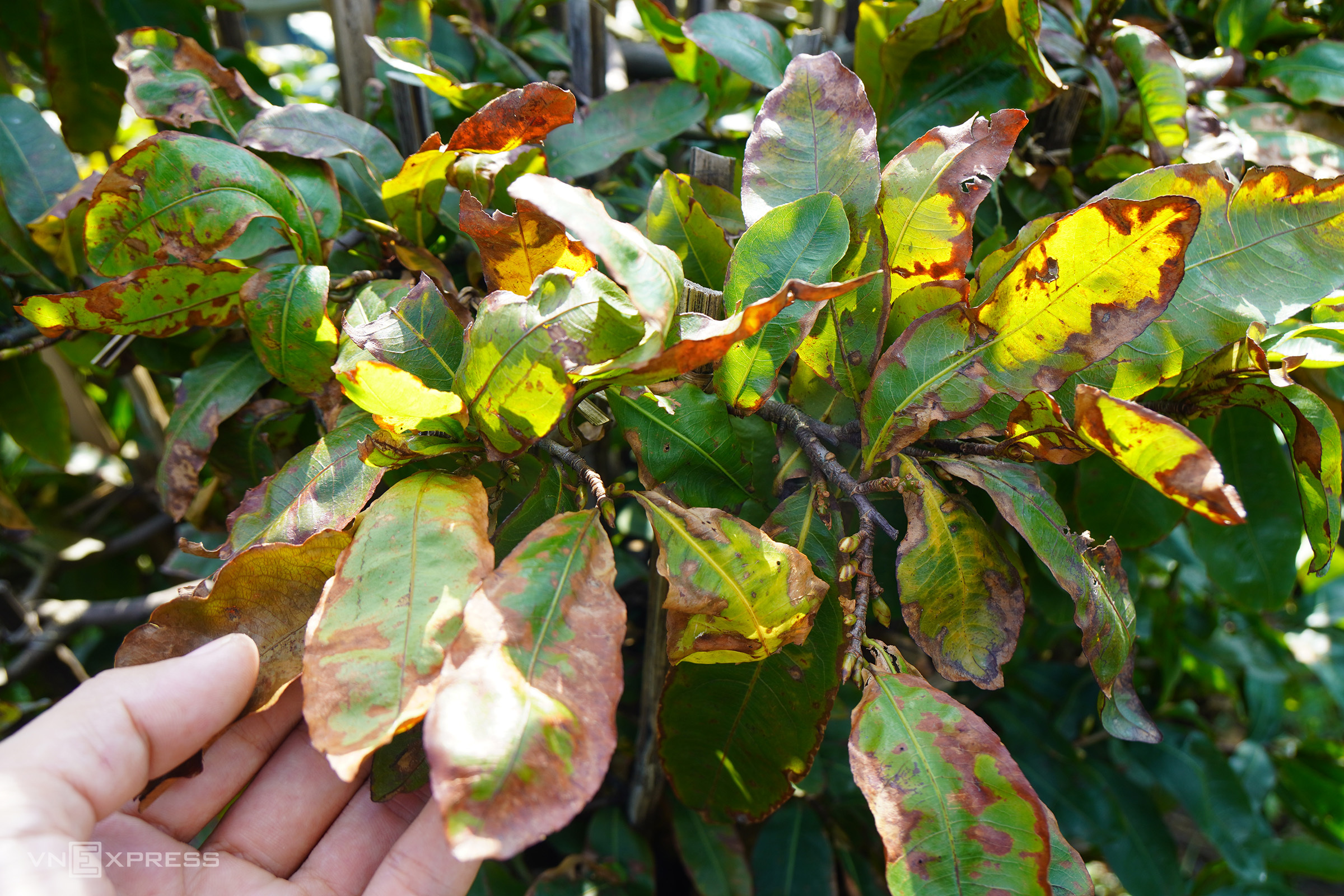 |
According to farmers, strong typhoon winds caused the scorched leaves and buds, making recovery difficult.
Many severely affected garden owners are still striving to save their mai gardens after the typhoon.
Nguyen Anh Dung, Chairman of An Nhon Bac Ward People's Committee, stated that approximately 120,000 mai pots and plants in the locality were damaged after typhoon Kalmaegi, with estimated losses exceeding 84 billion dong. Specifically for Tet mai flowers, there is a risk of no stock being available for sale this year.
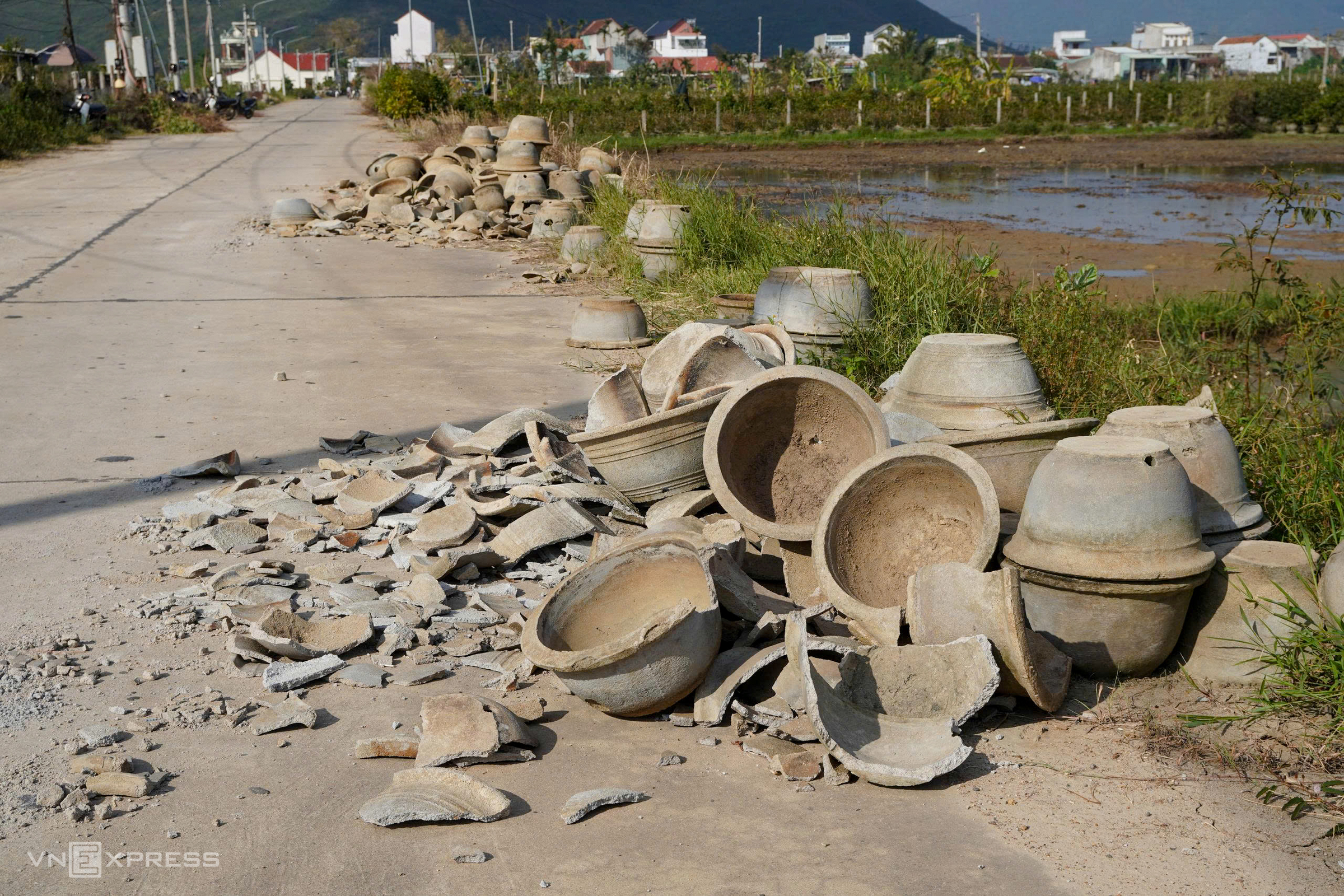 |
Mai pots damaged by the typhoon were scattered along the roads in the Tet flower capital.
According to the Department of Dyke Management and Disaster Prevention (Ministry of Agriculture and Environment), typhoon Kalmaegi damaged tens of thousands of homes in Gia Lai, Dak Lak, and Quang Ngai, with estimated economic losses of nearly 7,600 billion dong.
Gia Lai was the most severely affected locality, with nearly 14,000 hectares of crops damaged; over 60,000 homes unroofed or collapsed; and over 1,000 homes completely destroyed.
Tran Hoa