In late july, from his home in Bao Vinh ward, Dong Nai province, the 77-year-old veteran, recently recovered from a severe illness, attentively followed news of the search and collection of fallen soldiers' remains at Le Thi Rieng Park, TP HCM.
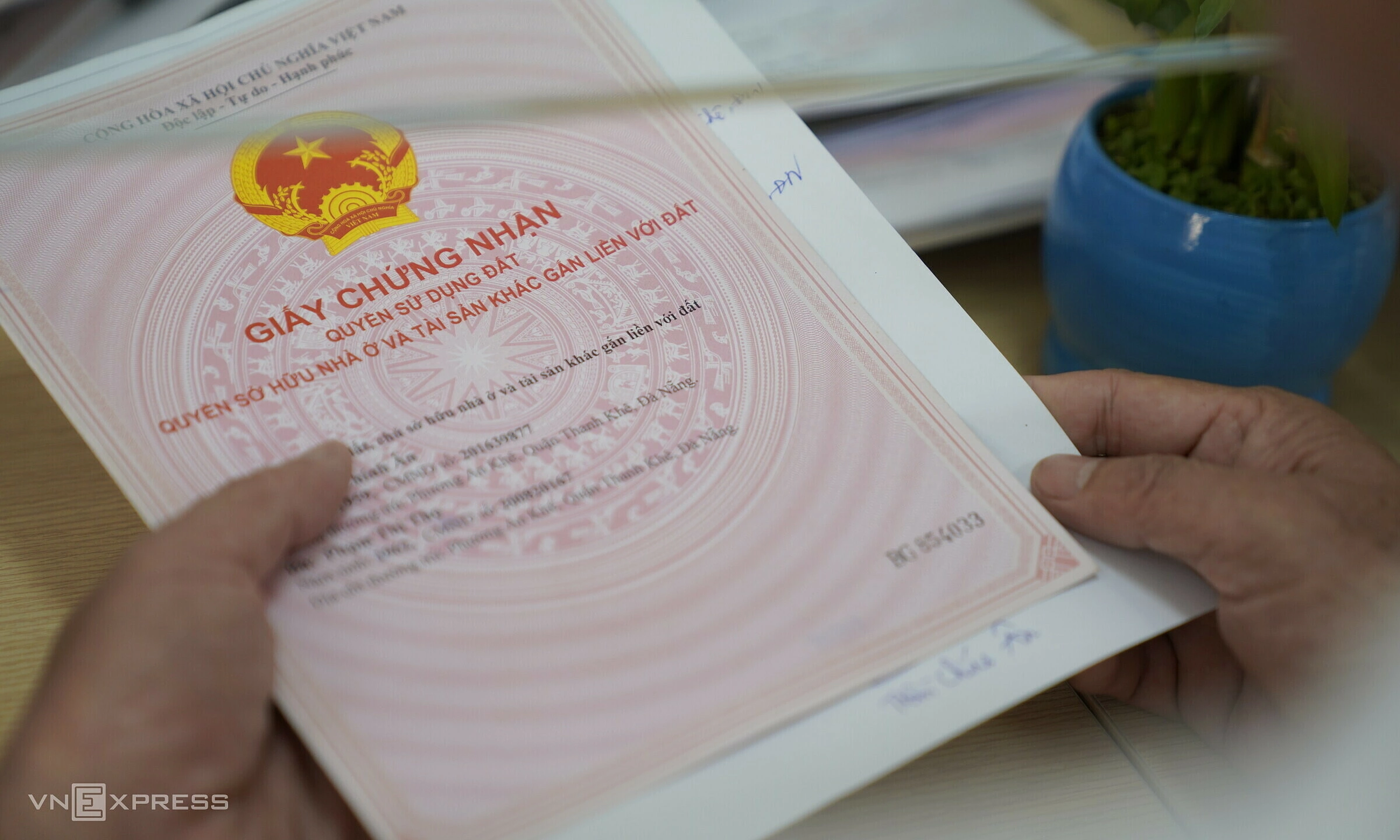
Among the remains gathered, one case included identification papers bearing the name Huynh Van Quen. Initial verification indicated that the fallen soldier belonged to Battalion 1 of Long An, a unit that participated in the battle of Y-Bridge (in the former districts 5 and 8) – a critical gateway to the city center during the Tet Mau Than 1968 General Offensive and Uprising. This information brought back memories for Suu of his combat years with Battalion 1, when he was just 17 years old.
Suu’s father was involved in the resistance against the French, often away from home. Through an acquaintance who worked as a nurse, Suu was sent to the provincial military medical unit, where he spent his days cutting grass and cooking for the soldiers. Due to his young age, he was affectionately called "milk soldier".
Two months later, seeing soldiers depart for battle one by one, he ran away from the military medical unit and requested to join Battalion 1. From a small, thin teenager, Suu gradually became a B41 gunner in Platoon two, Company four.
 |
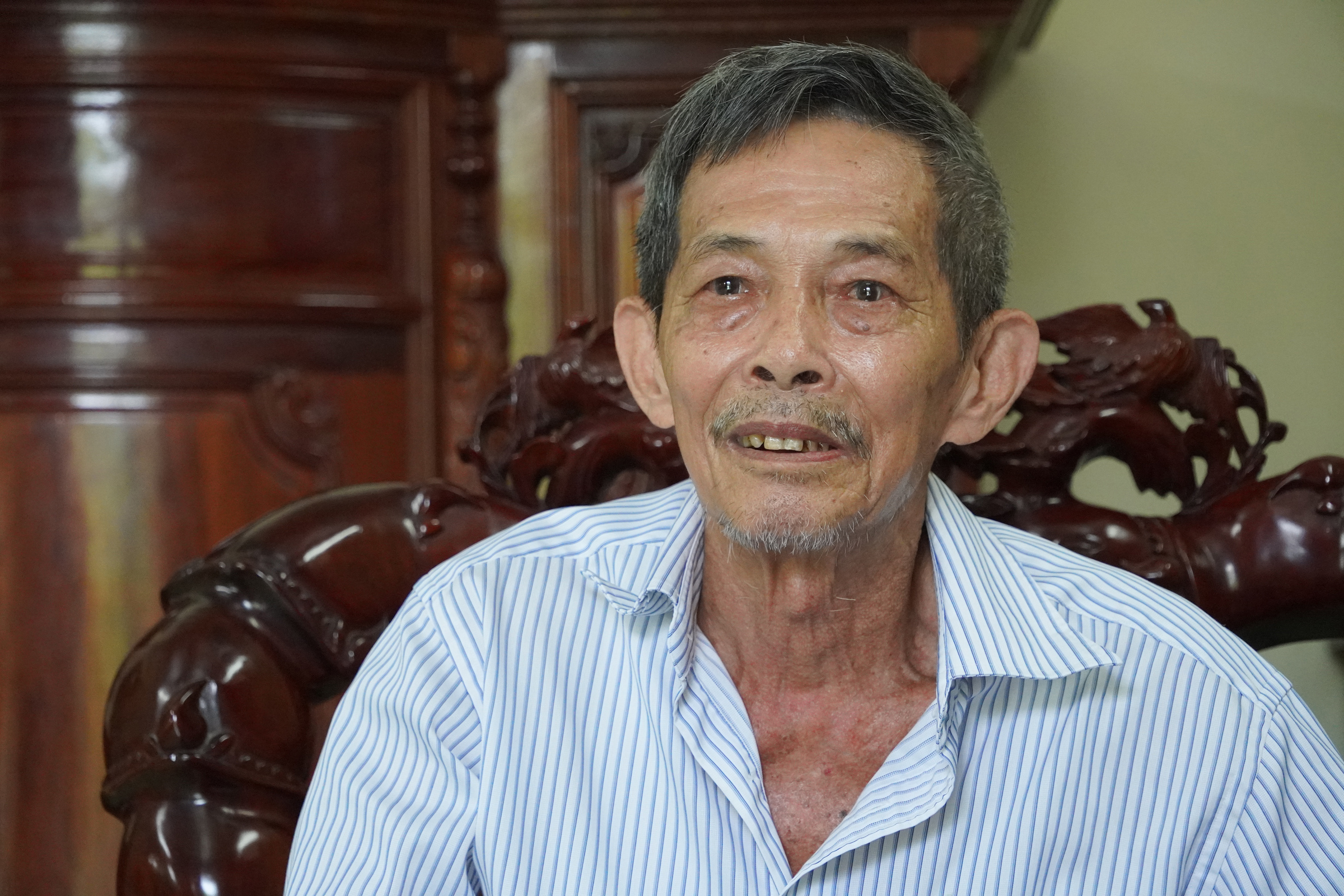
Bui Van Suu became emotional while recounting the two offensives into Saigon. Photo: Hoang Nam |
According to the book "Battalion 1 Long An - Unit three times Hero of the People's Armed Forces", by late 1967, as preparations for the Tet Mau Than General Offensive and Uprising were underway, Saigon - Cho Lon and its surrounding areas were divided into multiple sub-sectors. Battalion 1 became the core force of Sub-sector three, responsible for the southern approach to Saigon.
Suu’s unit marched to Ba Thu base in the former Duc Hue district, Long An province, to receive weapons and train for urban combat. The soldiers trained in open fields and along ditches, but none knew their precise mission.
On the 30th day of Tet, they received orders to clean their weapons and ammunition, departing on the first day of Tet. When the commander announced this was a major offensive into Saigon, the young soldiers were elated. Many discarded unnecessary belongings, confident they would enter the city center the next day.
However, the battlefield proved more challenging than anticipated. The opposing forces were numerous, supported by aircraft and artillery, preventing the attacking units from penetrating deep into the inner city.
During a battle in former district 8 near Route 5, now National Highway 50, Suu was dispatched to support Company one, which was encircled. Enemy forces had positioned a heavy machine gun on the first floor, controlling all movement. Despite never having used a B40, he accepted the mission to neutralize the strongpoint. "If I hesitated, our comrades ahead wouldn't hold out", he recalled.
He crawled along the ground, under a hail of bullets, to a house approximately 70 meters from the target, then opened fire, neutralizing the strongpoint. The enemy then retaliated with grenade launchers, killing a soldier beside him.
The company held out for nearly one week on the second floor of a building before receiving orders to withdraw, fearing the enemy would use bombs to destroy the area. That night, the soldiers crawled through muddy fields, with mud reaching their knees. The journey of over two kilometers took nearly one hour to complete.
 |
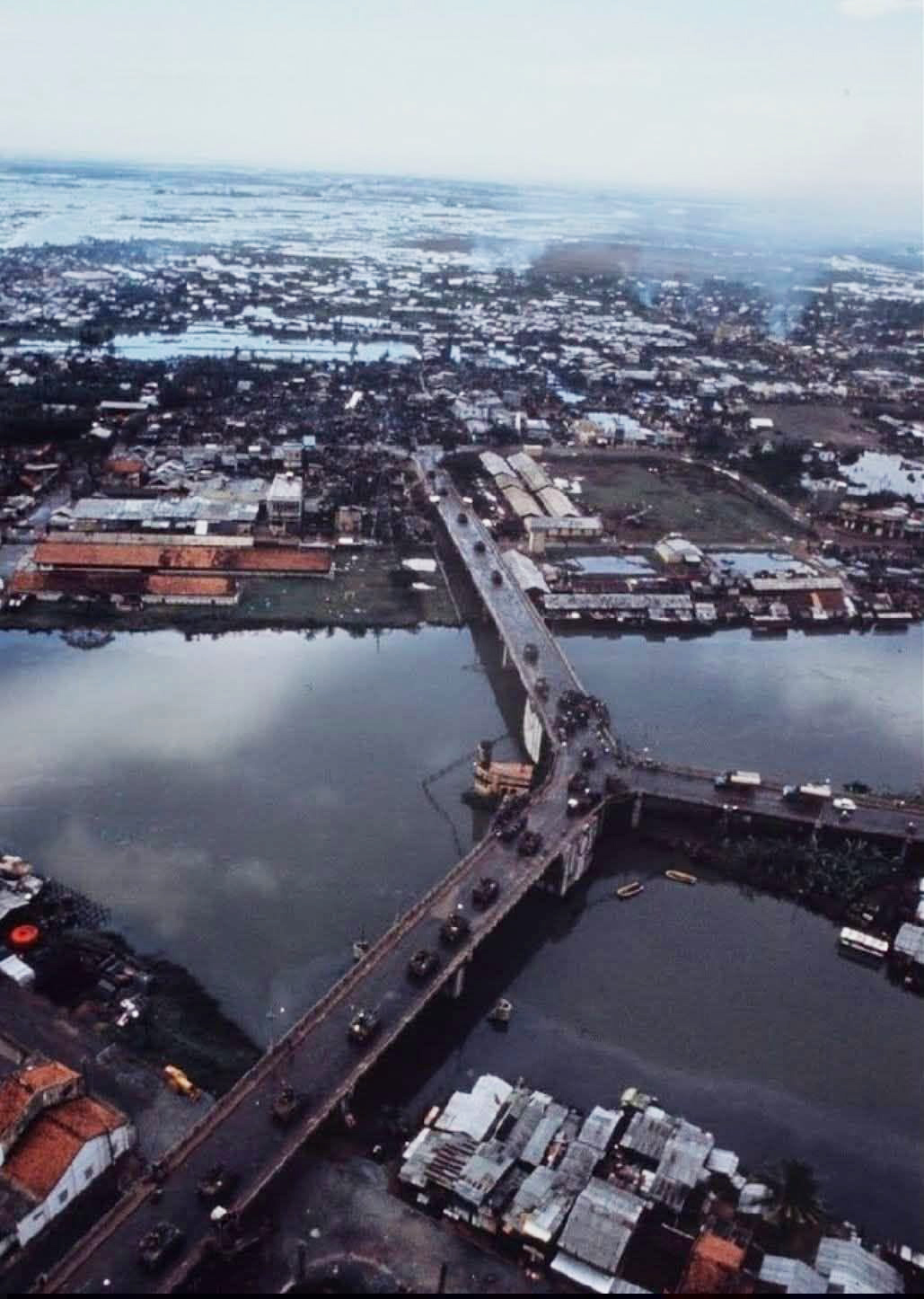
The Y-Bridge in 1968, in the former districts 5 and 8. Photo: Archive |
Battalion 1 then withdrew to Can Giuoc to regroup. Suu was promoted from squad leader to deputy platoon leader. Three months later, on the night of 5/5/1968, his unit traveled by boat along the Cay Kho canal, landing about two kilometers from Y-Bridge, initiating the battle during the second phase of the Saigon offensive.
As dawn approached and the soldiers prepared to cross the road, an enemy patrol threw grenades, blocking their advance. Suu’s group had to shoot out streetlights on both sides of the road, using the darkness to continue forward.
Around 8h, as they neared Y-Bridge, the soldiers spotted an enemy troop transport vehicle and opened fire. Helicopters then continuously circled, firing down into the area. The soldiers had to disperse into houses along the road to find cover.
A rocket struck the house where Suu’s group was sheltering. The explosion shook the house, injuring several soldiers. He and a few comrades escaped harm by lying under the floorboards of a wooden bed.
"By night, the entire 100-meter long row of houses was ablaze. Walls collapsed, corrugated iron roofs flew everywhere, and smoke billowed", he recounted. Encircled from both front and rear, the unit had to detour. Each soldier was given a rice sausage and a box of milk, but after rounds of fighting, they were almost too exhausted to eat.
After several intense engagements, Battalion 1 dislodged the bridge's defenders and simultaneously prevented the enemy from advancing from the opposite bank. Companies on both flanks secured positions at Mat Bridge and Rach Ban Bridge. The unit controlled a long section of Pham The Hien street, south of Y-Bridge.
On the opposite bank, the Army of the Republic of Vietnam (ARVN) erected barbed wire, sandbags, and deployed armored vehicles for support.
Suu remembered that in Company one, there was a deputy platoon leader named Tai, a B40 gunner renowned for his bravery. Whenever an armored vehicle was spotted, Tai would single-handedly maneuver through mounds and bushes to approach, open fire, and then quickly retreat to cover.
According to Suu, gunner Tai damaged six armored vehicles during the battle of Y-Bridge, boosting the unit's morale.
The fierce fighting forced residents to evacuate. Before leaving, many advised the soldiers: "We're leaving our homes to you; take whatever you need".
On the second day, Suu was wounded by a bullet and had to leave the battlefield. He later learned about the subsequent days through comrades and unit historical records.
 |
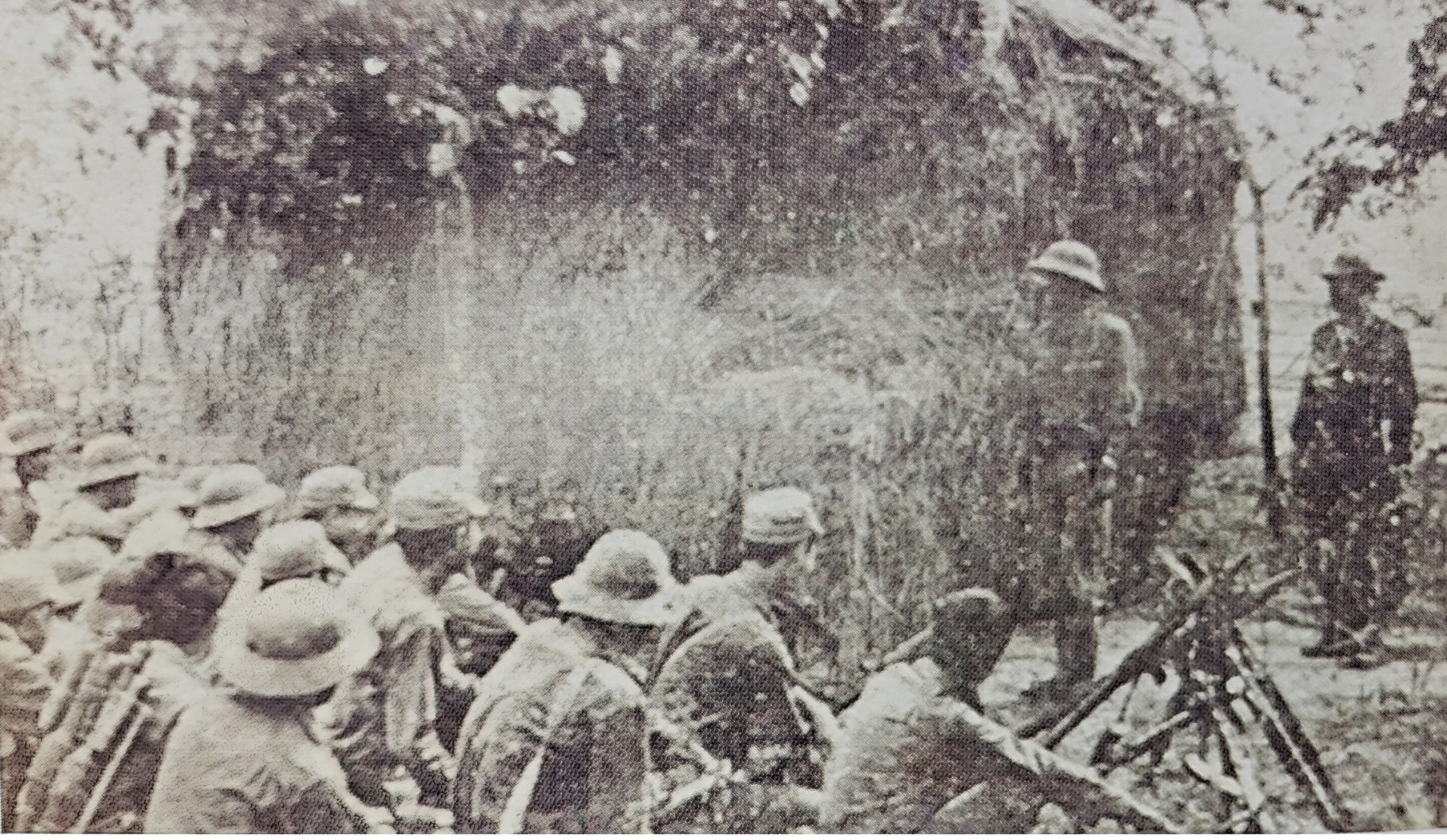
Battalion 1 during a combat deployment in Cambodia.
 |
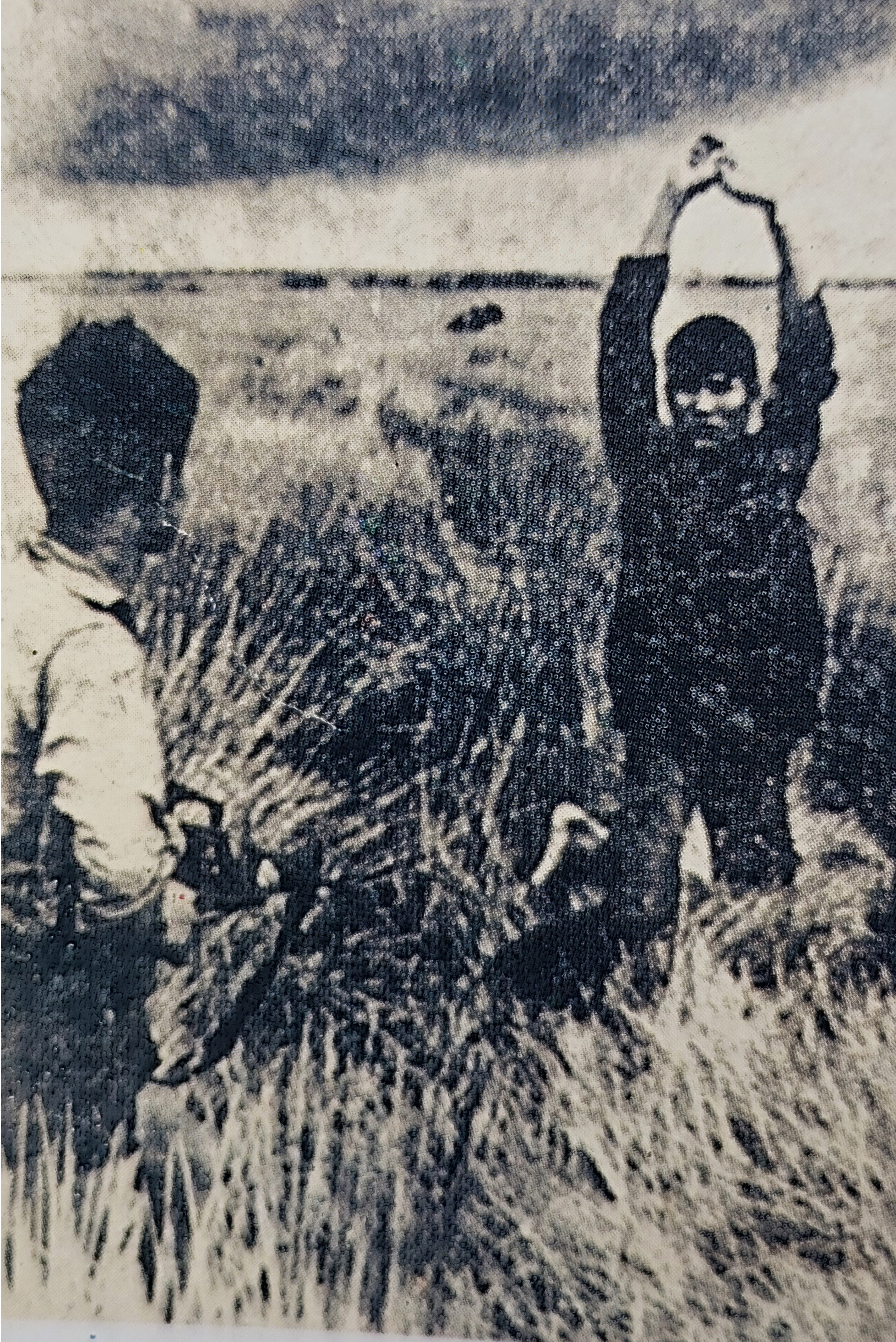
Battalion 1 soldiers capture enemy troops during the Binh Duc battle, 1974.
According to Battalion 1 documents, Y-Bridge became one of Saigon's fiercest battlefronts. US and Saigon forces used firepower from multiple directions, burning and collapsing rows of houses along both sides of the river to eliminate the soldiers' hiding places.
By the fourth day, US forces concentrated Brigade three of the 9th Division along with several ARVN units, but still could not dislodge Battalion 1 from the area south of the bridge.
On the sixth day, US troops formed multiple clusters along Pham The Hien street. The battalion gathered all those capable of fighting, organizing them into night assault detachments.
On the final day, a US battalion was deployed to the southern fields, while two flanking forces from Mat Bridge and Rach Ban Bridge gradually closed the encirclement. Helicopters illuminated the sky, preparing to deploy more troops.
After one week of holding their ground, Battalion 1 received orders to withdraw to Dong Thanh, Can Giuoc.
Upon returning to his unit, Suu inquired about his friends from the same village who had enlisted together and fought in Company two. "Cu was a liaison, Lam was a medic, and Vinh also joined the same group. After that battle, all three died at just 19 or 20 years old", he recounted.
The battle of Y-Bridge was later reported at the Southern battlefield review conference in 9/1968, receiving high praise for its resilience and military and political impact during the second phase of the Saigon offensive.
After two months of treatment, Suu returned to his unit. In 1970, he served as company commander, then participated in combat in Cambodia. In 1980, his health declined, and he was discharged. Three years later, his family moved to Long Khanh, Dong Nai province.
Nearly six decades after the battle, the veteran remains troubled by thoughts of his comrades who have not been found. "I am fortunate to be alive. I just feel for my brothers who are still lying somewhere in the fields, under the rivers for decades. I hope everyone is found soon and brought home to their families", he said, his eyes red-rimmed.
Hoang Nam