


 |
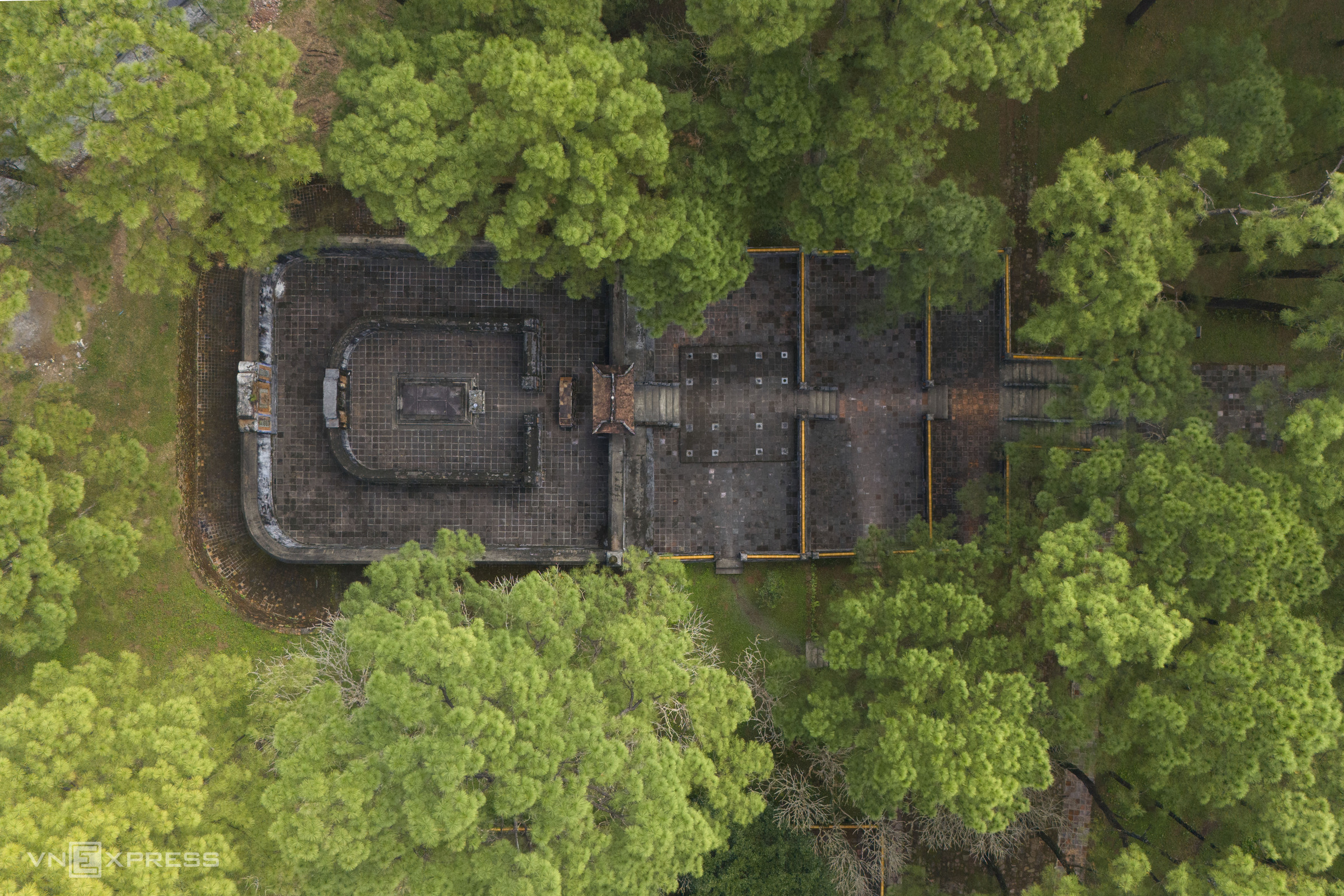
Boi Lang, the mausoleum of emperor Kien Phuc, is located within the Khiem Lang area – the resting place of emperor Tu Duc – surrounded by pine hills. This area was previously a spot where emperor Tu Duc would seek respite when visiting Khiem Lang.
Emperor Kien Phuc (1869-1884), whose real name was Nguyen Phuc Ung Dang, was the son of Kien Thai Vuong Nguyen Phuc Hong Cai. From a young age, he was adopted by emperor Tu Duc and brought into the palace. After emperor Hiep Hoa was deposed, he ascended the throne, adopting the reign name Kien Phuc, becoming the 7th emperor of the Nguyen dynasty. He reigned for 8 months before passing away at 15 years old, making him the shortest-reigning emperor of the dynasty.
In 1884, after emperor Kien Phuc passed away, the Nguyen dynasty constructed his mausoleum next to Dien Chap Khiem, a palace where emperor Tu Duc used to read and admire the scenery.
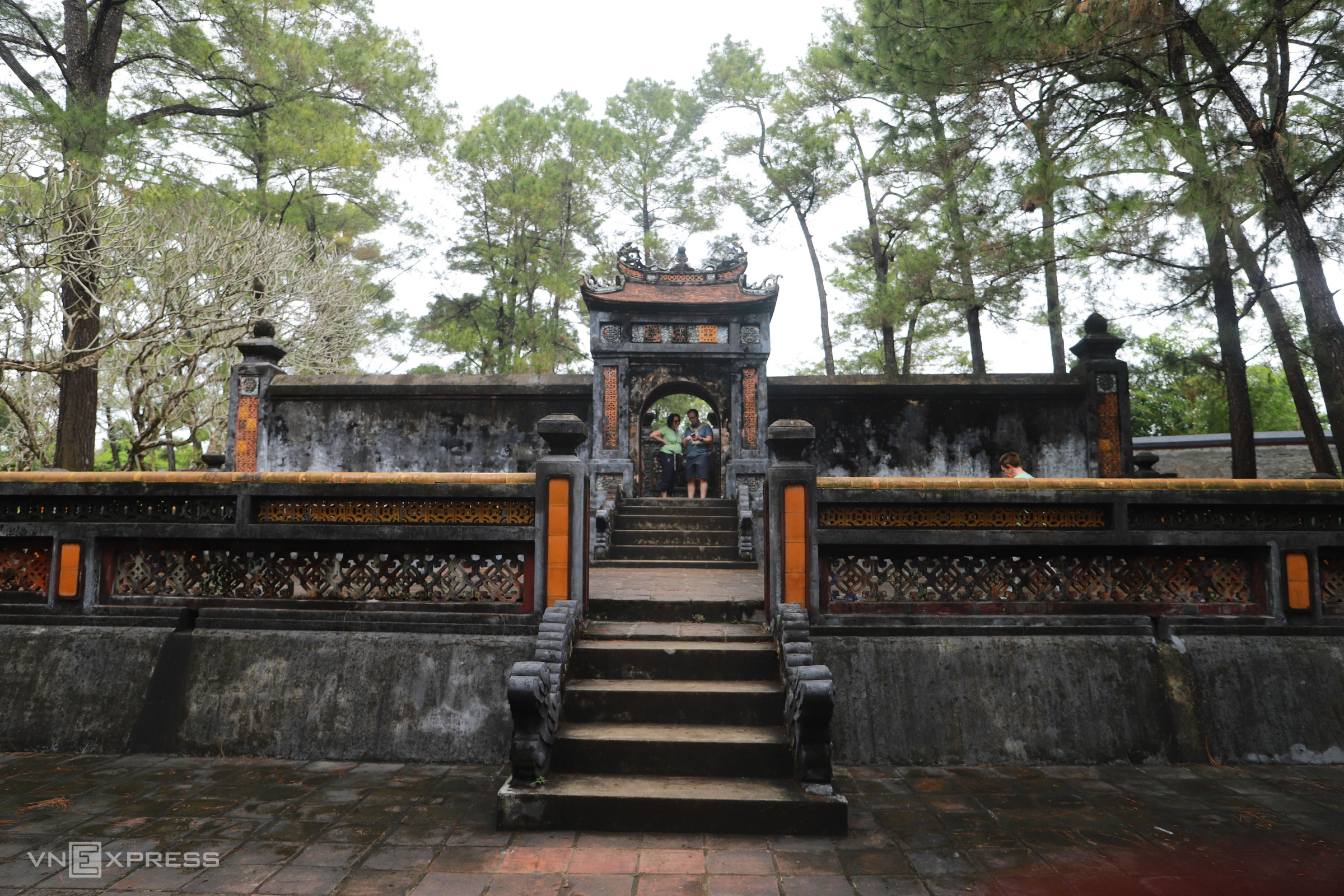 |
The mausoleum of emperor Kien Phuc was constructed with an architectural style similar to that of the Nguyen lords, featuring two outer walled enclosures, facing south.
The decorative floral patterns on emperor Kien Phuc's mausoleum are created using raised ceramic and enamel inlay. The foundation is paved with Bat Trang tiles.
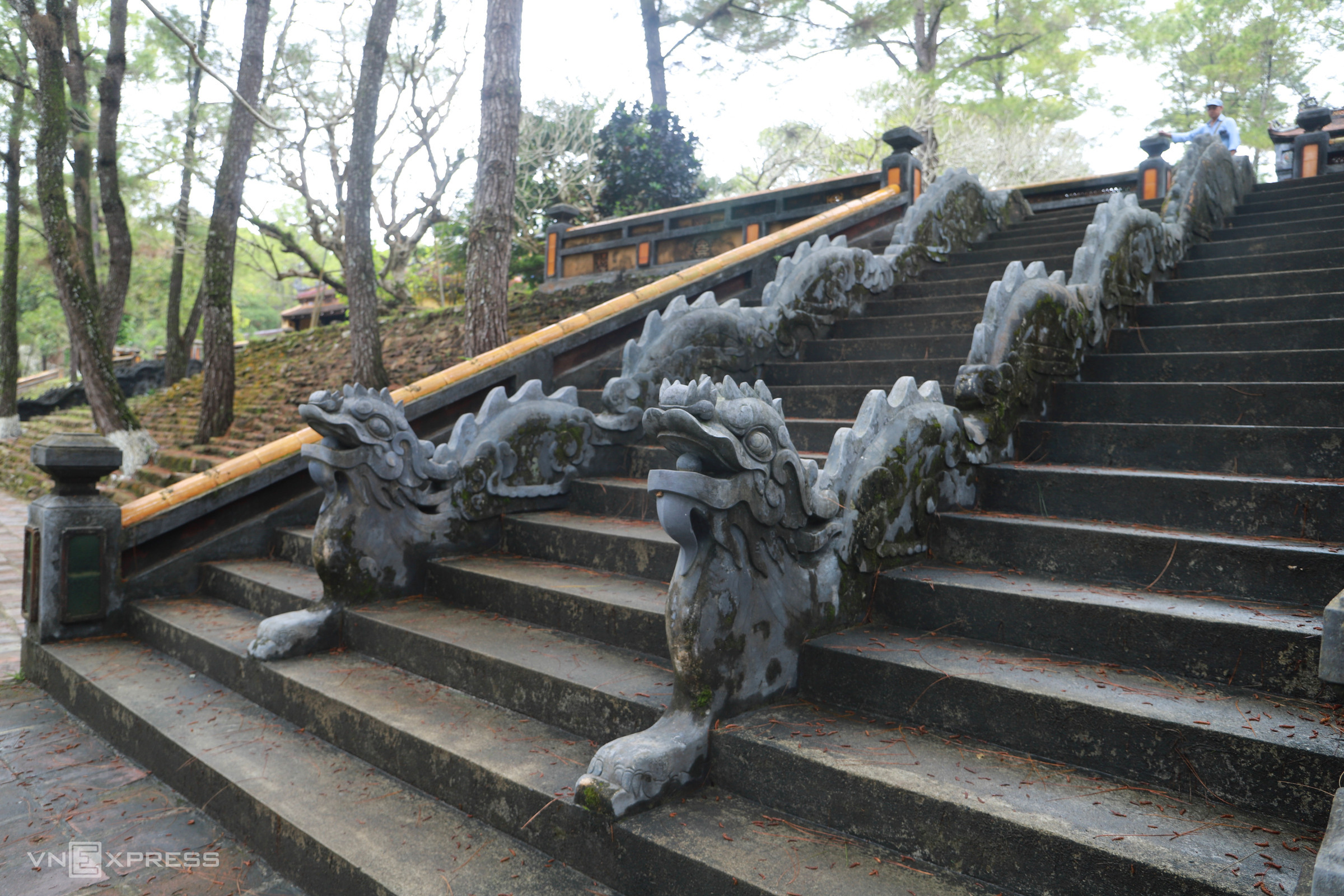 |
In front of the mausoleum entrance are two intricately carved dragons made from Thanh stone.
Emperor Kien Phuc's tomb has a rectangular, three-tiered structure. In front of the tomb is an altar made of Thanh stone.
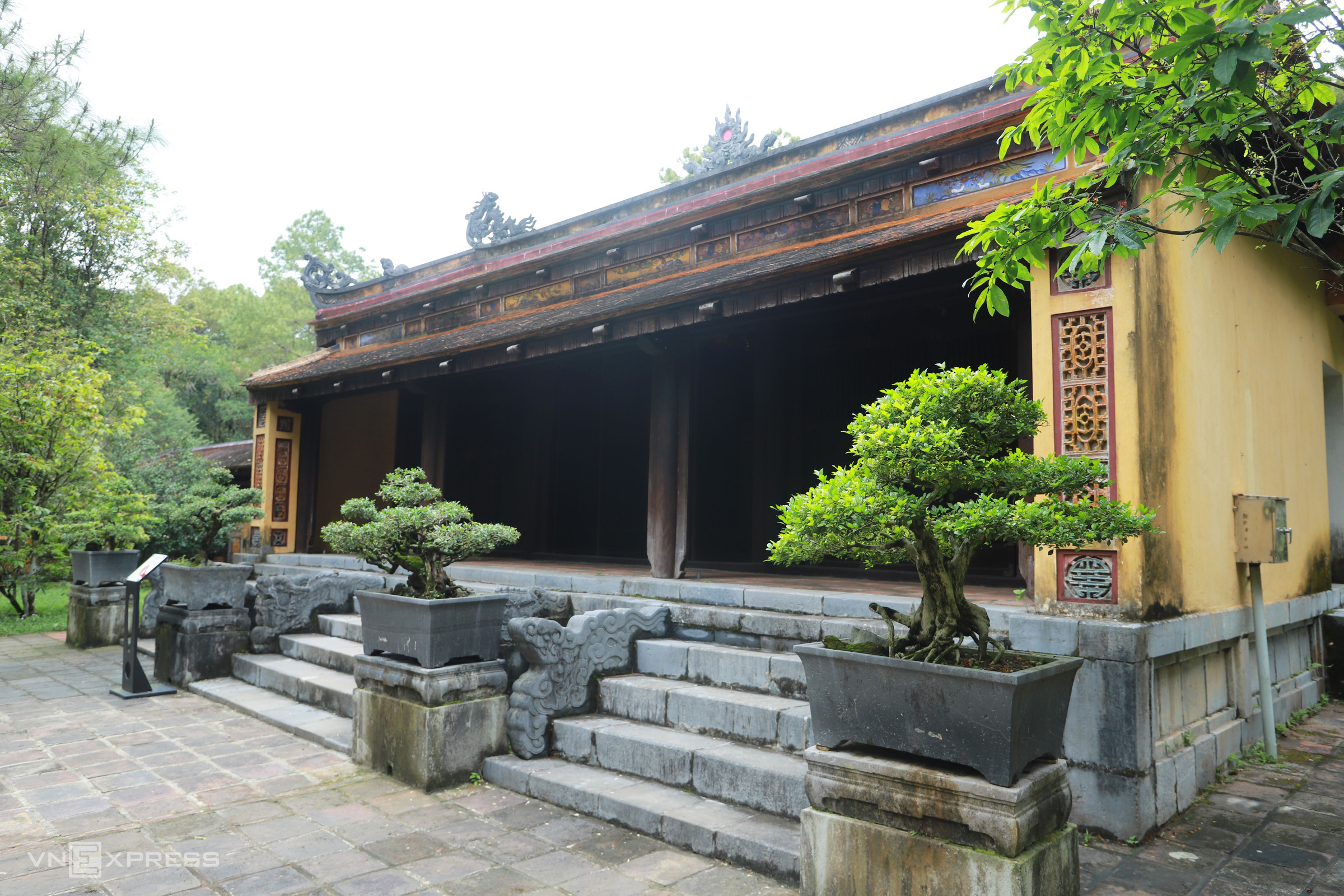
Adjacent to the tomb area is Dien Chap Khiem, which houses the altar of emperor Kien Phuc.
During emperor Tu Duc's reign, Dien Chap Khiem was used for reading and enjoying the views. After both emperor Tu Duc and emperor Kien Phuc passed away, the Nguyen dynasty repurposed this structure as a place of worship for emperor Kien Phuc.
Behind Dien Chap Khiem once stood Di Khiem Lau, where the emperor would enjoy the scenery and cool breezes, but it no longer exists.
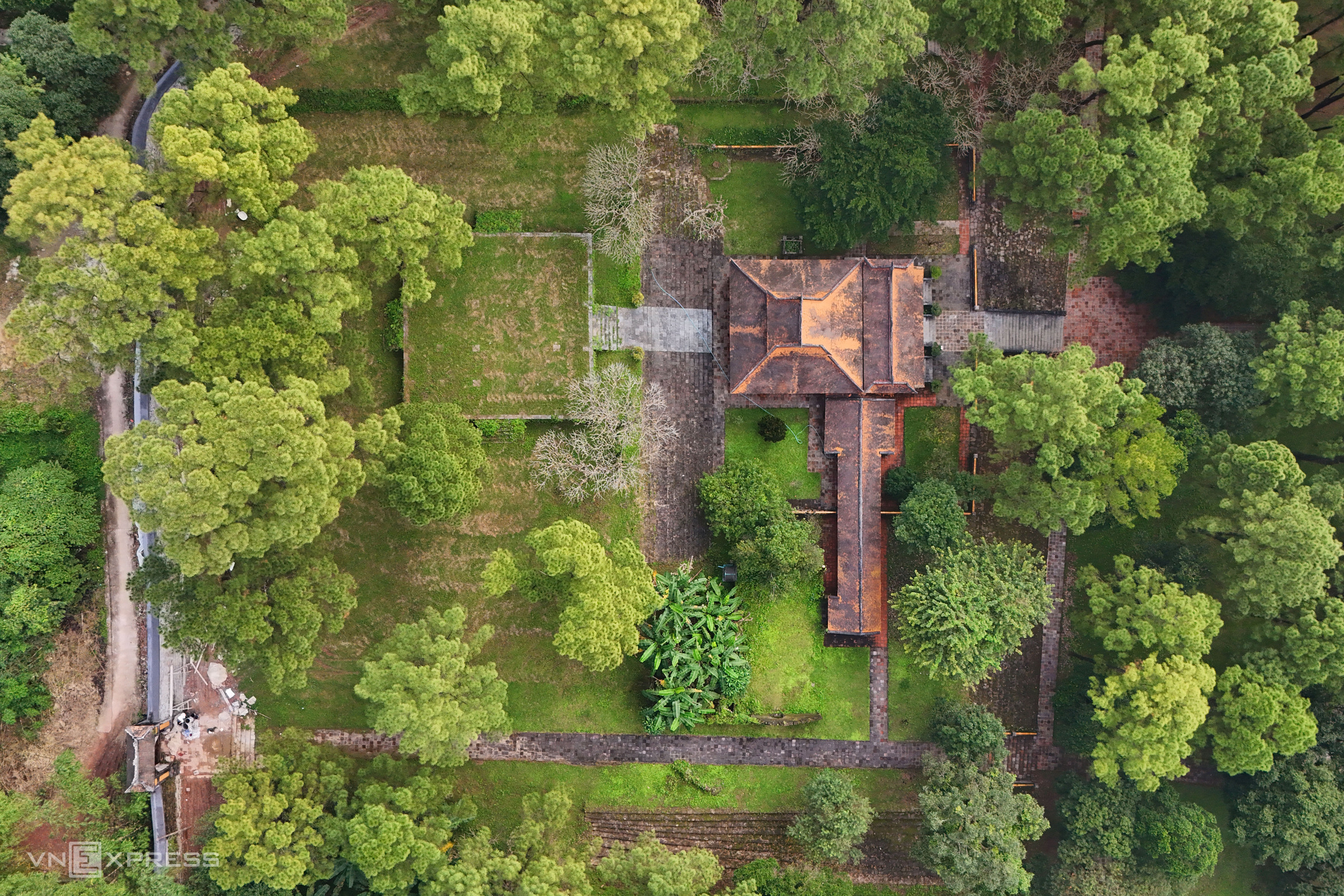 |
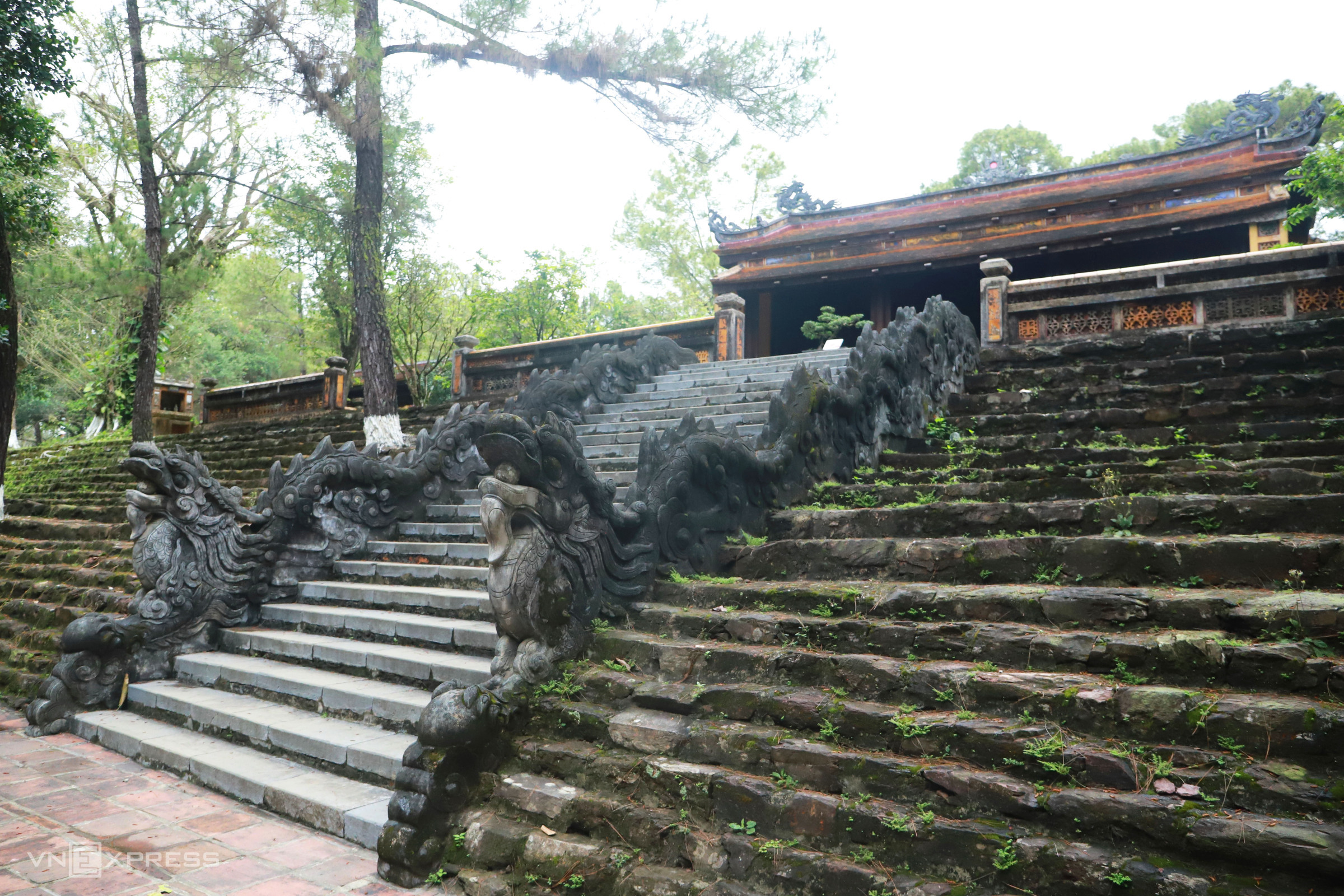
Dien Chap Khiem features double-roofed architecture with overlapping eaves, and its roof is covered with flat tiles. The stone steps leading into the palace are made of Thanh stone, with dragon motifs carved before the entrance.
 |
The altar of emperor Kien Phuc inside Dien Chap Khiem. Tourists and locals visiting the mausoleum can light incense before the emperor's altar.
The entrance to Dien Chap Khiem is paved with Thanh stone, flanked by a pair of intricately carved stone dragons of the same material.
 |
Emperor Kien Phuc's mausoleum is part of the Khiem Lang complex, where emperor Tu Duc rests. Currently, some main structures within the emperor Tu Duc mausoleum complex, such as Dien Hoa Khiem, Minh Khiem Duong, and On Khiem Duong, are undergoing restoration with a total budget exceeding 99 billion VND.
Vo Thanh





