The National Center for Hydro-Meteorological Forecasting reported that at 7:00 on 23/7, a tropical depression was located over the waters east of the Philippines. It had a maximum wind speed of 49 km/h, level 6, gusting to level 8, and was moving west-northwest at approximately 15 km/h.
By 7:00 tomorrow, 24/7, the tropical depression will be about 220 km east of Luzon Island, Philippines, with wind speeds of 61 km/h, level 7, gusting to level 9. Its speed is forecast to increase to 25-30 km/h, and it has the potential to strengthen into a storm.
By 7:00 on 25/7, the storm's center is expected to be over the northeast North East Sea, with maximum wind speeds of 74 km/h, level 8, gusting to level 10.
Both the Japan and Hong Kong meteorological agencies predict that the tropical depression will strengthen into a storm tomorrow and then enter the East Sea. However, it is not expected to directly affect mainland Vietnam.
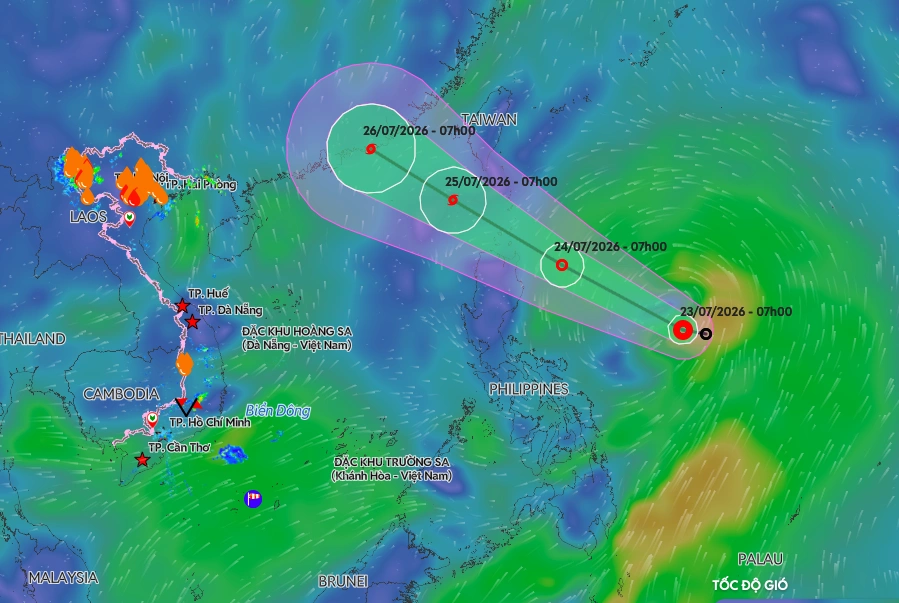 |
Forecast track of the tropical depression. Photo: Disaster Monitoring System. |
From the night of 24/7, the northeast North East Sea will experience winds gradually increasing from level 6 to level 8, gusting to level 10, with waves two to four meters high. Vessels operating in the danger zone could be affected by thunderstorms, whirlwinds, strong winds, and high waves.
Since the beginning of the year, the East Sea has recorded one tropical depression and one storm, Maysak. Storm Maysak, in early July, caused no human casualties but unroofed 96 houses, and 13 boats and rafts drifted away or sank. It also affected about 1,100 hectares of aquaculture, with total damages estimated at 20 billion VND.
Following Maysak, super typhoon Ba Vi operated in the Northwest Pacific, causing strong winds and high waves across many Vietnamese sea areas but did not enter the East Sea. From mid-July, northern Vietnam experienced continuous heavy rains, leading to flash floods, landslides, and severe damage in some mountainous provinces.
This year's storm season is forecast to have a number of storms and tropical depressions in the East Sea approximately equal to or lower than the multi-year average. However, their intensity and trajectory may be unpredictable. The July-September period is considered the peak storm season.
Meteorological agencies warn that extreme heavy rains, flash floods, and landslides continue to be risks during this year's rainy and storm season, particularly in the northern mountainous region and Central Vietnam.
Gia Chinh