On the morning of 25/2, the Search and Collection Team for Fallen Soldiers' Remains, Division 968, Military Region 4, discovered and exhumed two sets of remains at Hill 402, Ban Chua hamlet, Hieu Giang commune.
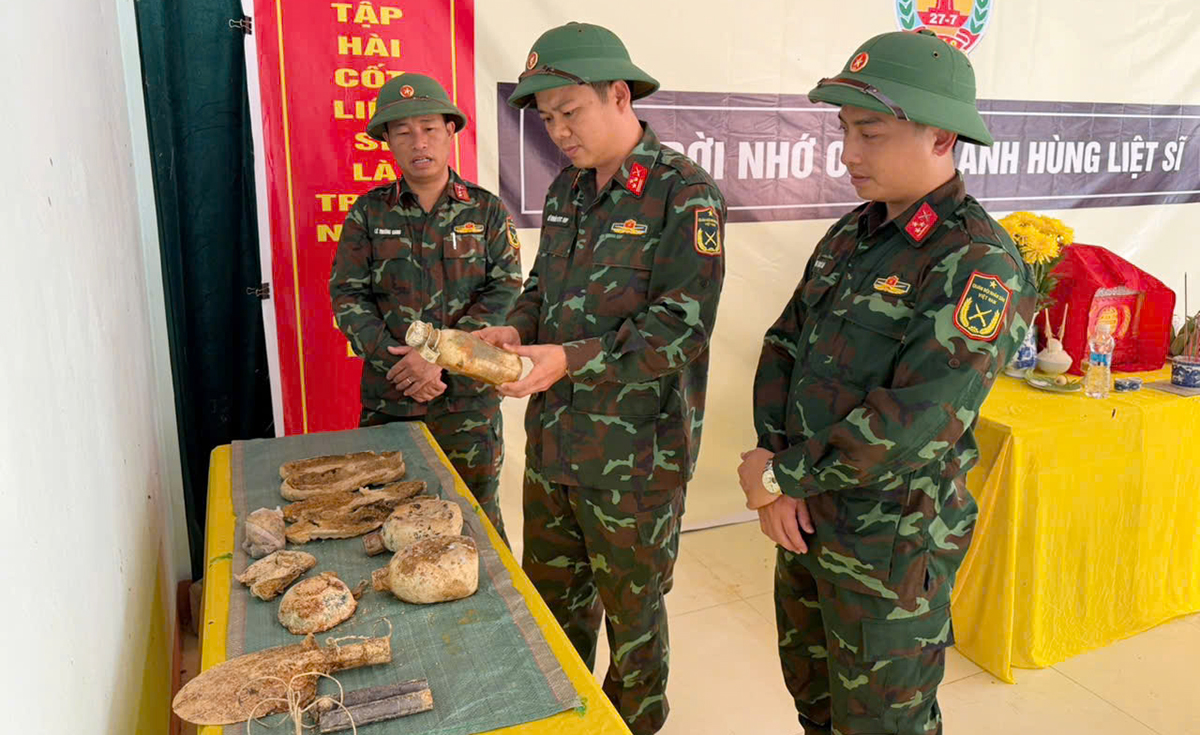 |
Artifacts found with the remains. Photo: Division 968 |
The two sets of remains were found at a depth of about 1,5 meters, 30-40 centimeters apart. Most bones had decomposed and shattered. The first set of remains included 11 teeth, and the second had 16. Accompanying artifacts were: three canteens, two pairs of shoes, 12 buttons, an infantry shovel, Sao Vang balm, a B52 bowl, and communication wire.
The collection team determined that the two fallen soldiers died and were buried in a combat bunker. The remains are currently being preserved at the community hall in Tan Hiep hamlet, Hieu Giang commune.
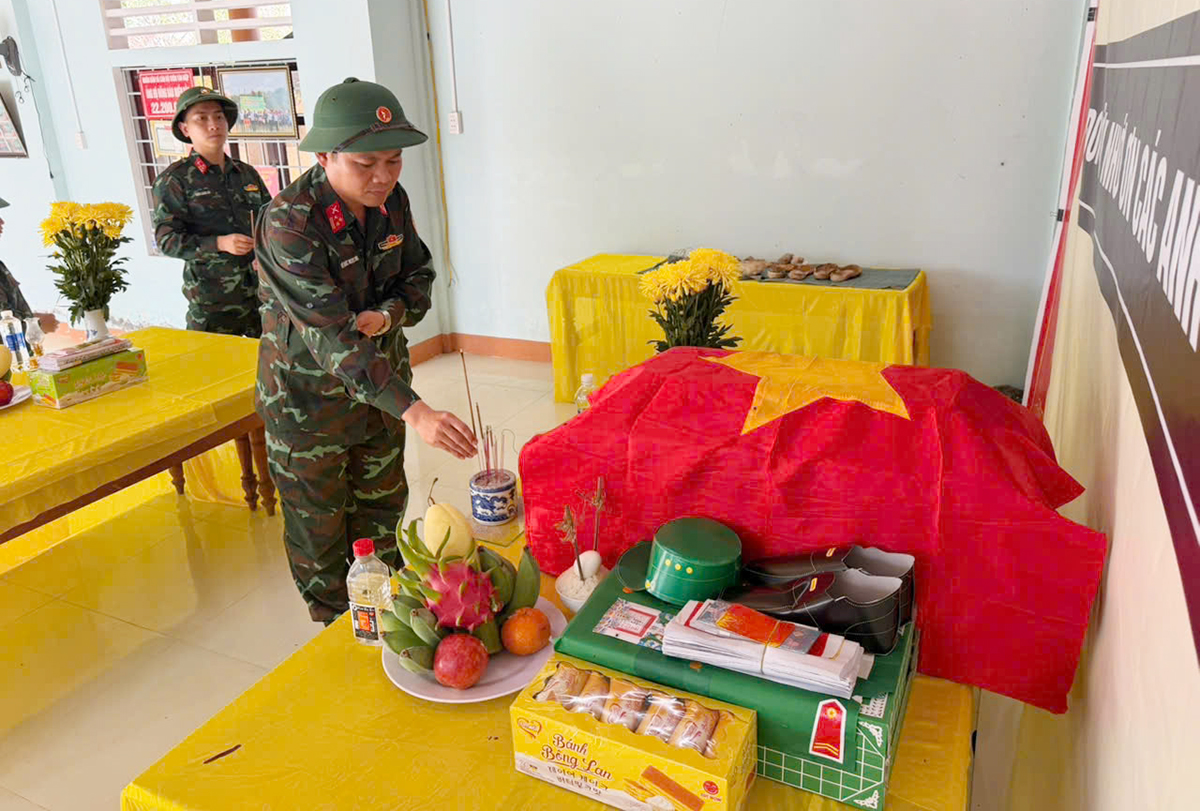 |
Two fallen soldiers' remains are managed and worshipped at the community hall in Tan Hiep hamlet, Hieu Giang commune. Photo: Division 968 |
Two days prior, the Search and Collection Team for Fallen Soldiers' Remains, Division 968, also discovered and exhumed a single set of remains in the garden of Mr. Le Van Canh's family, An Phuoc hamlet, Cam Lo commune.
This set of remains was found at a depth of about 0,7 meters, with bones shattered into many small pieces and 21 teeth, interred within an ammunition box. Accompanying artifacts included: one piece of parachute cloth, ammunition box nails, and two 5-centimeter bomb fragments. The search and collection team is coordinating with authorities to inspect, verify, and cross-reference information to identify the fallen soldier.
Quang Tri province was a fierce battlefield during the war, situated along the temporary demarcation line after the Geneva Accords. The province currently has 157 fallen soldiers' cemeteries, containing over 74.000 graves. Among these, the Truong Son and Road 9 National Fallen Soldiers' Cemeteries are the largest, holding over 21.000 graves.
Dac Thanh