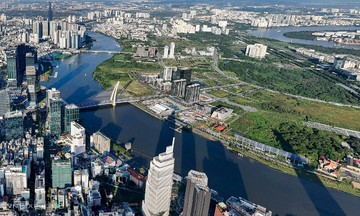
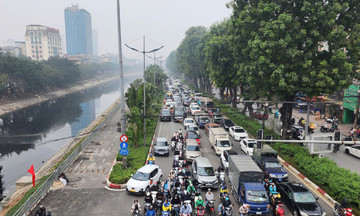
On 25/2, Vice Prime Minister Nguyen Hoa Binh presented the action program for implementing Resolution 79 on state economic development and Resolution 80 on Vietnamese cultural development, stating that the government has designed 230 tasks. Of these, 99 tasks implement Resolution 79 and 131 tasks implement Resolution 80.
The tasks are structured around four main pillars: completing a synchronized legal framework; developing high-quality human resources; building strategic infrastructure; and designing specific preferential mechanisms and policies. The program also clearly defines the lead agencies, roadmaps, and expected outputs.
In the cultural sector, human resource development is prioritized, starting with the issuance of a national strategy for cultural and artistic human resource development. This includes implementing a program to train 5,000 personnel for educational history game development. Additionally, Vietnam will send 80 experts and artists abroad for training and professional development each year. The Vietnam Talent Program for the 2026-2035 period and key scientific research programs on Vietnamese civilization will also be carried out.
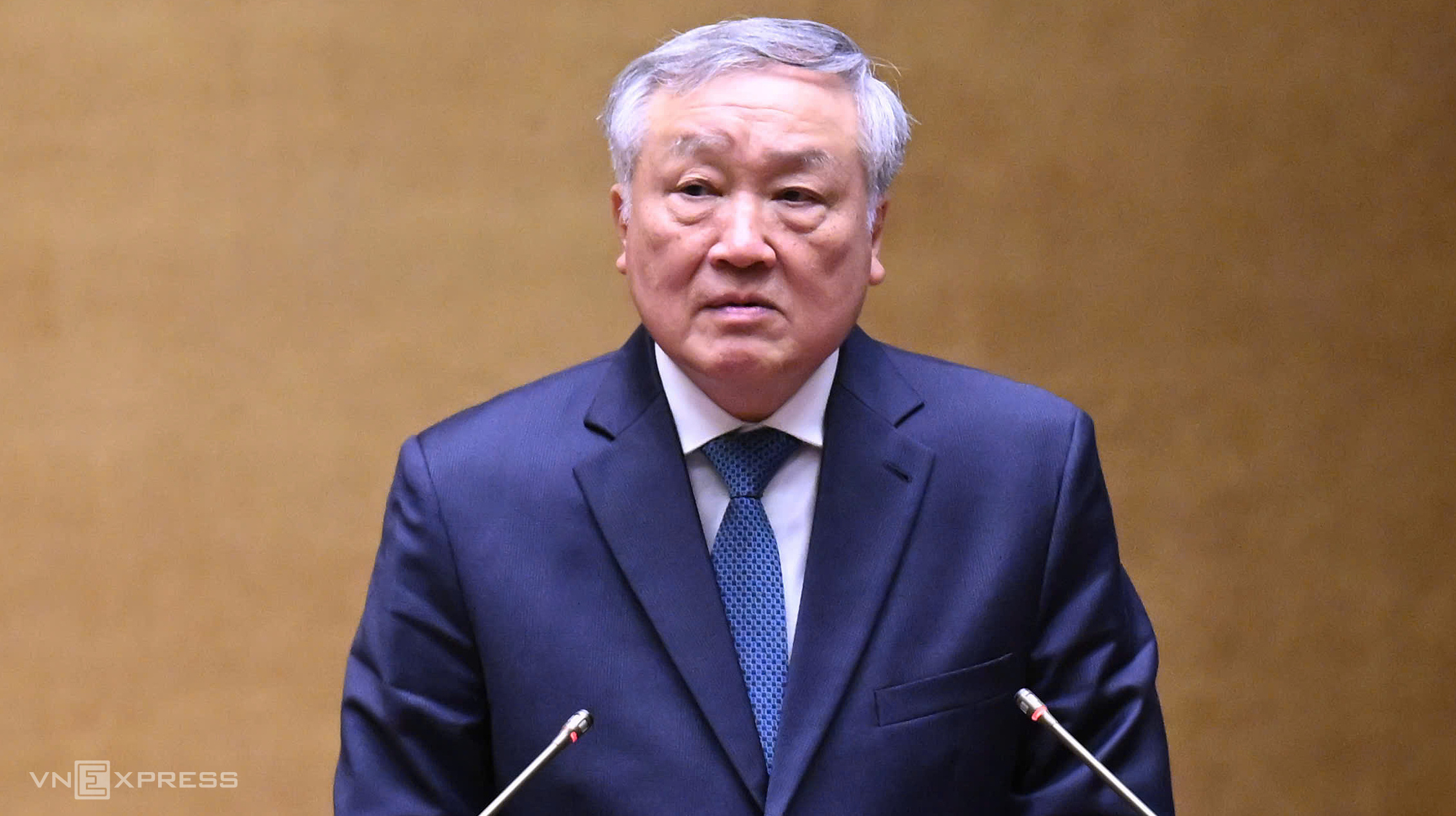 |
Vice Prime Minister Nguyen Hoa Binh speaks on 25/2. Photo: Giang Huy |
Alongside human resource development, the government is drafting and submitting a resolution to the National Assembly. This resolution will introduce breakthroughs in public-private partnership models for cultural and sports institutions, adopting approaches like public investment with private management, and private investment with public use. A Cultural and Art Fund will also be established under a public-private model. Financial resources will focus on training, talent retention, applying science and technology, digital transformation, and commissioning high-value artistic works.
According to Vice Prime Minister Nguyen Hoa Binh, the policy of designating November 24 annually as Vietnam Culture Day, with employees receiving full paid leave, will be codified into law. The government is drafting new laws on artistic activities, literature, copyright, and the cultural industry. Concurrently, it will amend the Law on Publication, the Law on Physical Education and Sports, the Law on Tourism, the Law on Libraries, the Law on Cinema, and the Law on Cultural Heritage. Regulations on fine arts, photography, and exhibitions, currently governed by sub-law documents, will also be reviewed and refined to address legal gaps.
The government is issuing a decree on commissioning and disseminating high-value works. It is also developing a decree on digital cultural infrastructure, data management, and digital cultural spaces. The National Cultural Index (V-Culture Index), along with a statistical index measuring the contribution of cultural industries to economic growth, will be established to quantify culture's role.
The entire national heritage system will be digitized and connected to the national cultural data infrastructure. A digital cultural platform will be developed to provide online library, museum, and performance services. The model "each heritage - one story - one digital product" will be implemented, and a controlled experimental mechanism for cultural activities will also be applied.
Heritage urban chains will be developed in Hanoi, Quang Ninh, Ninh Binh, and Hue. Vietnam aims to develop 5-10 national brands to lead the cultural industry and tourism. Land will be allocated to establish cultural industry centers, film studios, and creative spaces. The National Book Award will be elevated into a large-scale event series, promoting reading culture and the publishing market.
The annual state budget will allocate a minimum of 2% of total expenditure to culture, distributed in a focused manner and linked to output efficiency. The government is developing a national cultural infrastructure investment map, prioritizing addressing "white zones" of basic institutions and investing in national-scale facilities such as museums, theaters, and art centers.
In the area of international integration, Vietnam will prepare dossiers to nominate five more world cultural and natural heritage sites. It will establish one to three Vietnamese cultural centers in strategic partner countries and issue a foreign cultural strategy until 2030, with a vision to 2045. A multilingual communication campaign will be launched to promote the national image, and support will be provided for translating and publishing 200 literary and artistic works abroad each year.
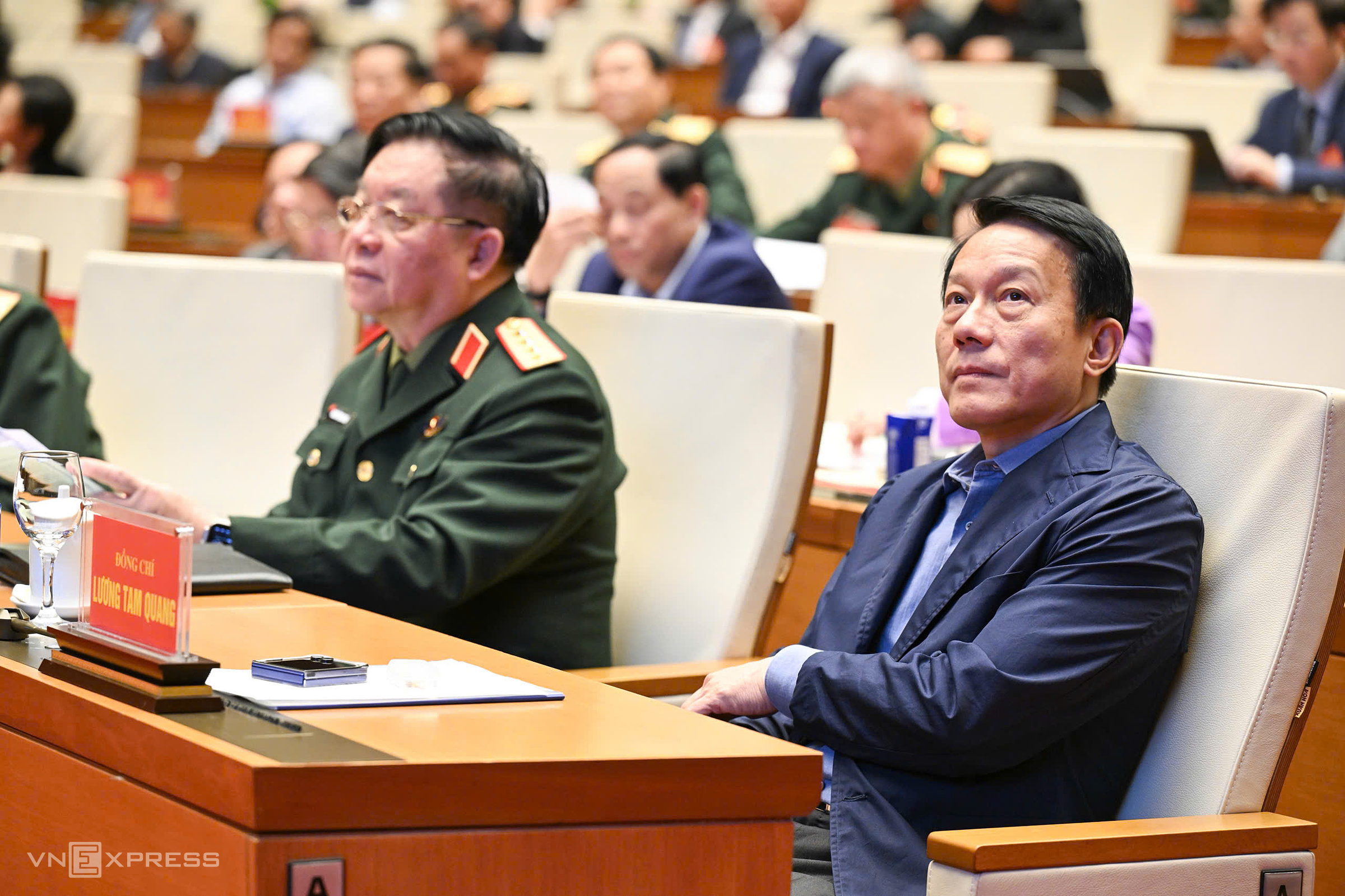 |
General Nguyen Trong Nghia, Chairman of the General Political Department of the Vietnam People's Army, and General Luong Tam Quang, Minister of Public Security, at the conference on 25/2. Photo: Giang Huy |
Smart vertiport construction to develop low-altitude economy
Regarding Resolution 79 on state economic development, Vice Prime Minister Nguyen Hoa Binh stated that the government will review and amend the Land Law. This revision aims for strong decentralization, reclamation of idle or wasted land, and integration of underground space planning with urban planning. Legislation on basic surveys, oil and gas exploitation, and offshore wind power will also be refined.
A rare earth strategy is being developed, and superior mechanisms are being established to pilot the development of space and low-altitude economies. Smart vertiport infrastructure will be invested in through public-private partnerships to develop ground infrastructure for the low-altitude economy.
New taxes related to assets and carbon emissions are being researched for application in line with international practices. The Vice Prime Minister stated, "The principle of minimizing the integration of social policies into budget revenue policies will be established."
State-owned enterprises will be evaluated based on final results, considering assigned objectives, tasks, and financial and non-financial indicators. Accounting will separate business production tasks from political and defense tasks. Modern corporate governance principles, aligned with OECD standards, will be applied, shifting from pre-audits to post-audits. Piloting the recruitment of directors for some enterprises is also under consideration.
The government is developing mechanisms to allow leading enterprises to use all revenue from divestment for reinvestment. It will also issue mechanisms for the Vietnam Asset Management Company to participate in bad debt resolution based on market principles. Mechanisms for the operation and finance of the State Capital Investment Corporation will be developed, aiming to form a national investment fund. State-owned enterprises are required to lead in mergers and acquisitions involving core technology transfer.
Vu Tuan