On 24/2, a reddish-brown water streak tens of meters wide appeared at Tam Quan beach (Thien Chanh hamlet, Hoai Nhon Bac ward, formerly Hoai Nhon town, Binh Dinh province), creating a striking contrast against the blue sea.
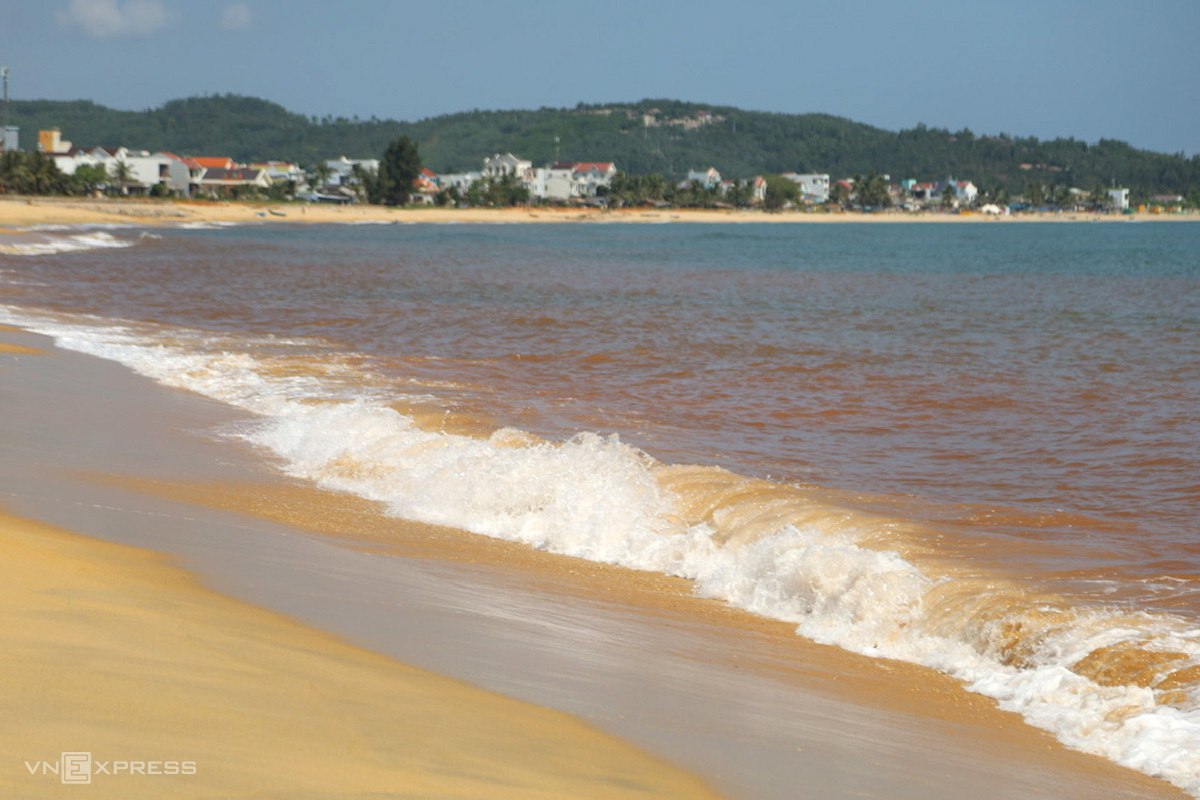 |
Tam Quan beach shows a brown water band over one kilometer long. Photo: Tran Hoa |
The phenomenon has raised concerns among many about its impact on the environment and fishermen's livelihoods. Nguyen Thi Chau, a coastal restaurant owner, stated that this situation has been ongoing for many months. According to her, there was once a red dirt road near the shore, which was destroyed by a storm last year, causing the seawater to encroach further inland. She suggested the water color might be due to mud from the eroded land mixing with the sea.
Phan Ngoc Tuan, Deputy Chief of Office of the Hoai Nhon Bac Ward People's Committee, suggested this could be a "red tide", also known as an algal bloom. However, he emphasized that the exact cause and extent of the impact require verification by specialized agencies. "This is the first time the locality has recorded such a change in sea color," he said.
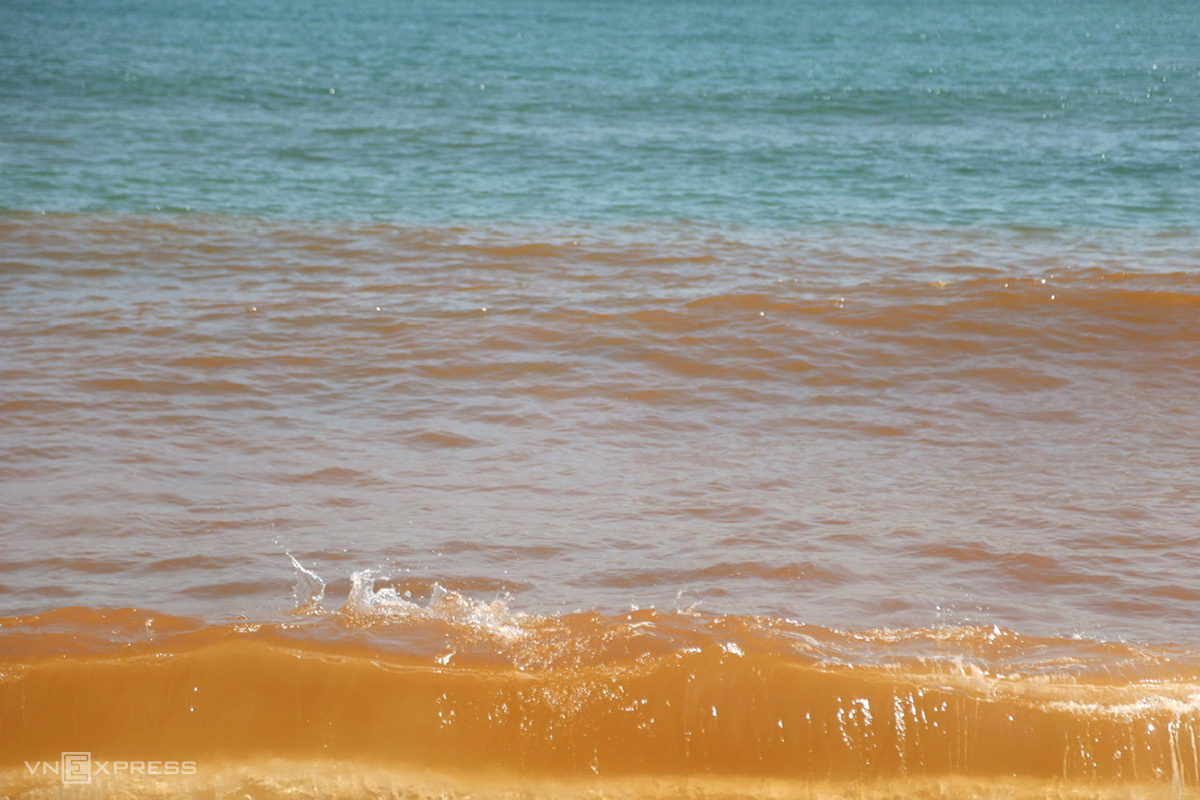 |
The reddish-brown water is believed to be a red tide, or algal bloom, appearing at Thien Chanh beach. Photo: Tran Hoa |
Red tide is a phenomenon where algae grow densely in marine, estuarine, or freshwater environments, causing the water surface to change color to red, pink, purple, or green. Depending on the species, algae can produce toxins, reduce oxygen, and cause the death of fish and marine organisms. Humans risk being affected if they consume contaminated seafood.
Tran Hoa