Thanh Hoa was a crucial strategic location during the war against the US, serving as both a significant rear base and a direct supply route for the southern battlefield. From 1965, after the failure of the Special War strategy, the US military expanded its air and naval attacks on the North to sever supply lines to the battlefield.
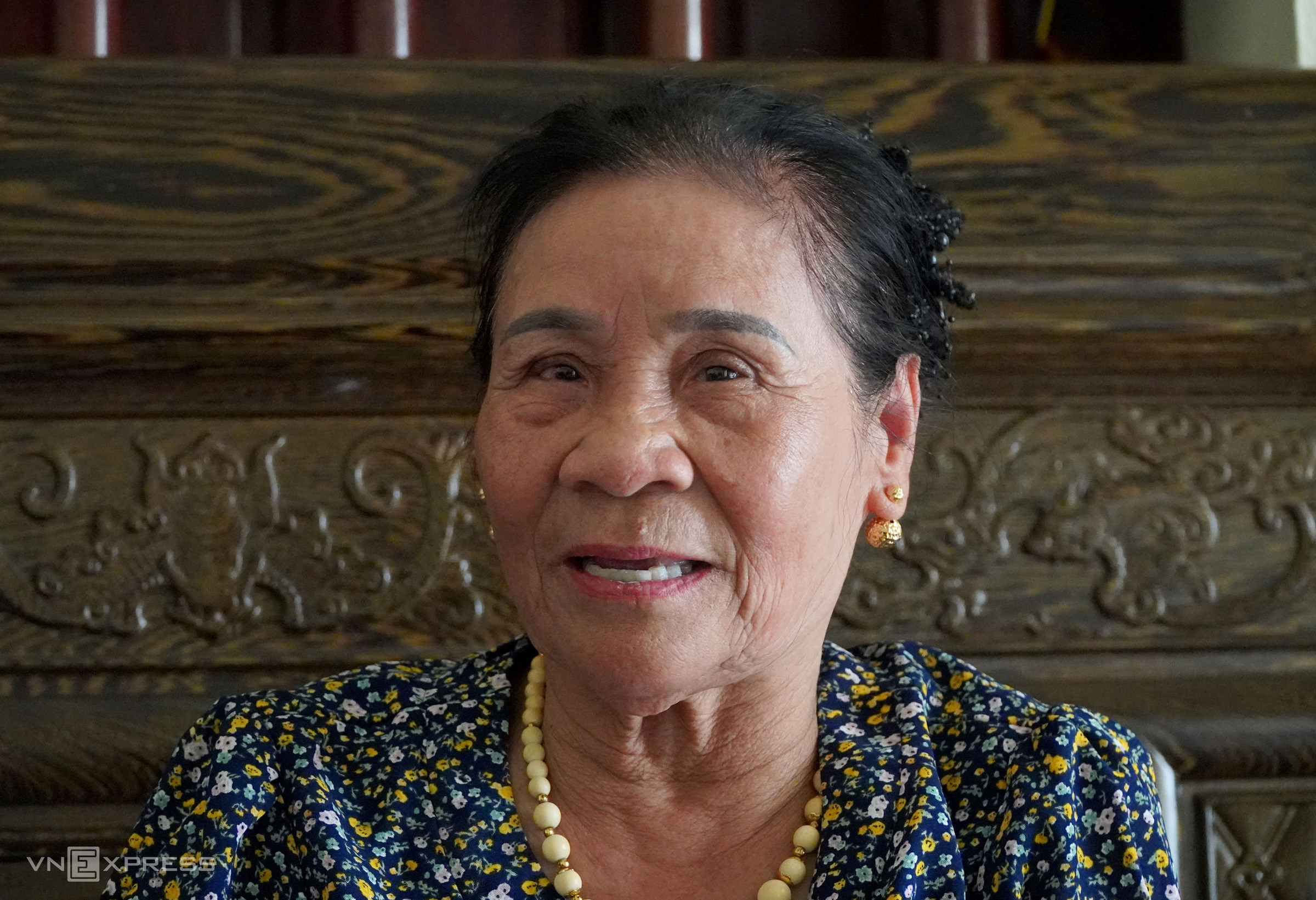 |
Hoang Thi Moi, former platoon leader of the Hoa Loc female militia platoon, recounts the confrontation with the US air force in the summer of 1967. Photo: Le Hoang
Hau Loc, a coastal district in northern Thanh Hoa province, became a key target for attacks. The area contained many vital transportation routes, food warehouses, ferry terminals, and inland waterways connecting to logistical hubs. From 1966-1967, US aircraft continuously bombed and shelled this area.
In response, the Provincial Party Committee and the Military Command of Thanh Hoa province decided to strengthen the people's air defense system, establishing local militia and self-defense units. On 19/5/1967, the Hoa Loc female militia platoon was formed, comprising 14 young women aged 18 to 20.
On 1/6/1967, the platoon was equipped with three 12.7 mm anti-aircraft guns, tasked with protecting the skies, warehouses, and river and sea transport routes. Most of the female militia members were still students or cooperative workers, with incomplete training, yet they had to quickly enter combat.
"We planned for 10 days of training, but after just over five days of theory and no practical exercises, we received orders to return to active duty due to intense US bombing", recalled Hoang Thi Moi, 77, former platoon leader of the Hoa Loc female militia platoon.
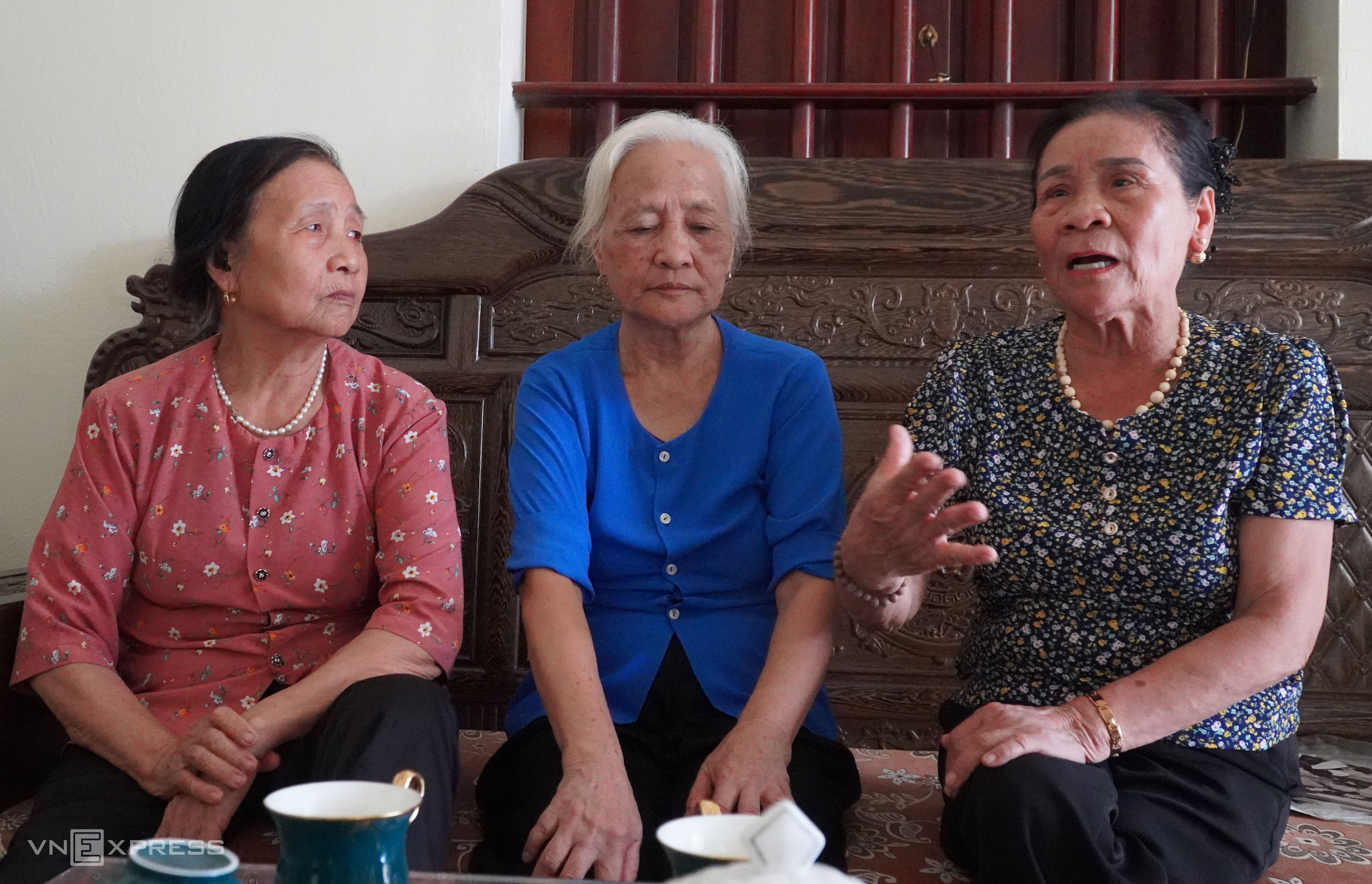 |
Moi (right) and two comrades revisit memories from the Dong Ngan battlefield nearly 60 years ago. Photo: Le Hoang
Memories of confronting the US air force
The Dong Ngan battlefield in Hoa Loc commune was where the female militia platoon first faced US aircraft. On 6/6/1967, as two groups of US air force planes flew low along the Len River, diving to drop bombs, the young women opened fire for the first time.
"Everyone was nervous and lacked experience, so we missed the targets", Hoang Thi Moi said. Immediately afterward, the entire platoon debriefed, analyzing each action from estimating altitude and distance to coordinating between gun crews.
At 15h on 16/6/1967, at the same battlefield, the Hoa Loc female militia platoon entered its second battle. When the second plane dove into firing range, the order to open fire was given by Deputy Platoon Leader Trinh Thi Can. Three 12.7 mm guns fired simultaneously.
"After 27 rounds, the AD-4 caught fire, trailing a column of black smoke before crashing into the sea", Moi remembered. That was the first time a female militia unit in the North shot down a US plane with infantry weapons.
The victory quickly spread, becoming a symbol of the courageous fighting spirit of Vietnamese women. On 16/7/1967, President Ho Chi Minh sent a letter of commendation and awarded badges to the Hoa Loc female militia platoon. "We read the letter right by the gun emplacement. Everyone vowed to fight even better to be worthy of Uncle Ho's trust", said Nguyen Thi Thu, former gun crew leader.
After the initial victory, the platoon continued training and maintaining readiness under harsh conditions. During the day, they fought; at night, when there were no enemy planes, the young women would tend to rice paddies, weed, and harvest potatoes and cassava to sustain the unit. The fields near the battlefield were taken over by the platoon, serving as both cultivation areas and defensive lines.
On 2/11/1967, when the US air force attacked De Bridge, a vital traffic junction more than 2 km from the Dong Ngan battlefield, the Hoa Loc female militia platoon achieved another success, shooting down an additional US plane and receiving the First Class Military Exploit Order from President Ho Chi Minh.
In the years that followed, the war intensified. In 4/1972, the US launched its second bombing campaign against the North, using B-52 strategic bombers. On the Hoa Loc battlefield, the female militia members maintained combat readiness. On 30/7/1972, the platoon coordinated with other air defense units, creating a multi-layered fire net, shooting down another US jet.
Pham Thi Nghi, a former soldier of the platoon, simply stated: "We did not think of ourselves as heroes. When the planes came, there was only one thought: we had to shoot, we had to keep our village and warehouses safe."
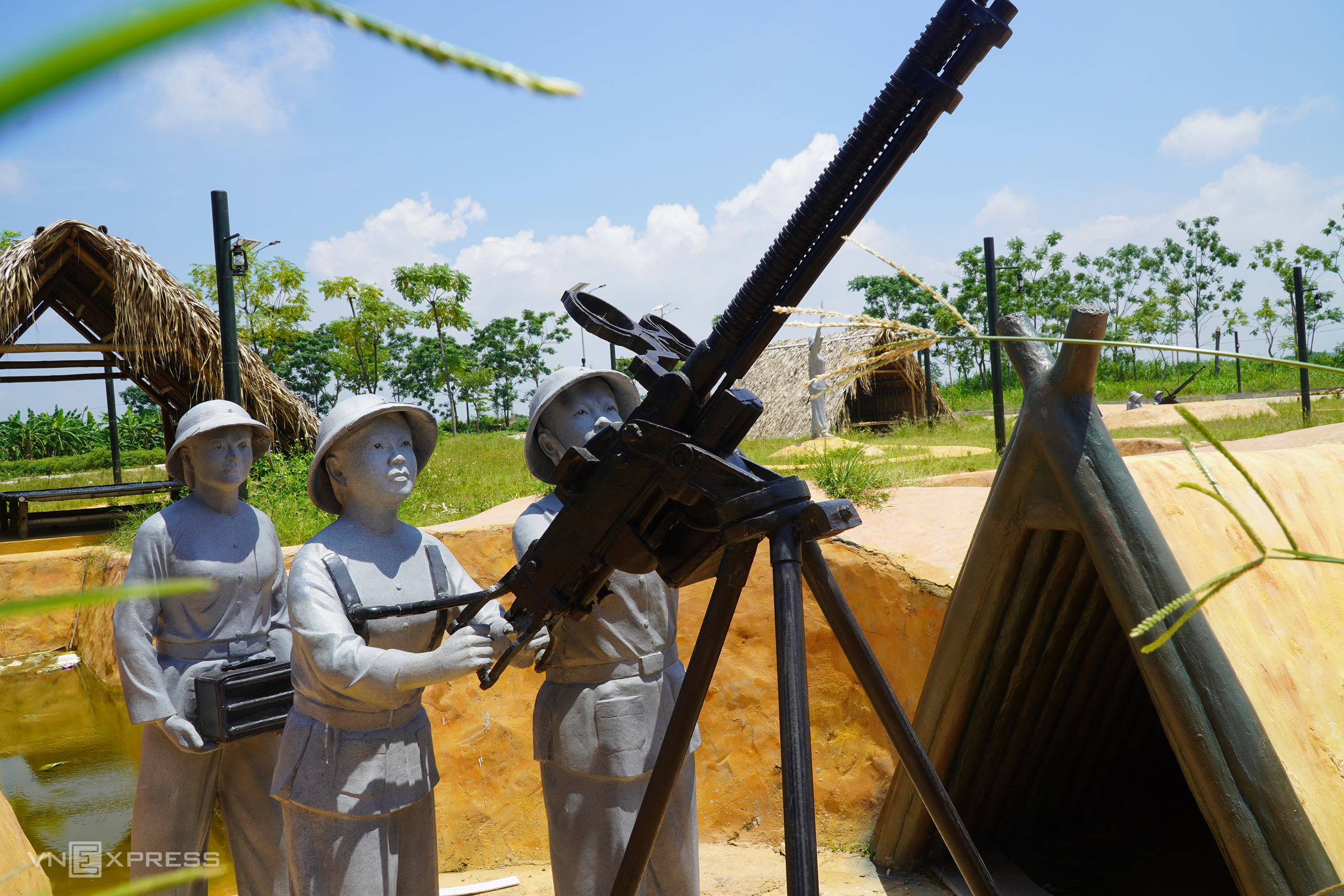 |
A replica of the 12.7 mm cannon used by the Hoa Loc female militia platoon to shoot down three US planes from 1967-1972. Photo: Le Hoang
With a record of shooting down three modern US air force planes in more than 100 battles, in 9/1973, the Hoa Loc female militia platoon was awarded the title of Hero of the People's Armed Forces, along with many other high honors. Can and Moi were invited to visit and share their stories of shooting down US planes in socialist countries like the Soviet Union and Chile.
After the 1973 Paris Agreement, the Hoa Loc female militia platoon essentially completed its mission but remained on standby until after 30/4/1975, when it was disbanded.
In 1991, the Dong Ngan battlefield, part of the Hoa Loc historical and cultural complex, was recognized as a provincial-level historical and cultural relic. In 2023, authorities began a project to build the Dong Ngan Battlefield Historical Relic Area and a monument to the Hoa Loc female militia platoon, covering an area of more than 1,5 hectares. By 2/2026, the construction was largely complete, becoming a site for tourism and historical education.
Le Hoang