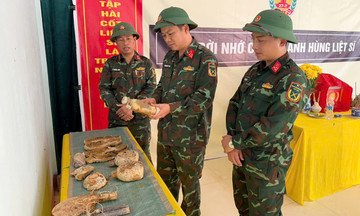
From January 1 to 4, a team from Economy-Defense Corps 337, Military Region 4, responsible for repatriating fallen soldiers' remains, excavated two sets of remains in Ta Rung hamlet, Khe Sanh commune. The remains were found at a depth of 0,8-1,2 meters, with bones still quite intact, wrapped in full canvas and parachute cord.
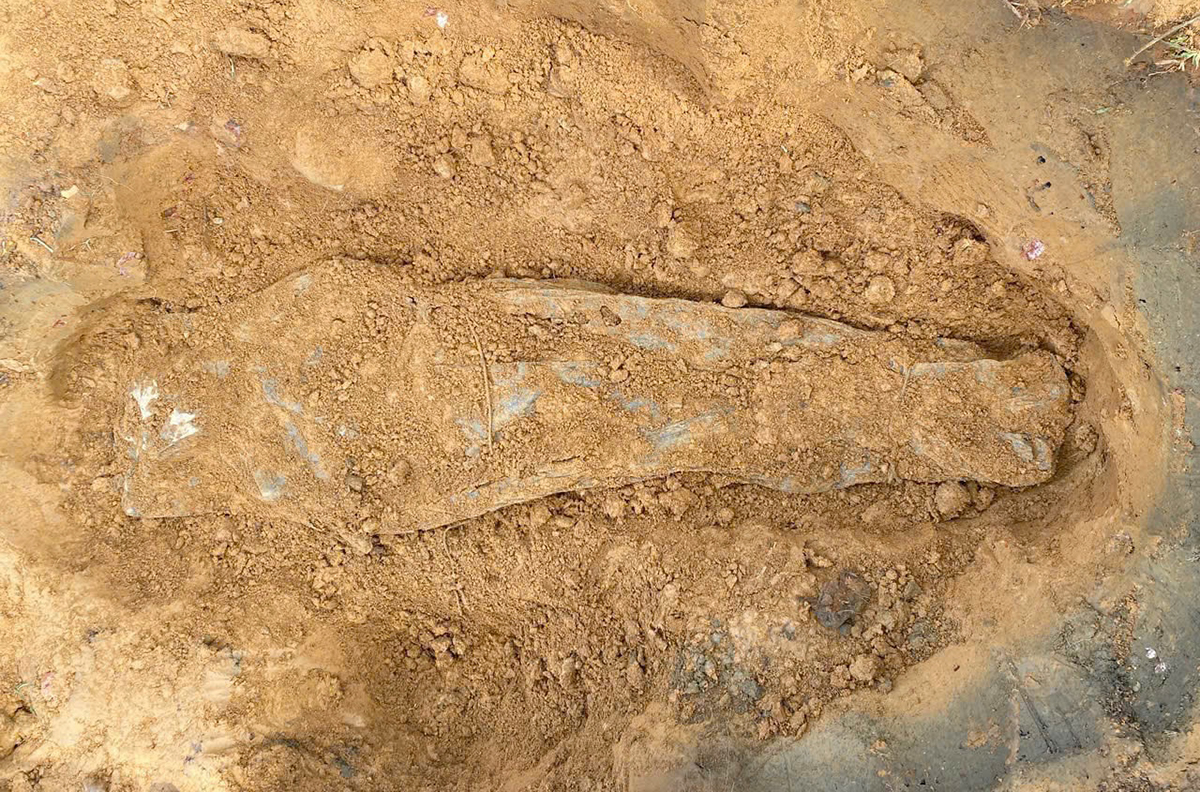 |
Fallen soldier's remains wrapped in canvas and parachute cord. Photo: Anh Tuan |
Following the discovery, search teams expanded their survey of the surrounding area. The two sets of remains were then moved to the Khe Sanh commune Spiritual-Cultural Area to be honored, preserved, and await official identification.
During the Resistance War against the US, Khe Sanh was an area bordering Laos, holding a strategic position. The US military once established the Khe Sanh base and Ta Con airfield to cut off supply lines to the southern battlefield. The Liberation Army organized many significant battles here during the Road 9 - Khe Sanh campaign in 1968 and the Road 9 - Southern Laos campaign in 1971. Many cadres and soldiers sacrificed their lives in this land.
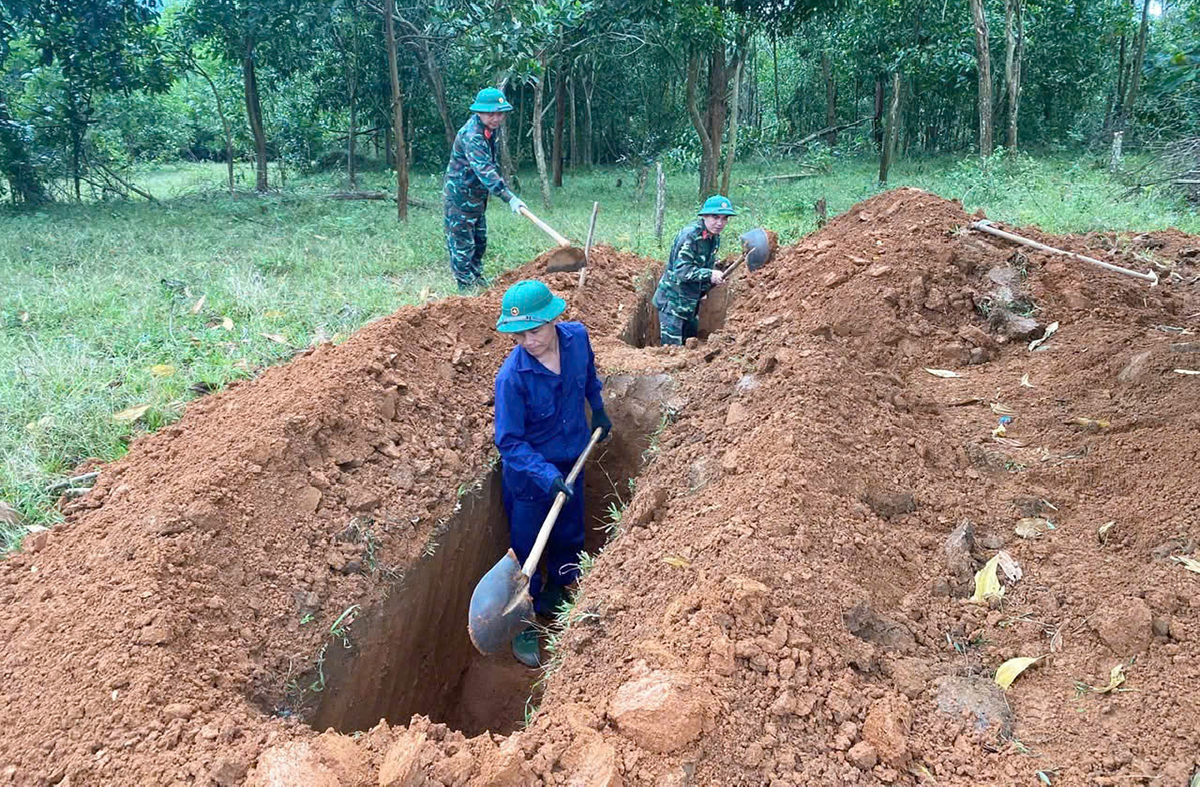 |
The area where Economy-Defense Corps 337 found the fallen soldiers' remains. Photo: Anh Tuan |
Quang Tri was a fierce battlefield during the war, situated on the temporary demarcation line after the Geneva Accords. The entire province currently has 157 fallen soldiers' cemeteries with over 74,000 graves; among them, Road 9 National Fallen Soldiers' Cemetery and Truong Son are the two largest cemeteries, with over 21,000 graves.
Dac Thanh