On 9/1, Team 584 of the Quang Tri Provincial Military Command discovered and exhumed the remains of two fallen soldiers in an acacia and melaleuca tree garden in Trai Ca village, Dakrong commune.
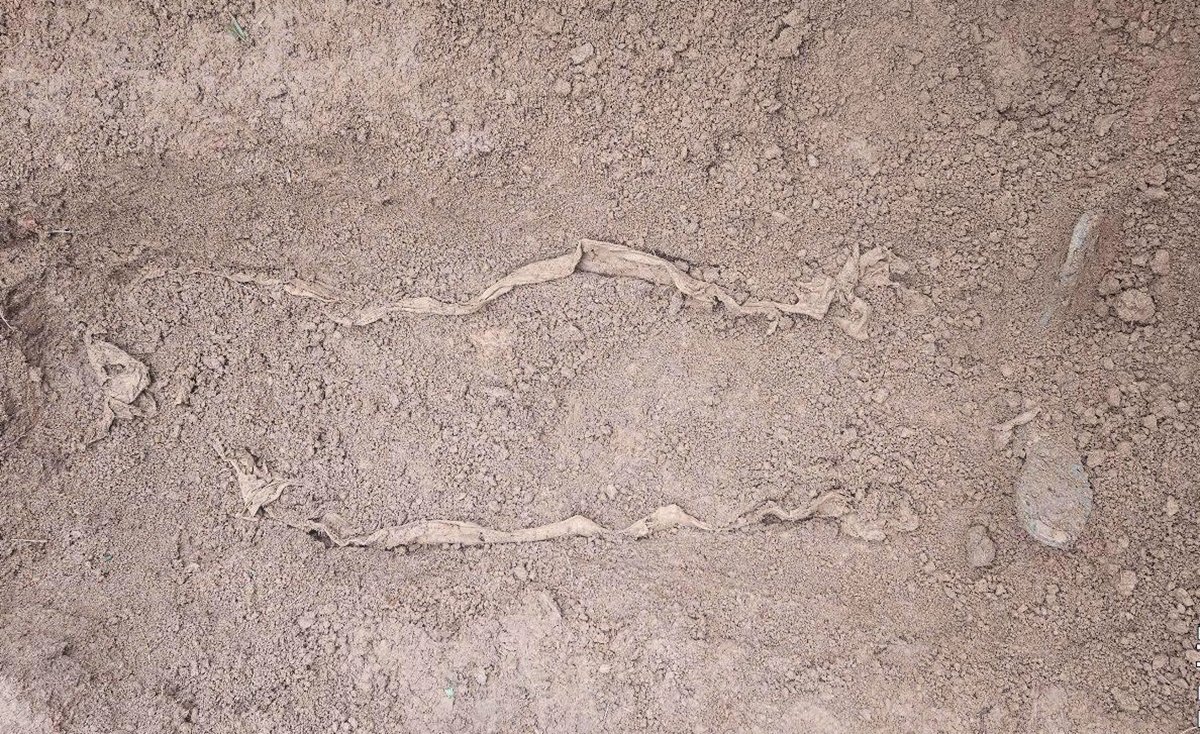 |
Fallen soldier's remains wrapped in canvas. *Photo: Team 584* |
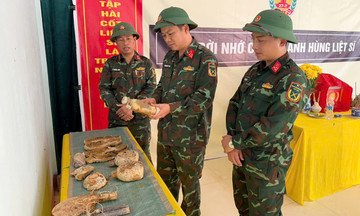
The remains were found at a depth of 0,8 to one meter, with many bone fragments wrapped in canvas. Each set of remains was accompanied by artifacts including a pith helmet, shoes, a belt, an army hammock, an ammunition magazine, AK rounds, and other personal belongings.
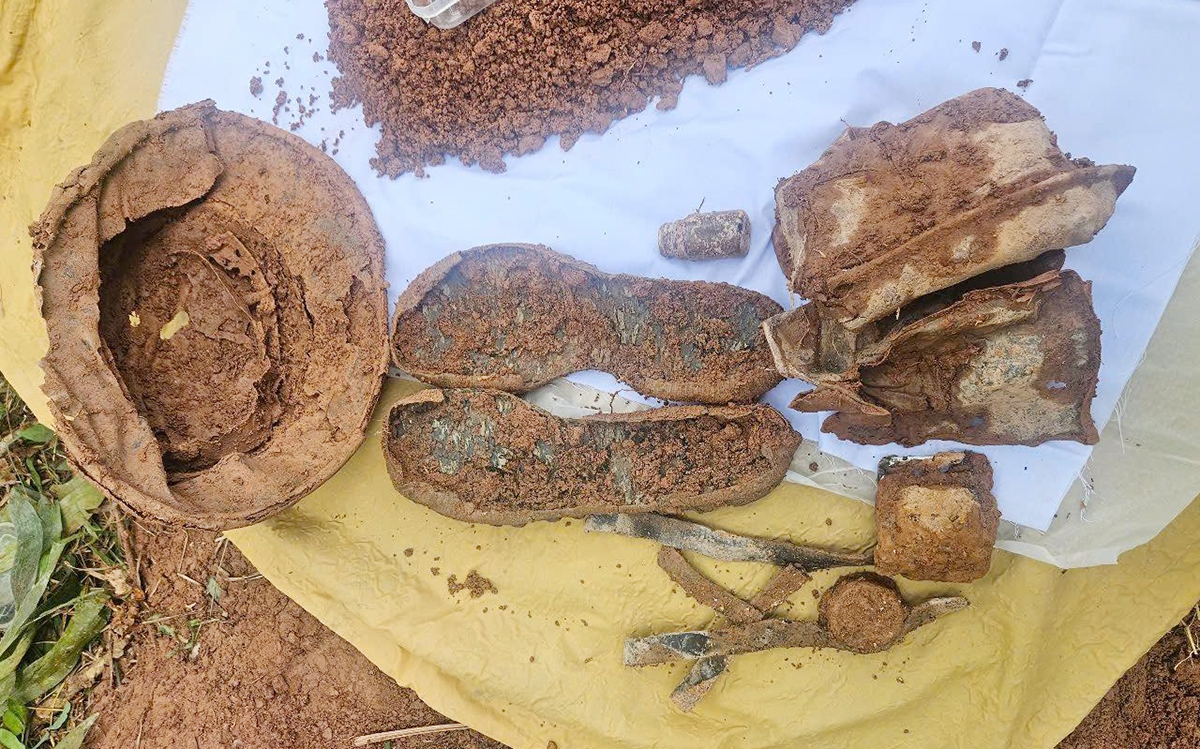 |
Mortar rounds, sandals, and many personal belongings were found with the fallen soldiers' remains. *Photo: Team 584* |
Following the exhumation, the search team expanded the survey area.
This discovery follows a previous one from 1/1 to 4/1, when the Team for the Collection of Fallen Soldiers' Remains, Economic-Defense Group 337, Military Region 4, exhumed two sets of remains in Ta Rung village, Khe Sanh commune. These remains were found at a depth of 0,8 to 1,2 meters; the bones were relatively intact, wrapped in whole canvas sheets and parachute cord.
During the anti-American resistance war, Dakrong commune, bordering Laos, was home to the Ba Long war zone. Its rugged mountainous terrain made it a strategic corridor along Route 9. The area saw numerous troop movements, staging, and battles, leading to the sacrifice of many cadres and soldiers.
Quang Tri was a fierce battlefield, located on the temporary demarcation line after the Geneva Accords. The province currently has 157 fallen soldiers' cemeteries with over 74,000 graves. Among these, National Fallen Soldiers' Cemetery Road 9 and Truong Son are the two largest, holding over 21,000 graves.
Dac Thanh