On the afternoon of 8/7, chairing a meeting to implement directives from General Secretary and President To Lam following a working session with the education and training sector, Vice Prime Minister Le Tien Chau requested the Ministry of Education and Training to comprehensively review the curriculum. This review aims to meet the demands of human resource development in the new context.
He also urged localities to proactively allocate budget and mobilize legal resources to support students with textbooks, semi-boarding meals, and school supplies when conditions allow.
Alongside curriculum simplification, the Vice Prime Minister called for innovation in junior high final exam assessment methods and admission procedures. These changes should reduce student pressure while ensuring fairness and transparency.
According to him, overcoming the overemphasis on achievement must be a central task for the education sector. The Ministry of Education and Training needs to review assessment mechanisms for students, teachers, and schools. It also needs to reform examination, admission, competition, and reward processes to reduce grade pressure, prevent fraud and misconduct, and avoid the recurrence of unfortunate incidents.
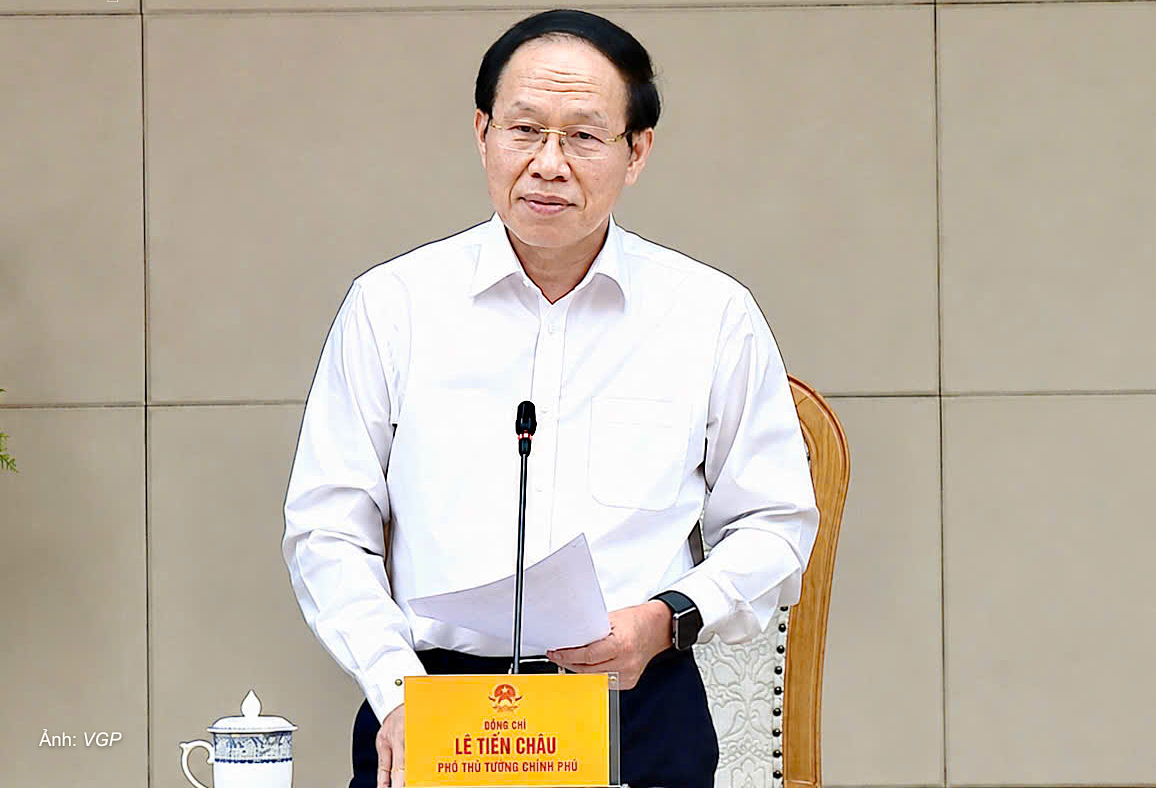 |
Vice Prime Minister Le Tien Chau. Photo: VGP
The current general education curriculum comprises 27 subjects and educational activities. Primary education includes 11 compulsory subjects and educational activities: Mathematics; Vietnamese Language; Ethics; Foreign Language one (grades 3, 4, and 5); Nature and Society (grades 1, two, and three); History and Geography (grades 4 and 5); Science (grades 4, 5); Informatics and Technology (grades 3, 4, and 5); Physical Education; Arts (Music, Fine Arts); and Experiential Activities. The two optional subjects are Ethnic Minority Language and Foreign Language one (grades 1, two).
Junior high education includes 12 compulsory subjects and educational activities: Literature; Mathematics; Foreign Language one; Civic Education; History and Geography; Natural Science; Technology; Informatics; Physical Education; Arts (Music, Fine Arts); Experiential and Career Orientation Activities; and Local Education Content. The two optional subjects are Ethnic Minority Language and Foreign Language two.
High school education includes 8 compulsory subjects and activities: History; Literature; Mathematics; Foreign Language one; Physical Education; National Defense and Security Education; Experiential and Career Orientation Activities; and Local Education Content. The two optional subjects are Ethnic Minority Language and Foreign Language two. Additionally, students choose four elective subjects from Physics, Chemistry, Biology, Informatics, Geography, Technology, Economic and Legal Education, Music, and Fine Arts.
Vu Tuan