The National Assembly Standing Committee recently approved amendments to the Ordinance on Preferential Treatment for People with Meritorious Services to the Revolution, significantly broadening the conditions for recognizing martyrs. Key changes include relaxing criteria for war invalids who die due to recurring injuries and individuals who sacrifice their lives while performing duties under special circumstances.
Under previous regulations, war invalids, or those eligible for similar policies with a body injury rate of 61% or more, could only be considered for martyr recognition if they had a hospital medical record detailing treatment for a recurring injury and a death review record confirming the recurrence as the primary cause of death. The Government noted this requirement often posed challenges in practice. Many severely injured war invalids, particularly those with an 81% or higher body injury rate, were often brought home by their families or transferred to care centers for meritorious individuals to pass away according to their wishes when their health deteriorated. Such cases frequently lacked the required hospital documentation, even when their deaths were directly linked to war-related injuries.
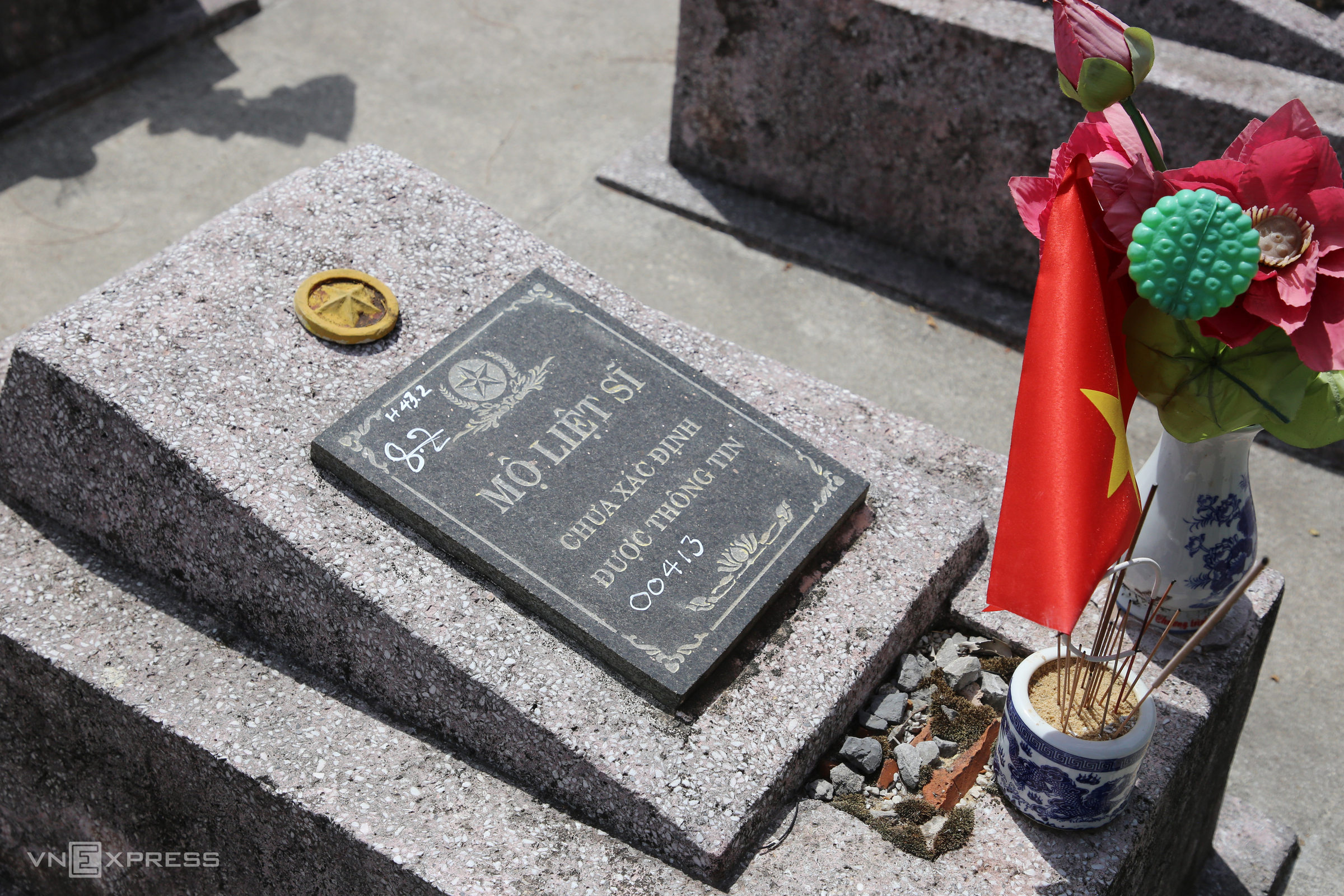 |
An unidentified grave in Quang Tri province. Photo: Dac Thanh
To address this, the revised Ordinance now allows for martyr recognition for war invalids or those eligible for similar policies with an 81% or higher body injury rate who pass away, or those with a 61% to under 81% injury rate whose death is attributed to a recurring injury. The Government will provide detailed guidance on the necessary documentation for these cases.
The draft also revises the conditions for recognizing martyrs and war invalids for individuals performing national defense and security duties. Previously, the Ordinance specified numerous separate scenarios, such as bravely undertaking urgent or dangerous tasks, direct involvement in combat training or hazardous duties, or suffering untreatable illness or accidents while on duty in border, sea, or island areas. The amended Ordinance consolidates these into a more general condition: individuals who sacrifice their lives while "performing national defense, security, and homeland protection duties under special, difficult, dangerous conditions or in border areas, at sea, on islands as defined by the Government" will now be considered for martyr recognition. This broader approach aims to meet the evolving demands of national defense and security, establishing a more comprehensive legal framework for specific tasks encountered in practice. Additionally, the Ordinance expands the criteria for recognizing martyrs and war invalids among law enforcement personnel involved in crime prevention and control. The existing provision for "directly fighting crime" has been broadened to "directly performing crime prevention and control duties."
Beyond expanding martyr recognition, the Ordinance introduces several policies to enhance preferential treatment for meritorious individuals and their relatives. For instance, war invalids, sick soldiers, and resistance activists exposed to chemical toxins with a body injury rate of 61% to 80% will now receive annual health rehabilitation benefits, upgraded from once every two years. The Ordinance also includes caregiver allowances for those living at home, adjusts health insurance policies, and outlines benefits for relatives after a meritorious individual passes away. The Ordinance is expected to be signed, promulgated, and take effect before 27/7/2026.
Son Ha