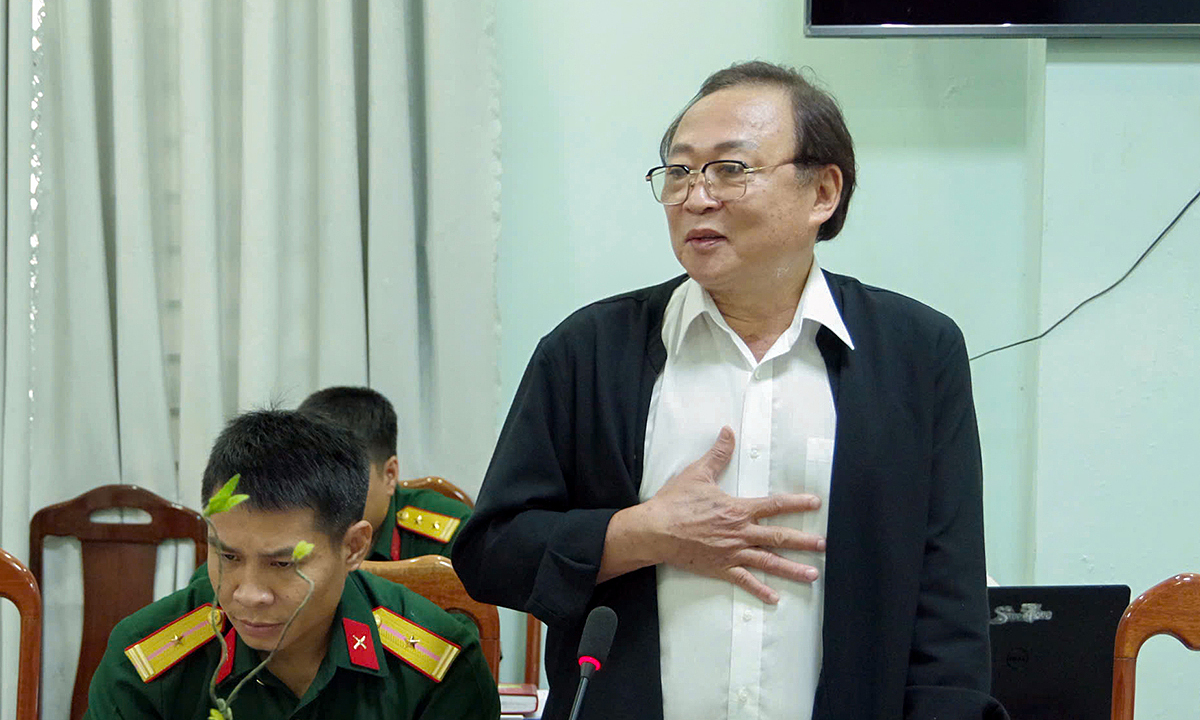
A new regulation, Decree 283, effective 10/9, mandates that employers hiring domestic help must report the employment or termination of contracts to the commune, ward, or township People's Committee. Failure to do so can result in fines ranging from 1 to 3 million VND. The decree also stipulates a warning for employers who do not issue a written contract or fail to reimburse travel expenses when a domestic worker leaves for their place of residence.
More severe penalties apply to employers who violate workers' rights. Fines of 10 to 15 million VND are imposed on employers who withhold a domestic worker's personal identification documents or fail to contribute the mandatory social insurance (BHXH) and health insurance (BHYT) amounts, which are meant for the workers to participate in these schemes independently.
 |
Workers receive hourly domestic help consultation at the Hanoi Employment Service Center, 7/2026. Photo: Hong Chieu
According to lawyer Pham Thanh Huu of Nguyen Luat & Partners Law Company Limited, current law defines domestic help as individuals who regularly perform household tasks for one or more families. These tasks include housekeeping, managing the household, childcare, caring for the sick, caring for the elderly, driving, gardening, and other family-related duties that are not commercial in nature.
Therefore, if a household hires hourly workers through a brokerage company, these individuals are not considered "domestic help" under the 2019 Labor Code. In such cases, the employer is not required to report to the commune-level People's Committee.
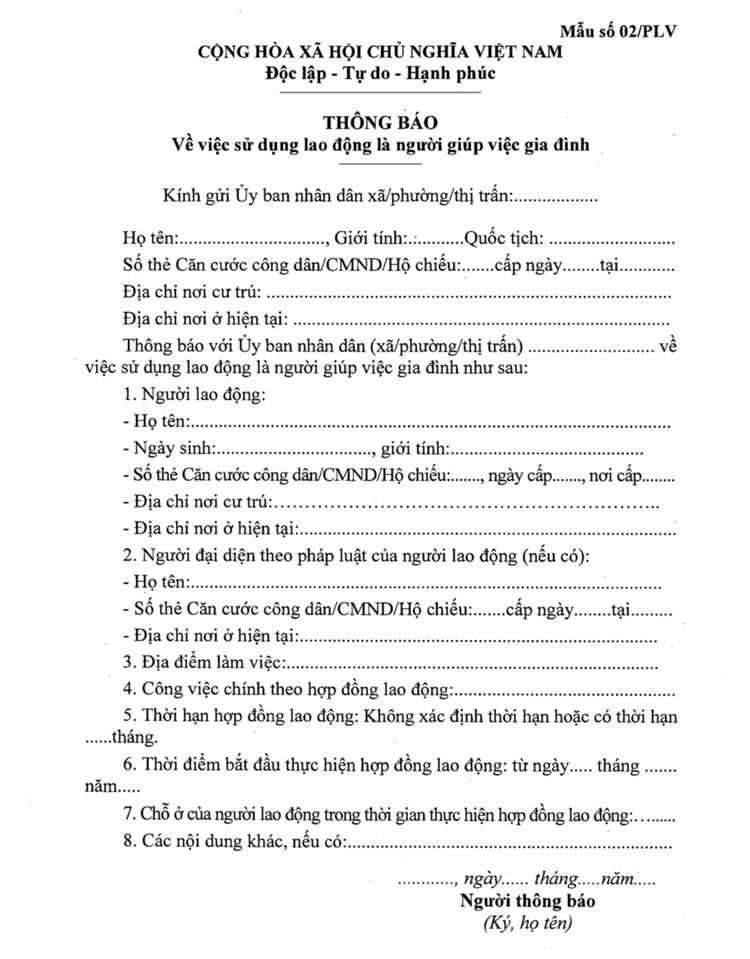
However, when a household directly recruits a domestic worker for regular employment, the employer must notify the commune-level People's Committee of the employment or termination within 10 days from the contract's signing or termination date. The required notification form is provided in an appendix to Decree 145, issued in 2020.
Form for reporting to the commune, ward, or township People's Committee on the employment or termination of domestic help contracts. Source: Decree 145/2020
 |
Furthermore, laws and guiding documents stipulate that employers are responsible for paying domestic workers an amount equivalent to the mandatory social insurance (BHXH) and health insurance (BHYT) contributions. This payment must be made concurrently with salary payments, enabling workers to participate in these insurance programs independently.
Lawyer Huu provided an example: if both parties agree on a salary of 6 million VND, excluding BHXH and BHYT contributions, the employer must pay an additional amount for BHXH and BHYT equal to 21,5% of the salary, which corresponds to 1,29 million VND, to the worker.
Beyond financial penalties, employers must also rectify any violations. This includes entering into a written contract, fully reimbursing travel expenses, returning personal identification documents, and making full payments for social insurance and health insurance, if any of these conditions were breached.
Hong Chieu