 |
In mid-march, the Hanoi Department of Construction issued several traffic diversion notices for streets to ensure safety for the construction of the localized anti-flooding project in the central and Old Quarter areas.
On Quan Su street, the construction unit erected mobile barriers made of corrugated iron combined with B40 mesh, divided into sections five to 10 m long. The excavation area is located in the middle of the road, about 3,3 m wide, for the construction of a box culvert measuring 1,6 x 1,6 m.
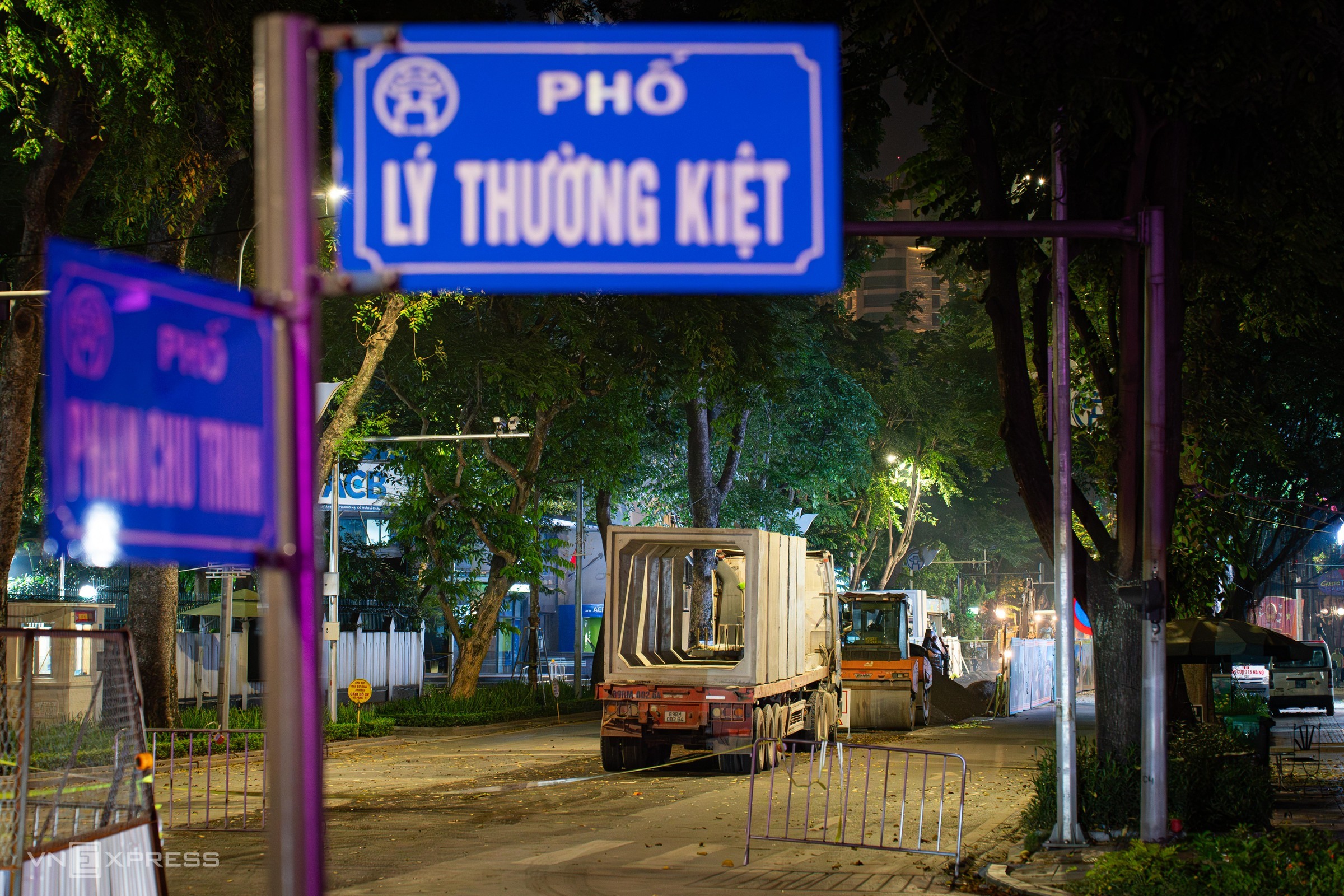 |
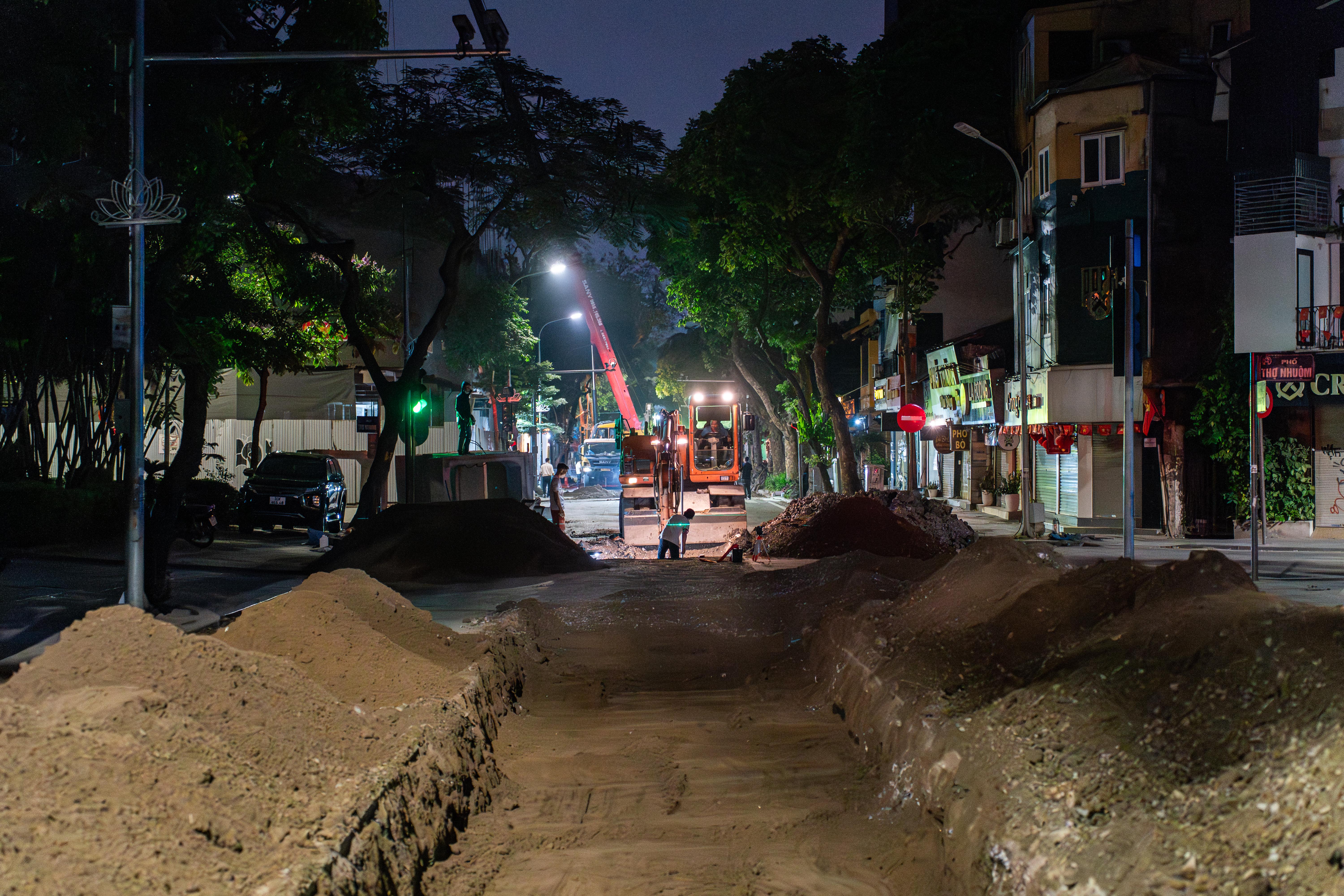
After 22h, pre-fabricated concrete blocks are transported to the construction sites in the central streets by super-heavy vehicles.
Since Hanoi prohibits trucks of two tons or more from operating during the day starting 15/1, materials are transported at night.
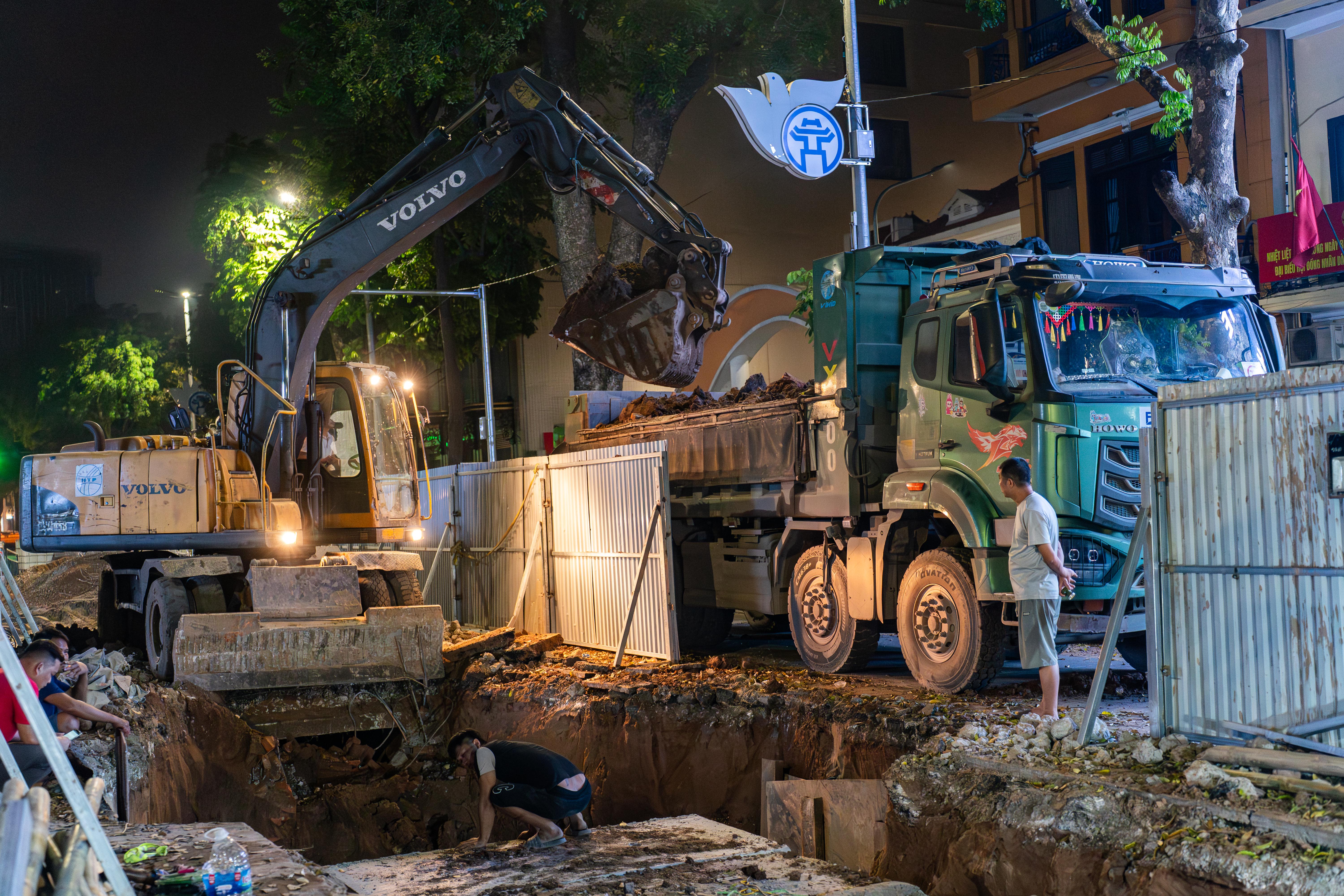
Pre-fabricated concrete box culverts are placed into position by workers using excavators. As construction progresses, the excavated soil is immediately backfilled to restore the road surface by the next morning.
At night, with less traffic, the unit utilizes the road section near the sidewalk to gather drainage pipes, facilitating installation. Five to six sections are installed each night. After lowering the culverts, workers dredge out any mud and soil that has spilled into the water conduit.
 |
Nearly one km away, on Phan Chu Trinh street, Hoan Kiem ward, the construction unit is excavating and erecting frames for concrete pouring. A section about 500 m long is barricaded at both ends.
In front of Hoang Da market, an underground regulating tank with a capacity of 2,500 m3, made of reinforced concrete, is planned to be equipped with a pump station with a capacity of 0,09 m3/s per pump. The Larsen sheet piling, foundation construction, and relocation of underground utilities have been completed. Currently, pipe installation is underway and is expected to finish around 26/4.
At the construction site, mud and soil are brought up in large bags. The project is tasked with regulating water for the Duong Thanh - Bat Dan - Nha Hoa area and began construction in february 2026.
After being brought up, workers dismantle, gather soil, stones, and waste into one area within the construction site. The 6,5 m deep underground tank gradually emerges, with the concrete pipe drainage system currently being installed inside.
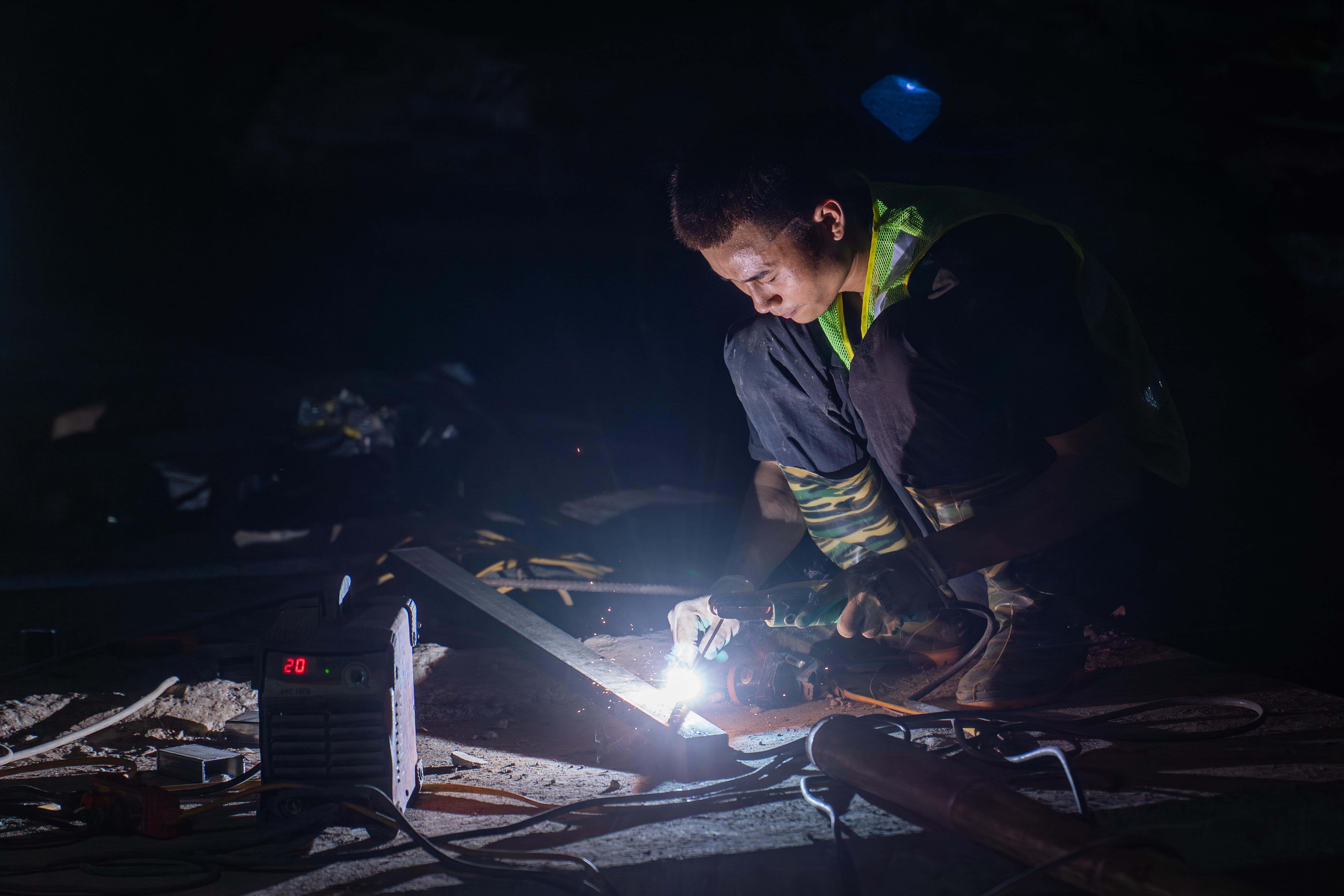 |
Workers weld long iron bars to erect fences, separating the construction area from the remaining road to ensure safety for traffic.
Previously, the Hanoi Department of Construction reviewed and temporarily reclaimed parking spaces on Phan Chu Trinh and Ly Thai To streets to facilitate construction and reduce traffic congestion.
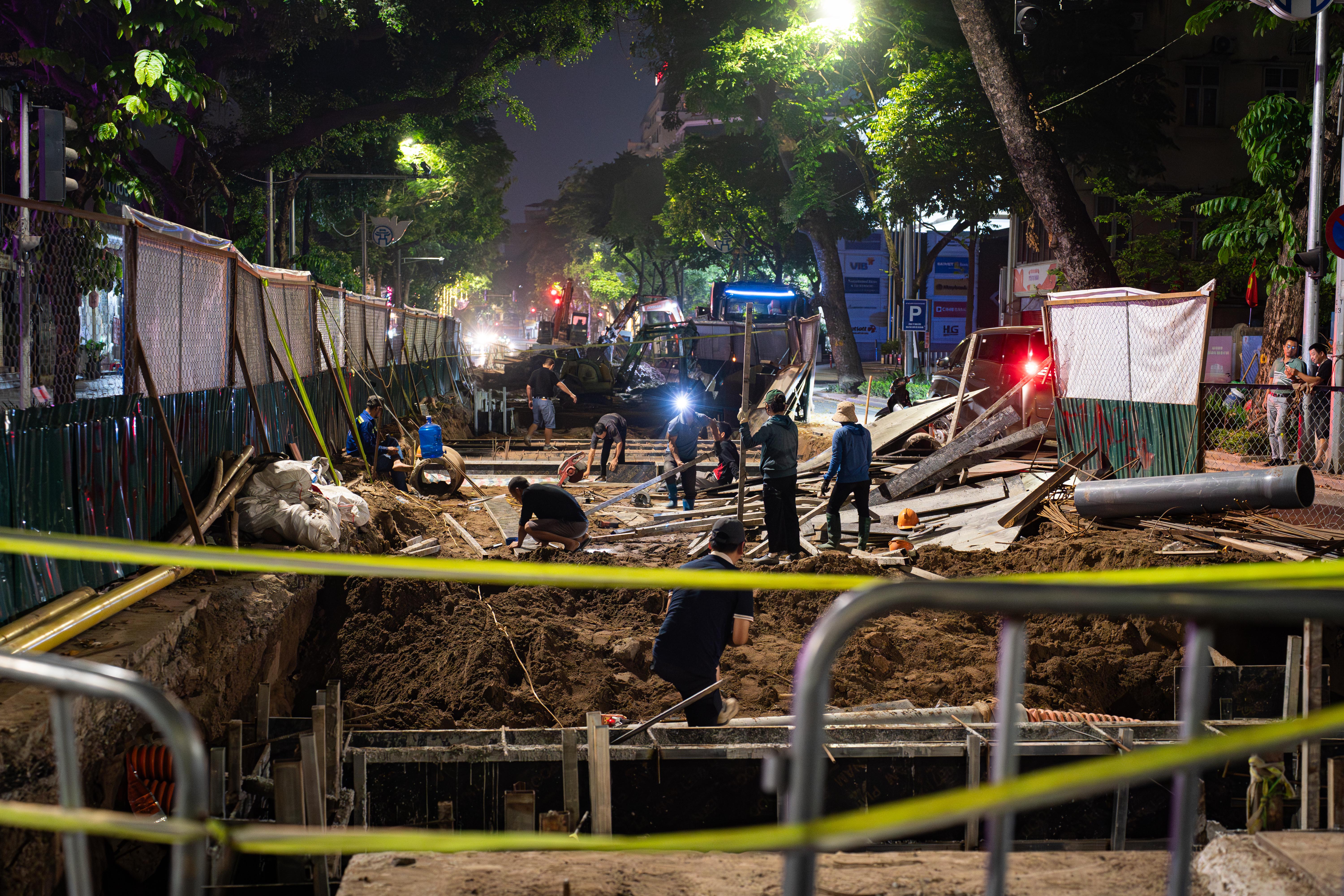 |
At the Ly Thuong Kiet - Phan Chu Trinh intersection, heading towards Hanoi University of Pharmacy, the construction unit erected barriers made of corrugated iron combined with B40 mesh, and the temporary traffic light system was halted.
The barricaded area is about 70 m long, with a road excavation width of 6 m; the remaining road surface on each side is about 3,4-4,6 m wide. On the night of 18/4, the construction site was working on frame installation and concrete pouring.
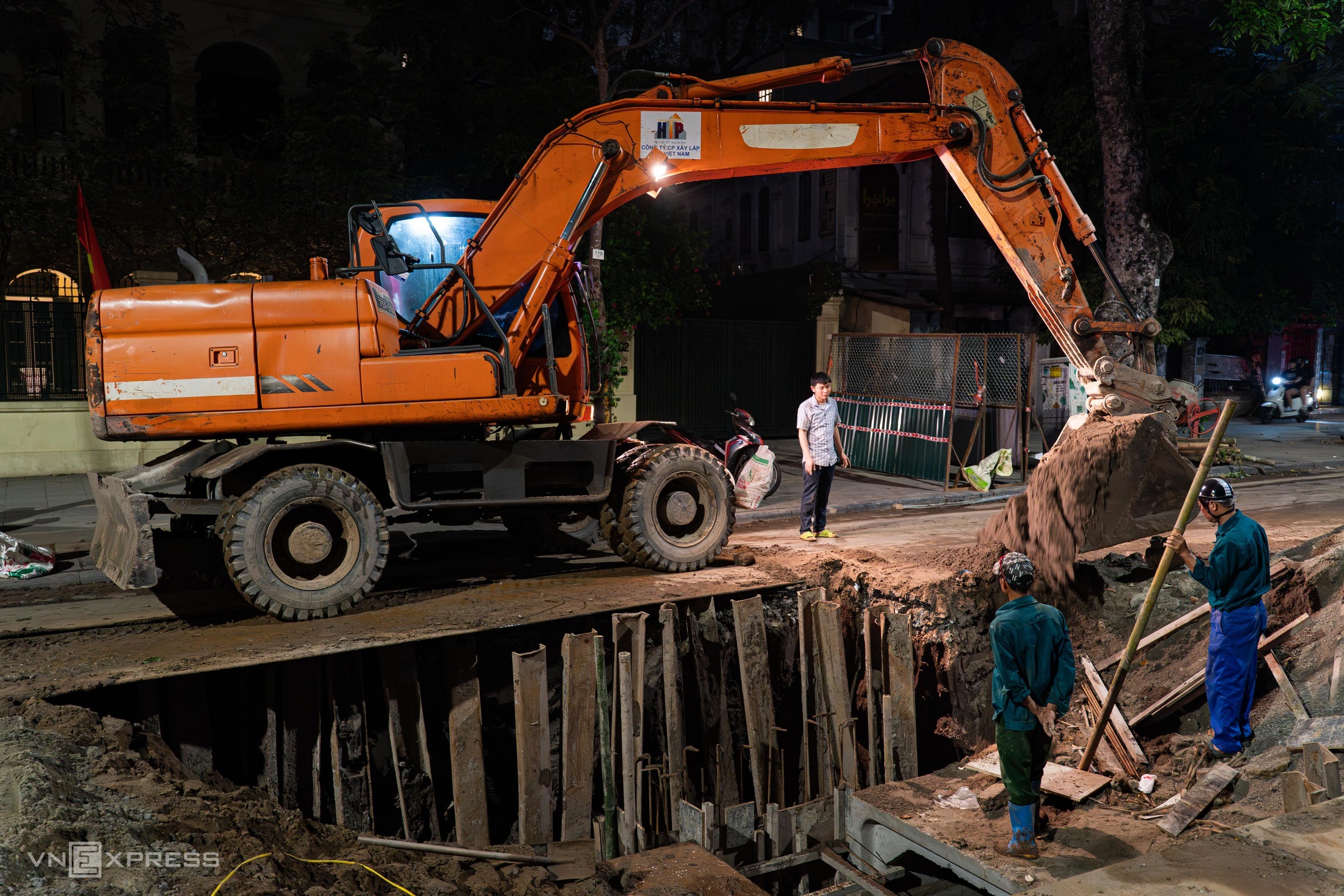 |
On Quang Trung street, machinery operates continuously along a section of approximately 400 m. As construction is completed, excavators immediately backfill the soil to restore the road surface.
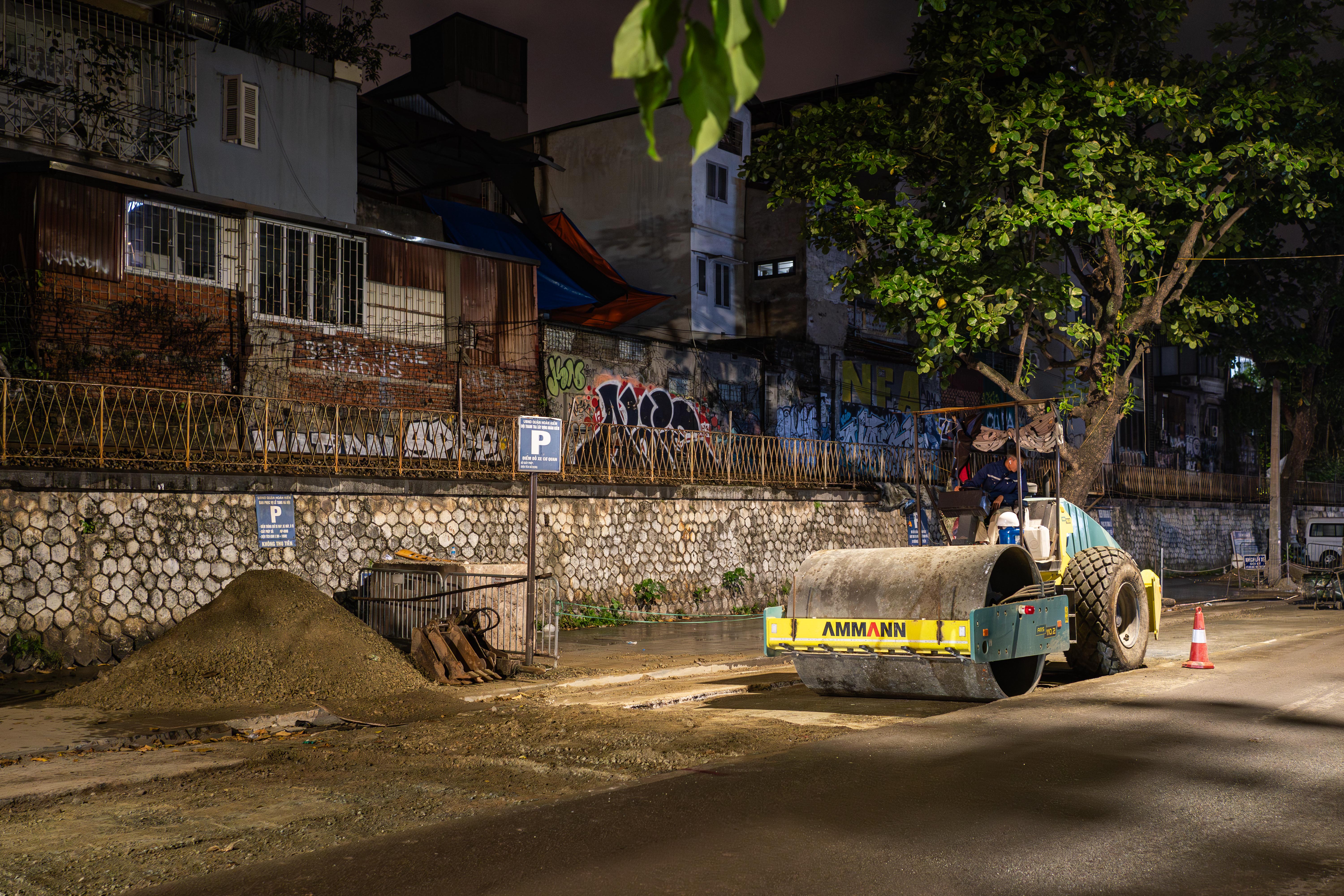 |
After each night, the road surface is restored to a rough asphalt layer, ensuring the same elevation as before moving to the next section. When about 50 m is completed, the unit will lay the finished asphalt concrete, ensuring traffic safety after removing the barriers. Barriers are removed and cleared before 5h the next morning.
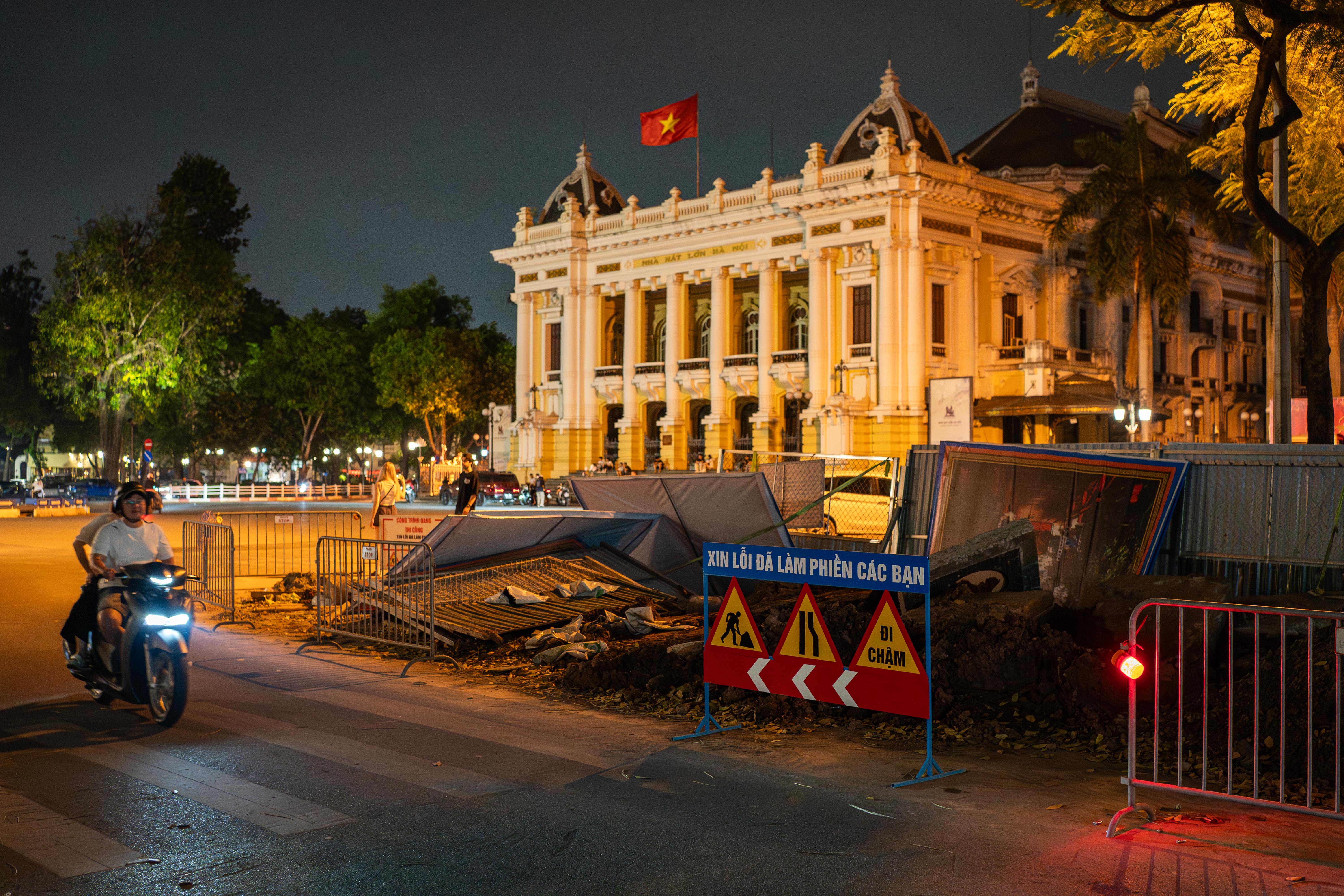 |
After construction is completed, the flower garden area in front of the Hanoi Opera House will be used as a scrap collection point.
The city is implementing 10 urgent projects totaling nearly 5,600 billion VND to address urban flooding in the area. These projects are expected to be largely completed before the 2026 rainy season.
Hoang Giang - Vo Hai.