The Can Gio biosphere reserve spans an area of approximately 75,740 hectares, with a core zone of 4,721 hectares, a buffer zone of 41,139 hectares, and a transition zone of 29,880 hectares. This area is home to a population of terrestrial and aquatic forest flora and fauna.
On 21/1/2000, UNESCO recognized Can Gio as Vietnam’s first world biosphere reserve. This designation acknowledges the biodiversity value of the mangrove ecosystem and the area’s role in the ecological structure of the coastal region.
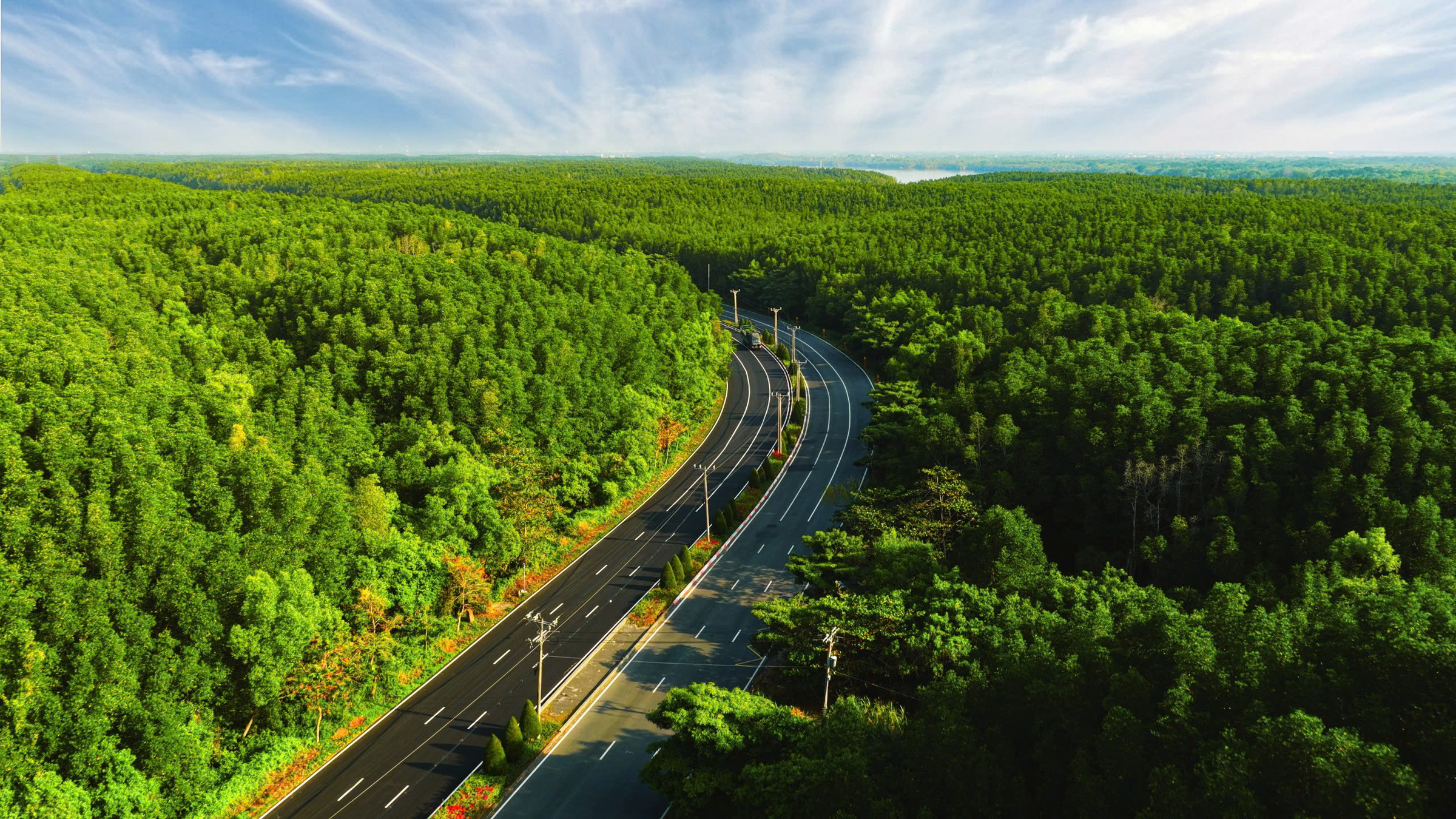 |
Rung Sac road in Can Gio. Photo: Thanh Tung |
Dense river system
One of the key factors shaping Can Gio’s natural environment is its river system. The network of rivers and canals in Can Gio is dense. Large rivers such as Soai Rap, Long Tau, Dong Tranh, and Thi Vai serve as main arteries, from which many smaller canals branch out.
These rivers carry large amounts of alluvium, sand, and nutrients. As the current slows in estuary areas, materials gradually deposit, forming coastal mudflats. This continuous process, occurring over many years, progressively expands the wetland area. Alluvium not only creates land but also provides nutrients for the mangrove ecosystem.
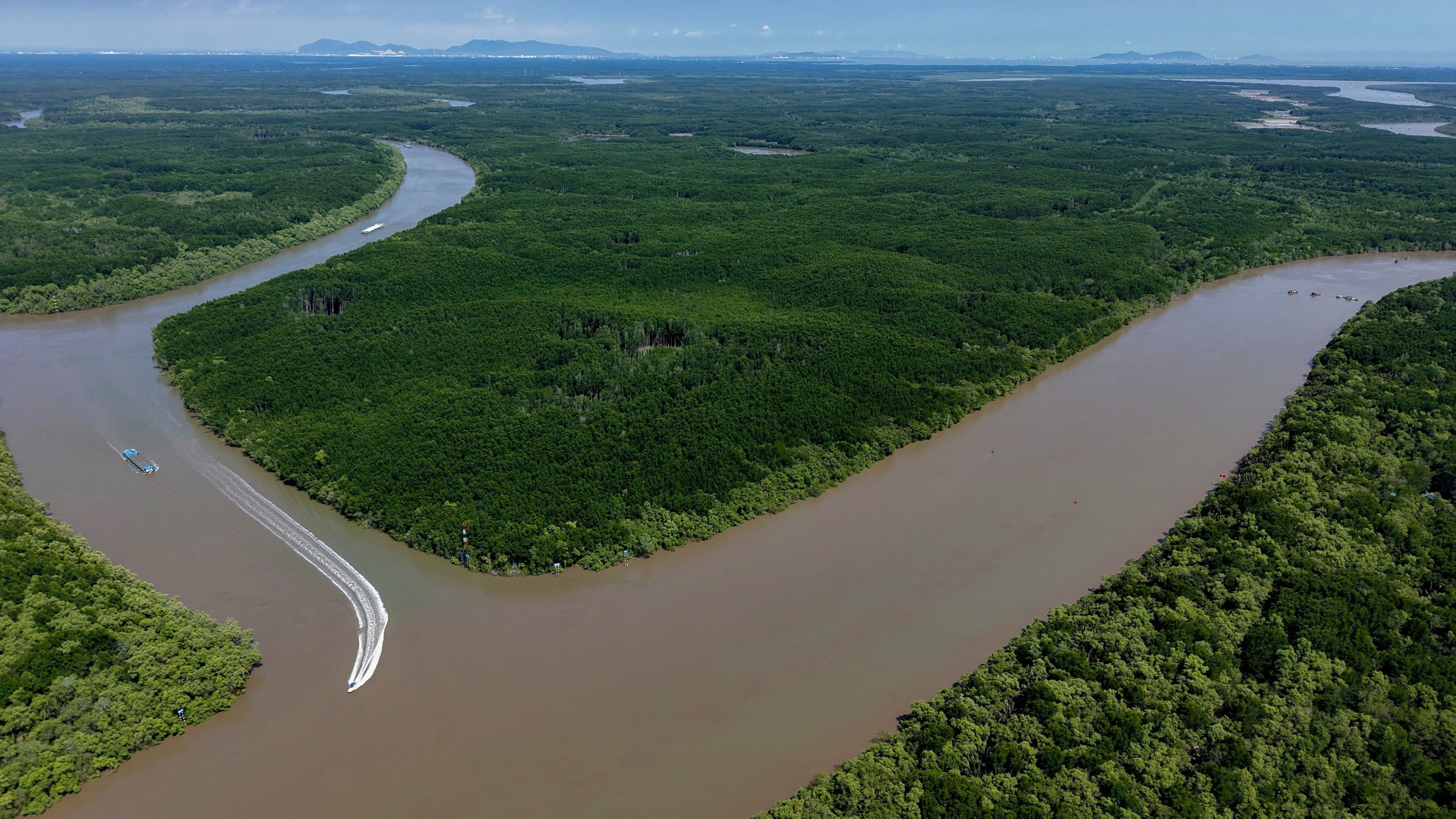 |
The river system surrounding the Can Gio biosphere reserve. Photo: Thanh Tung |
Beyond river currents, tides are also a significant factor. Can Gio is directly influenced by East Sea tides, experiencing a twice-daily ebb and flow. When the tide rises, saltwater and brackish water flow deep inland through rivers and canals. When the tide recedes, water carries nutrients and small organisms back to the sea.
This circulation creates the distinctive environment of the brackish water zone, where both fresh and salt water coexist. These are suitable conditions for the formation of the mangrove ecosystem.
Coastal mangrove ecosystem
On the accreted wetlands, mangrove plants gradually develop. Common tree species here include Duoc, Mam, Ban, Vet, and Coc, with Duoc trees making up a large proportion. The prop root system of the Duoc tree spreads widely across the muddy substrate, helping the tree stand firm while retaining alluvium. Over time, this root layer creates a stable ground, contributing to the expansion of the forest area.
As vegetation cover develops, the ecosystem becomes more diverse. Mangrove forests provide habitat for various organisms, from aquatic species to birds, mammals, and reptiles.
According to the Can Gio Protection Forest Management Board, the mangrove ecosystem supports 318 plant species, 35 mammal species, 164 bird species, 36 reptile species, 36 amphibian species, 282 fish species, and 223 invertebrate species.
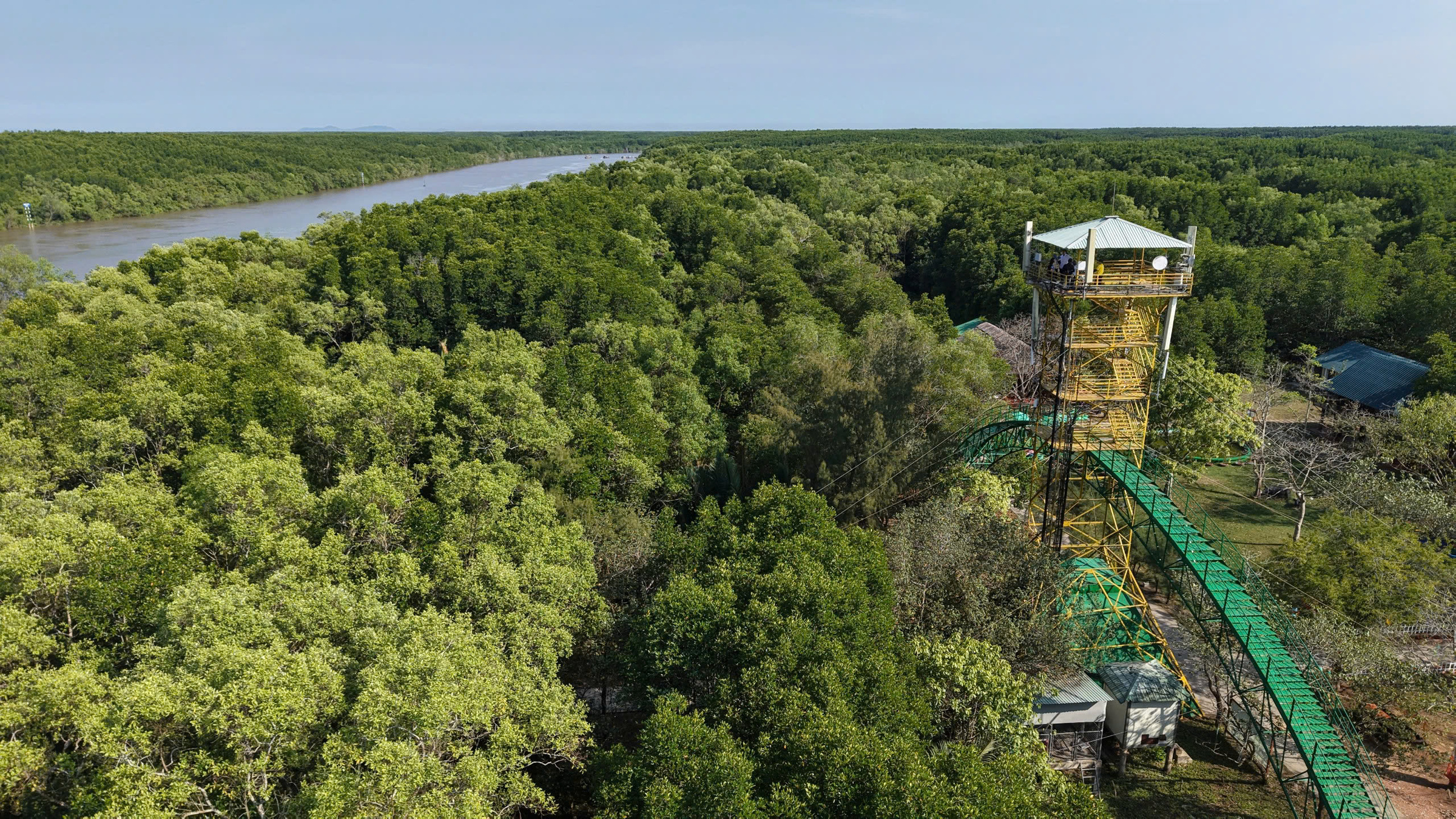 |
Trees such as Duoc, Mam, and Ban thrive in soft mud and brackish water environments. Photo: Thanh Tung |
Can Gio’s birdlife is rich, featuring many waterbirds and migratory birds. Riverine and coastal mudflats are where many species feed or breed seasonally. Additionally, the area hosts mammals, reptiles, and insects adapted to the mangrove environment.
A prominent ecological site in the area is Dao Khi Can Gio (Can Gio Monkey Island), home to thousands of long-tailed macaques. These monkey troops have adapted to the mangrove forest environment and have become a familiar part of the local ecosystem. Furthermore, Khu du lich Vam Sat (Vam Sat Tourist Area) is a birdwatching and ecological research area. This zone features extensive mangrove forests, natural lagoons, and a crocodile sanctuary.
Beyond natural elements, people are also a part of this landscape. Can Gio residents primarily rely on fishing and aquaculture for their livelihoods. Economic activities are closely tied to the natural conditions of the estuarine region, creating a connection between people and the environment.
Can Gio’s proximity to Ho Chi Minh City makes it a popular weekend destination. Many people visit to experience nature, observe the ecosystem, and temporarily escape urban life.
This area is also suitable for outdoor activities, including endurance sports such as walking, cycling, or running. The relatively flat terrain, minimal motorized vehicles, and varied landscapes across different areas facilitate the creation of extended activity routes.
The running community will soon have another opportunity to experience the local routes when the VnExpress Marathon Green Paradise Can Gio is scheduled for 1/5. This marks the first time the VnExpress Marathon series will take place in Ho Chi Minh City’s "green lung."
According to the organizers, the event is expected to attract 5,000-8,000 athletes across four distances: 5 km, 10 km, 21 km, and 42 km. A highlight of this race is the course, which combines mangrove forests and coastal areas.
Organizing the VnExpress Marathon here is expected to help Can Gio become a new destination for the southern running community. With routes through mangrove forests, along the coast, and rare natural spaces, runners will feel nature’s breath with every stride.
Hoang Dan