Among the hundreds of local festivals held annually across Japan, the Enrei Onodachi Memorial Festival stands out as the nation's shortest, concluding within 15 to 20 seconds.
The Enrei Onodachi Festival is held twice a year, in June and October, at Enrei Onodachi Park, located in Shiojiri Pass, Nagano province. It commemorates previous visits by Emperor Meiji and Emperor Showa.
During their journeys through the region, both emperors made very brief stops. Later, these fleeting imperial visits were recreated by organizing a festival that lasts only a few seconds.
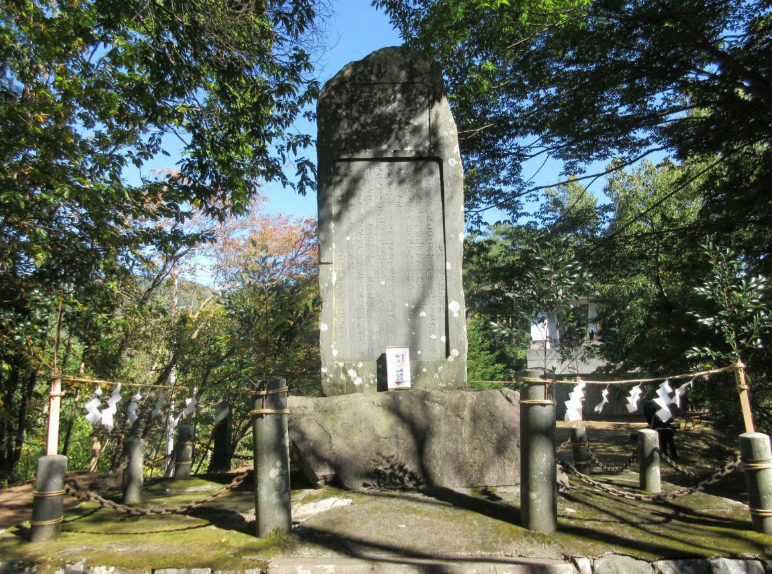 |
Stone monument commemorating the visit of the Japanese Emperor. *Iwafu*
The spring festival commemorates Emperor Meiji's visit on 24/6/1880, while the autumn festival marks Emperor Hirohito's visit on 14/10/1947.
Despite its brevity, the event attracts many spectators, historians, and curious tourists, who gather to witness a ceremony that ends almost as soon as it begins.
The festival began in 1916, not long after the villages of Hirano, Nagaji, Shiojiri, and Chikumachi erected a stone monument to commemorate Emperor Meiji's 1880 visit. Following Emperor Showa's visit in 1947, the autumn festival was also established.
The main ceremony typically occurs around 10h. When the officiant calls out, "All, bow", participants simultaneously bow in commemoration, and after this brief bow, the festival concludes. Before 2006, the entire event lasted only 10 seconds. For the spring festival in 2006, the duration was extended to one minute after the Okaya city government deemed 10 seconds "too short to show respect".
However, during the autumn festival that same year, the time was shortened to 30 seconds because the Shiojiri city government determined that "one minute was too long". By autumn 2007, the two cities agreed on a 20-second duration. In 10/2023, the autumn festival was briefly reduced to 15 seconds, but by 2024, the duration returned to 20 seconds.
Officials, residents, and tourists participate in Japan's shortest festival. *Manichi*
Despite its fleeting nature, the festival is attended by officials from both Shiojiri and Okaya cities, including mayors, city council members, and hundreds of residents and tourists. The brief ritual symbolizes respect for imperial visits and serves as a reminder of the historical connection between the local area and the Japanese imperial family.
Beyond the nation's shortest festival, Nagano also hosted the 1998 Winter Olympics and is described by visitors as an "outdoor sports paradise" for activities like skiing and snowboarding. Nagano is also known as the "roof of Japan," boasting the country's highest mountain ranges.
Its rural communities maintain centuries-old ways of life. Villages such as Tsumago and Narai possess a beauty reminiscent of a samurai film. Vibrant festivals are held annually, and Matsumoto Castle, with its imposing black walls, is preserved intact.
Additionally, Nagano attracts visitors with its hot spring villages (onsen), where people can relax in warm waters while enjoying mountain scenery. The Karuizawa resort, featuring many unique small houses, is a favorite destination for many tourists.
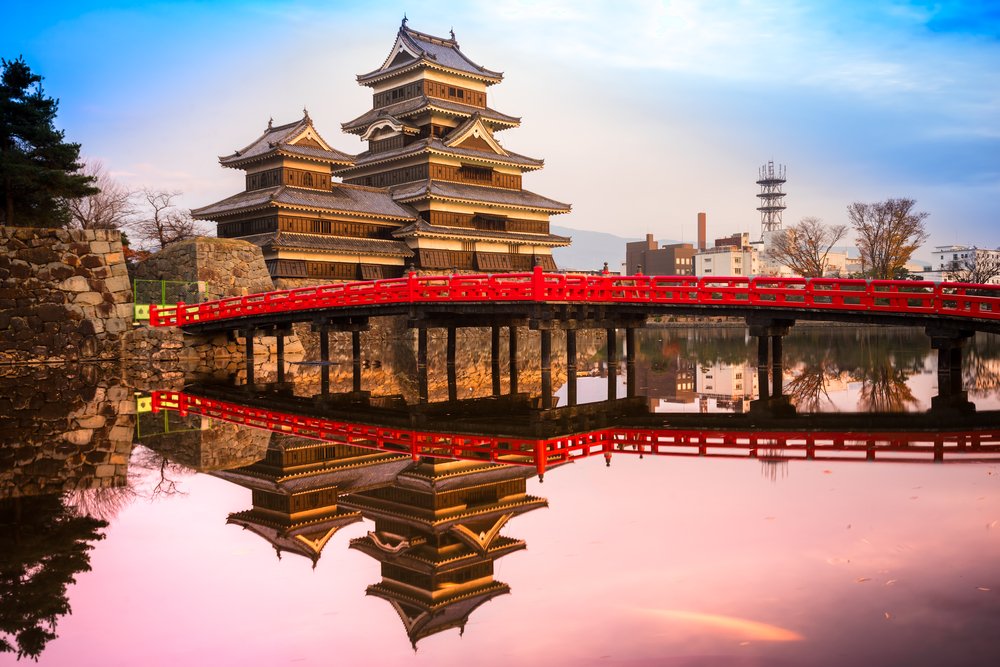 |
Matsumoto Castle, a popular tourist attraction in Nagano. *Japan Rail Pass*
From Tokyo, the most convenient way to reach northern Nagano is by taking the Hokuriku Shinkansen high-speed train. To access central Nagano and Matsumoto, visitors can take a direct train from Tokyo's Shinjuku Station or from Nagoya Station in Aichi province. Additionally, long-distance bus routes connect Nagano with many other cities nationwide.
Anh Minh (According to Manichi, Travel Japan)