On 20/1, the Thai Hotels Association (THA) submitted a proposal to the government to establish a tourism war room. This model involves collaboration between regulatory bodies and the private sector to develop rapid response strategies against the strong rise of regional competitors, particularly Vietnam.
Thienprasit Chaiyapatranun, president of THA, stated this proposal emerged after observing alarming shifts in international tourist flows. "We need a dedicated data analysis unit to understand why customers are choosing other destinations over Thailand", Thienprasit said.
According to THA's proposal, the war room will serve as a strategic operational brain. This unit's task is to coordinate with airlines and hotels to launch discount packages offsetting exchange rate fluctuations, even when the baht currency fluctuates. Thailand will use data to implement direct promotional campaigns in markets where Vietnam is dominant, such as Russia and Poland.
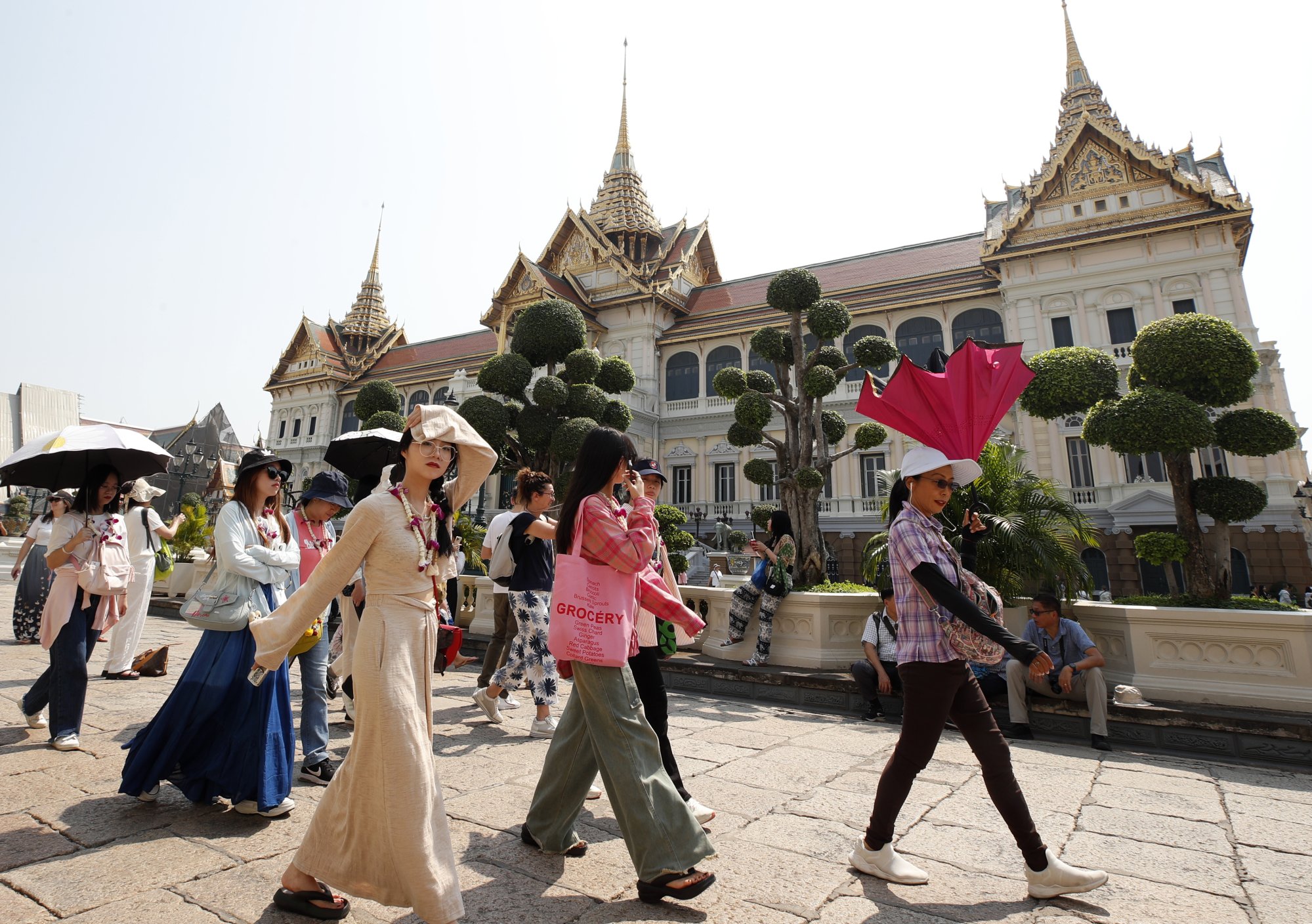 |
Chinese tourist group at the Grand Palace, Bangkok, Thailand. *Photo: EPA-EFE*.
The rapid response unit will also develop scenarios to retain high-spending tourist groups during the off-peak season, avoiding excessive reliance on short-term festival seasons.
Citing data from digital advertising partner Yango Ads, specializing in the Russian market segment, the THA president noted that tourist arrivals from Russia to Vietnam doubled during the peak season at the end of 2025. Tourist groups from Poland and Eastern Europe, key markets for Phuket and Pattaya, are also shifting towards Vietnam's central coast.
Explaining Vietnam's appeal, Thai experts point to two core reasons: novelty and price. While Thailand faces deteriorating infrastructure, Vietnam continuously launches new resort complexes and attractions. The baht has maintained record-high values against other currencies, pushing service prices in Thailand 15-20% higher than in Vietnam, causing Thailand to lose its price competitiveness.
 |
Tourists visit Hoi An Ancient Town in early 11/2025. *Photo: Nguyen Dong*.
In 2025, Vietnam welcomed over 21 million international visitors, nearly 18% above its initial annual target. This represents a 117% recovery compared to the record year of 2019. The Chinese market accounted for over 5 million arrivals, a 41% increase, and the Russian market tripled compared to 2024, reaching nearly 690,000 visitors.
Thai tourism recorded its first decline after a period of recovery. With nearly 33 million international visitors, Thailand met 91% of its target and saw a 7% decrease compared to 2024. The Chinese market dropped by 30% to 6,1 million arrivals.
"Thailand still boasts a large loyal customer base, but without decisive action, the gap in destination choice between Thailand and Vietnam will continue to narrow in 2026", Thienprasit said.
Mai Phuong (According to Bangkok Post)