In the course of air travel, you might occasionally settle into your seat near the boarding gate only to see the information screen update with a new departure gate. While gate changes occur frequently, airlines and airports rarely provide explanations. Here are some reasons behind these adjustments.
"Last-minute gate changes, in particular, often cause considerable frustration for many passengers. The primary reasons are technical issues, delayed aircraft arrivals, or the previously assigned gate being occupied by another plane," stated Ivaylo Danailov, CEO of SkyRefund, a company specializing in air passenger rights.
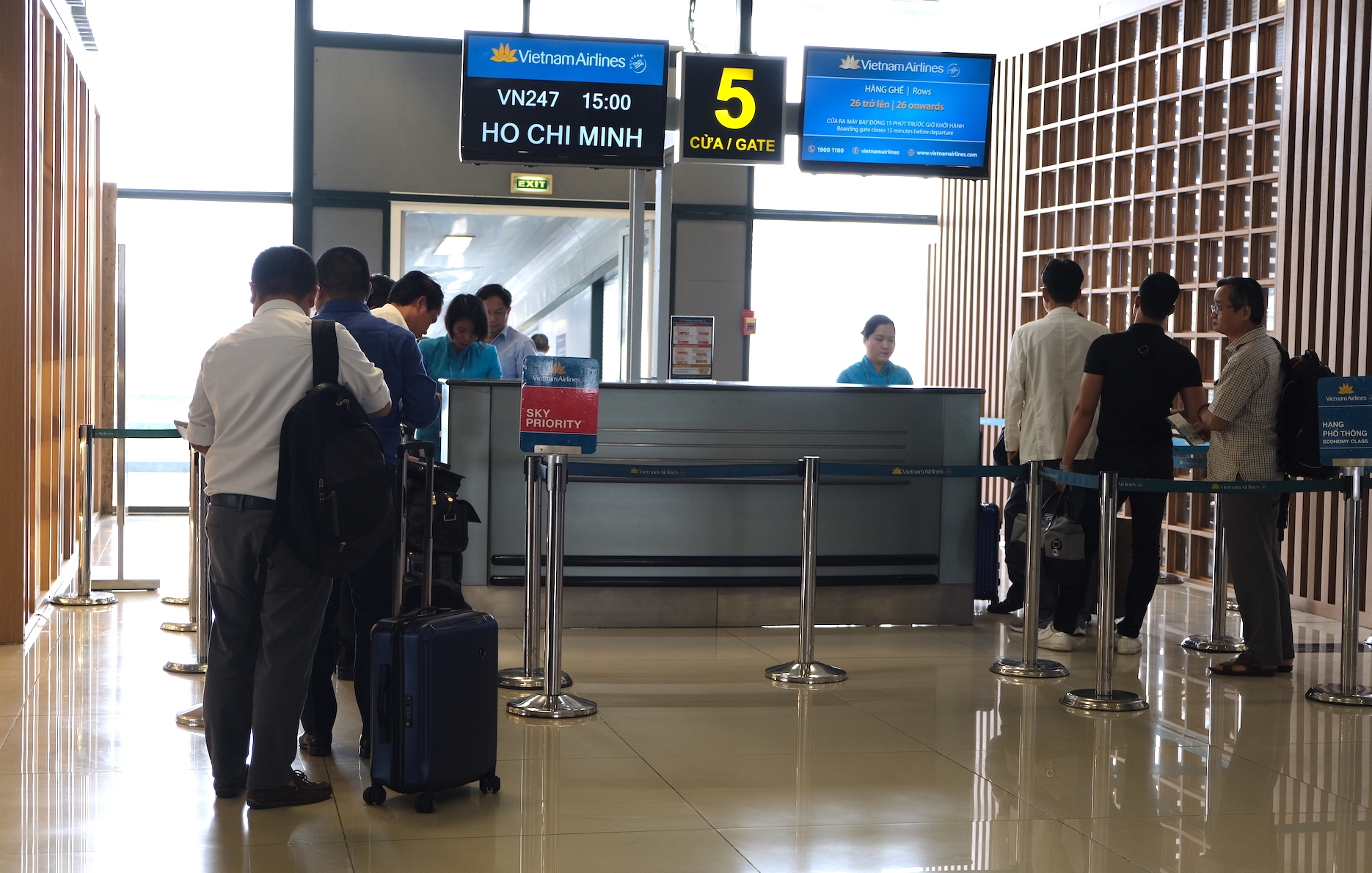 |
Boarding gates are usually assigned hours before a flight, but can change at the last minute. *Illustration: VNA*.
Airports are responsible for allocating boarding gates. Gate reassignments frequently result from efforts to optimize gate usage and other ground service resources.
Due to delays and air traffic congestion, aircraft often arrive earlier or later than originally scheduled. When a flight is delayed, its initially assigned gate may have already been reallocated to another aircraft, Danailov explained. This can create a ripple effect, requiring airports to continuously adjust gate assignments to accommodate all flights as quickly as possible.
Beyond delays, numerous other factors can lead to gate changes. "Directives from air traffic control, staff shortages, or even minor adjustments to optimize airport operational flow can also trigger a cascading effect, necessitating a gate change," Danailov added. He noted that this represents a complex logistical challenge, where even a minor error can disrupt the entire operational chain.
Gate changes also occur due to technical or safety faults. "Airports have a limited number of jet bridges and parking positions, while many flights arrive or depart within the same timeframe, necessitating adjustments to the gate allocation plan," stated Bjorn Erik Barman-Jenssen, CEO of Scandinavian Airlines Ground Services.
He also mentioned that aircraft type and capacity can influence gate arrangements. Furthermore, not all gates are suitable for every aircraft type, and numerous logistical factors are involved, especially at busy airports.
"Gate allocation is frequently adjusted in real-time, based on factors such as baggage handling, loading, and aircraft cleaning requirements," he explained. In some instances, an aircraft might also be moved to a different gate for various reasons. For example, a plane might request a specific gate to facilitate faster and more convenient transfers for passengers with short connecting times, particularly if the inbound flight is expected to be delayed.
How to avoid missing your flight due to gate changes
While last-minute gate changes are often unpredictable and beyond passenger control, travelers can take several steps to avoid missing their flights because of these adjustments:
Download the official app of your airline and enable notifications. This will allow you to receive almost immediate alerts via text message or within the app if there is a gate change.
If you have a long layover, proactively check the flight information screens at the airport regularly, especially within an hour before boarding, when changes are more likely to occur.
Additionally, aim to be at the initially announced boarding gate at least 30 minutes before your flight's scheduled departure. This provides ample time to move to a new departure gate if a change is announced.
Tam Anh (according to Travel + Leisure)