Canadian Prime Minister Mark Carney announced retaliatory tariffs against the US, releasing a list of nearly 900 American goods that will face taxes of 25-50% starting September 8 after trade talks between the two countries collapsed last weekend.
The US toilet paper market depends significantly on Canada. While most tissue and toilet paper products are processed in domestic factories, American businesses primarily rely on imported raw wood pulp from Canada, a nation with abundant timber reserves. Procter & Gamble, owner of the Charmin toilet paper brand, stated last year that they were forced to raise prices due to imposed tariffs.
Additionally, to meet the US's massive consumption demand, Canada is the largest supplier of finished paper products to the American market, totaling 328 million USD in 2024. Retailers, including Costco, also import most of their paper products from Canada.
Consequently, tariff tensions increase both domestic production costs and the price of imported finished goods, directly raising retail prices for American consumers.
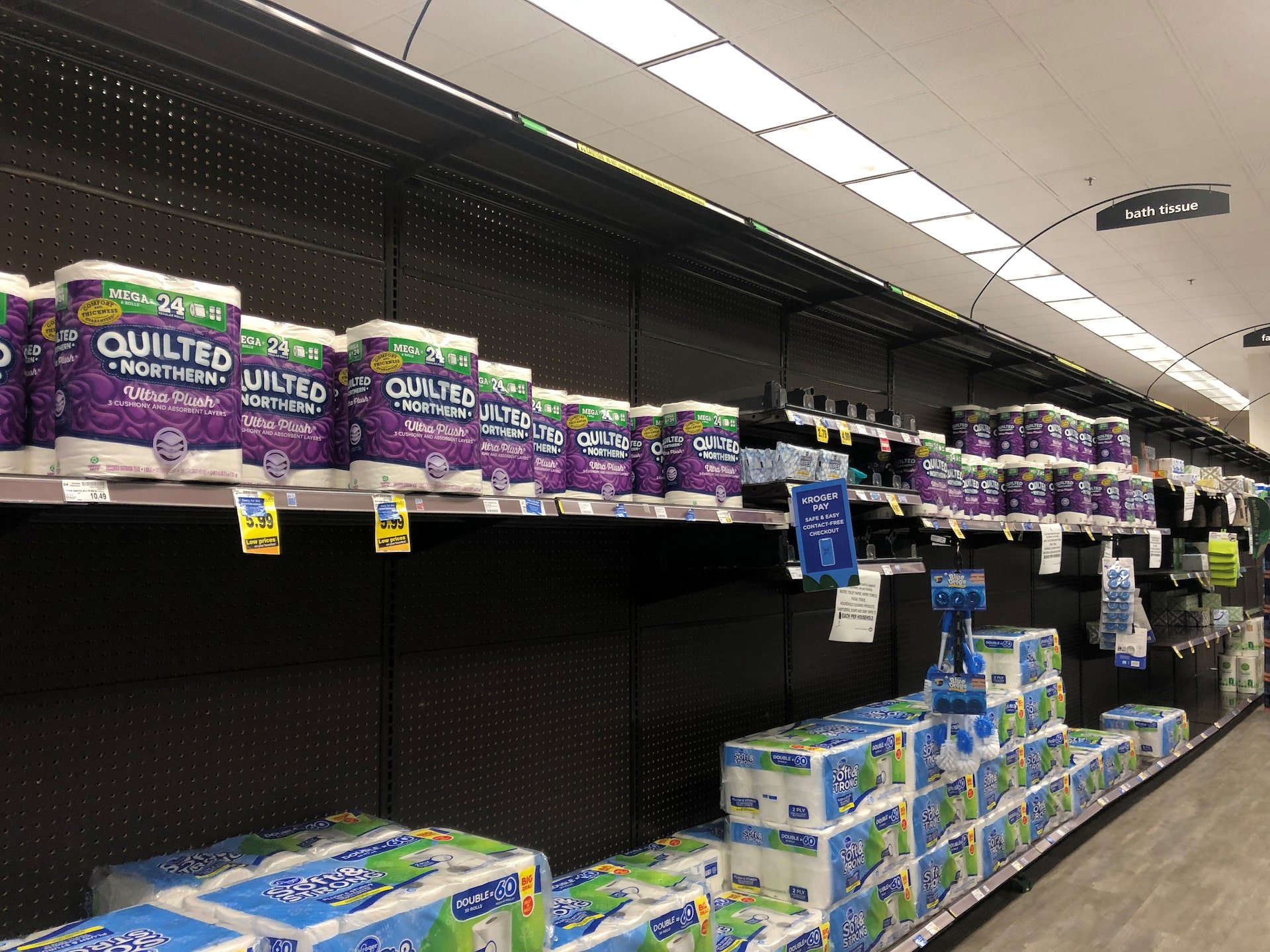 |
Toilet paper shelves at a supermarket in Los Angeles, California, US on 25/4/2020. *Reuters* |
The US accounts for over 20% of global tissue consumption despite having only 4% of the world's population. On average, an American uses 141 rolls of toilet paper annually, ranking them number 1 globally, just above Germans, who consume an average of 134 rolls per year.
Beyond paper products, other goods also face potential price increases. This trade dispute highlights the deep economic ties between the two countries, as consumers on both sides of the border remain concerned about inflation.
US tariffs directly impact Canadian spirits, including well-known whisky brands such as Crown Royal and Canadian Club; these products currently face a 50% tax.
Although Canada has not yet imposed tariffs on American spirits, most Canadian provinces have issued their own bans on US alcohol in retaliation.
Carney urged provincial leaders to consider returning American alcohol to store shelves. However, Nova Scotia Premier Tim Houston expressed skepticism about the effectiveness of this move, telling CBC News: "Whether Nova Scotians or Canadians will actually buy them once they are back on sale is a completely different matter."
Canada also targeted the US seafood industry by imposing a 25% tariff on fish and seafood, including frozen lobster. This move led Republican Senator Susan Collins to call Trump's decision a mistake, as she faces a challenging re-election race in Maine, known as the "lobster capital" of the US.
A 25% tariff on Canadian automobiles and auto parts is expected to impact the US automotive industry, which heavily relies on Canadian components for production. Trump threatened to double this tariff to 50% if an agreement is not reached by 1/1/2027.
With trade talks having collapsed, it remains unclear if or when these tariffs will be lifted. However, the Trump administration maintained that the trade dispute with Canada was "unlikely" to affect American consumers, according to Jamieson Greer, US Trade Representative.
"The fundamentals remain very strong. I don't believe this will have any impact," he stated.
By Hoang Lan (According to Guardian, AFP)