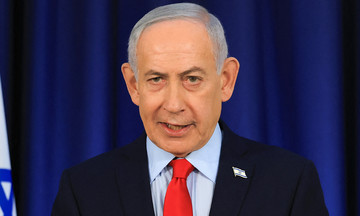
Guatemala's President Bernardo Arevalo declared a "state of siege" on 18/1, granting security forces expanded powers for 30 days to combat escalating gang violence that has led to the deaths of eight police officers. This measure authorizes the full deployment of police and military forces to suppress the unrest.
The "state of siege" functions similarly to martial law, allowing for the restriction or suspension of civil liberties and broadening the authority of security forces to address public order threats. Under this declaration, the government can suspend the right to assembly and permit security forces to arrest and interrogate suspects without a court order. However, this measure still requires approval from Guatemala's Congress, which is controlled by the opposition.
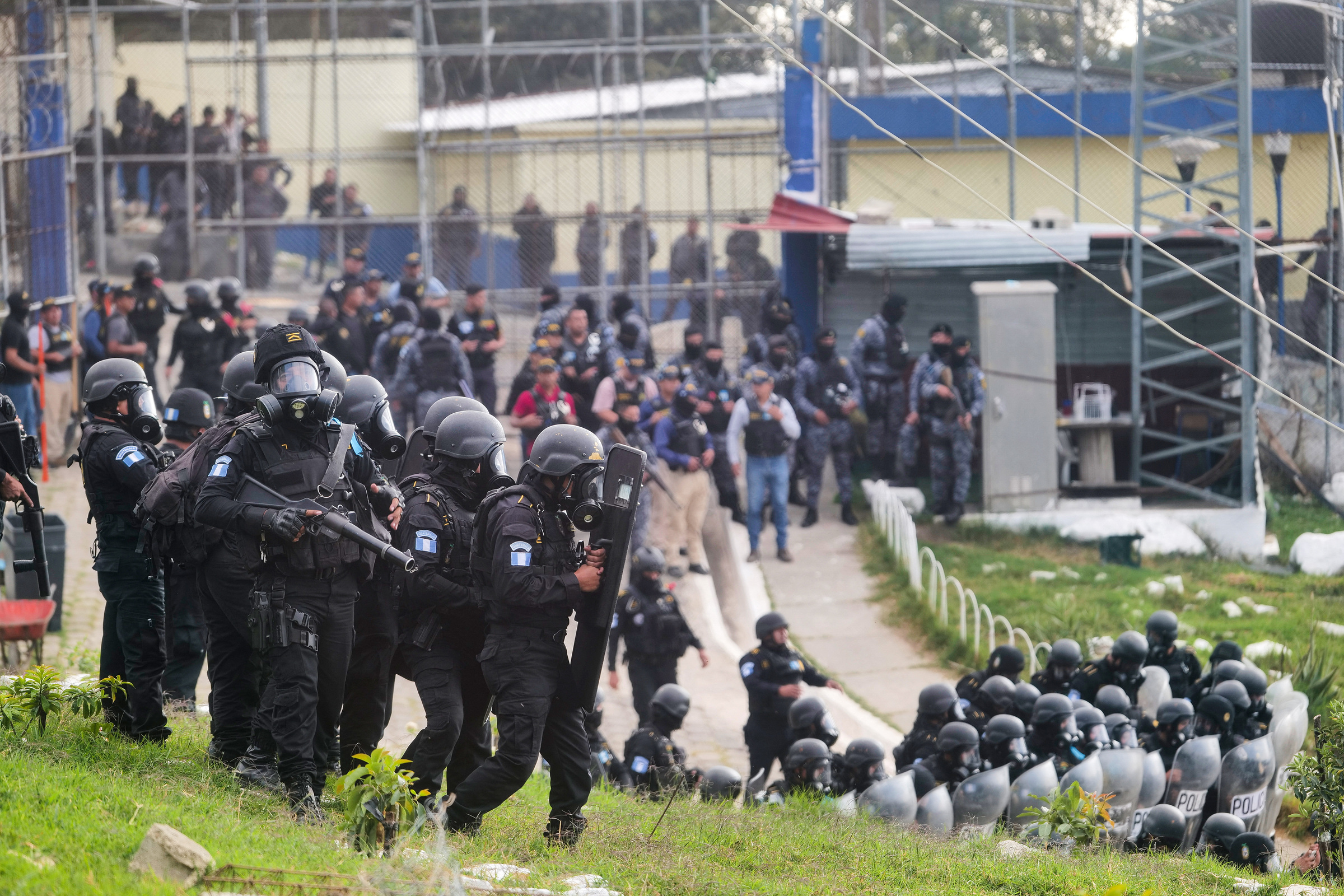 |
Guatemalan riot police block the entrance to a prison where riots occurred on 18/1. Photo: AFP
The presidential decree followed a series of critical incidents, including the rescue of nine prison guards held hostage at Renovacion I prison, located approximately 75 km from Guatemala City. Inmates had taken the guards hostage. Gangs also held hostages at two other prisons near the capital: 28 people at Fraijanes II and nine at the Preventivo facility. Interior Minister Marco Antonio Villeda announced that negotiations were underway to ensure the hostages' freedom, stating that the government "will not bow to criminals."
The Guatemalan government has identified the Barrio 18 criminal gang as the orchestrator of these prison takeovers, seeking additional privileges for their incarcerated members. Among them is leader Aldo Duppie, who is serving a total sentence of about 2,000 years. After police arrested Duppie and transferred him to another location, multiple acts of violence targeting police officers erupted in Guatemala City, resulting in eight fatalities and 10 injuries among law enforcement.
"These murders were carried out with the intent to terrorize security forces and the public, to make us abandon the fight against these gangs and the fear they sow. However, they will fail," President Arevalo stated, also declaring three days of national mourning to honor the fallen police officers.
In response to the wave of violence, authorities have implemented several public safety measures. David Boteo, Director of the Guatemalan National Police, advised citizens to limit outdoor travel, while the Ministry of Education canceled classes nationwide on 19/1 to ensure safety. Guatemalan Defense Minister Henry Saenz announced that the military would maintain a street presence to pursue criminal groups.
Barrio 18, the gang at the center of the unrest, was designated a terrorist organization by Guatemala's Congress in 10/2025, a move that followed a similar listing by the U.S. government as a foreign terrorist organization. The homicide rate in Guatemala in 2025 was 16,1 per 100,000 inhabitants, double the global average.
By Thanh Danh (According to Reuters, AFP)