Speaking at a cabinet meeting today, Israeli Prime Minister Benjamin Netanyahu stated that US Vice President JD Vance briefly informed him about negotiations with Iran on his return from Pakistan. Delegations from both sides negotiated for 21 hours but failed to reach an agreement.
Netanyahu said the two-week ceasefire agreement between the US and Iran "could change in the blink of an eye", adding that the US "cannot accept Iran's blatant violation of the conditions that led to negotiations".
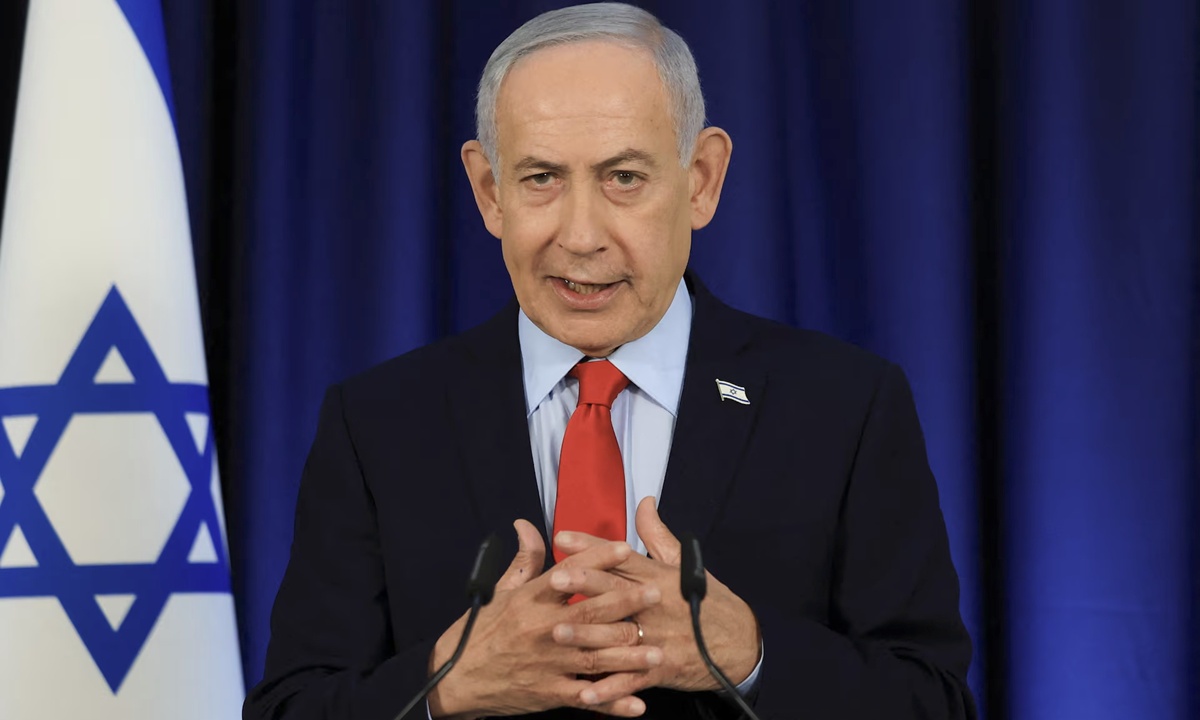 |
Israeli Prime Minister Benjamin Netanyahu at a press conference in jerusalem on 19/3. Photo: Reuters
"Under the ceasefire agreement, the US would cease airstrikes, and Iran would immediately reopen the Strait of Hormuz, but they did not do so. The Americans cannot accept this", he stated.
Additionally, according to the Israeli prime minister, Vice President Vance also mentioned that the core issue from the US perspective is "the elimination of all of Iran's enriched uranium and ensuring no nuclear enrichment activities in the coming years, possibly for many decades".
Prime Minister Netanyahu declared Israel supports President Donald Trump's decision to blockade the Strait of Hormuz, adding that the two sides "are coordinating continuously".
"Statements about a rift between the two countries are completely false", he said. "The exact opposite is true. Anyone present in these conversations, as well as in our daily discussions with President Trump and his team, can attest to that".
US Central Command (CENTCOM) today sent a notice to ship owners, stating that its military would block vessels of all nations entering and exiting Iran's coastal areas, including all Iranian ports in the Persian Gulf and Gulf of Oman, but "not impede freedom of navigation" for ships traveling to and from non-Iranian ports.
This measure aims to implement President Trump's declaration on 12/4 regarding the blockade of the Strait of Hormuz after the US and Iran concluded negotiations without reaching an agreement.
In a message published after Trump's statement, Iran's Islamic Revolutionary Guard Corps (IRGC) announced its forces maintain full control of the Strait of Hormuz, warning "the enemy will be caught in a death spiral if any miscalculation occurs".
The Strait of Hormuz is a critical oil shipping route, accounting for approximately 20% of the global oil supply. Immediately after the US-Israel launched an attack on Iran on 28/2, Tehran deployed numerous speedboats to lay mines in the Strait of Hormuz.
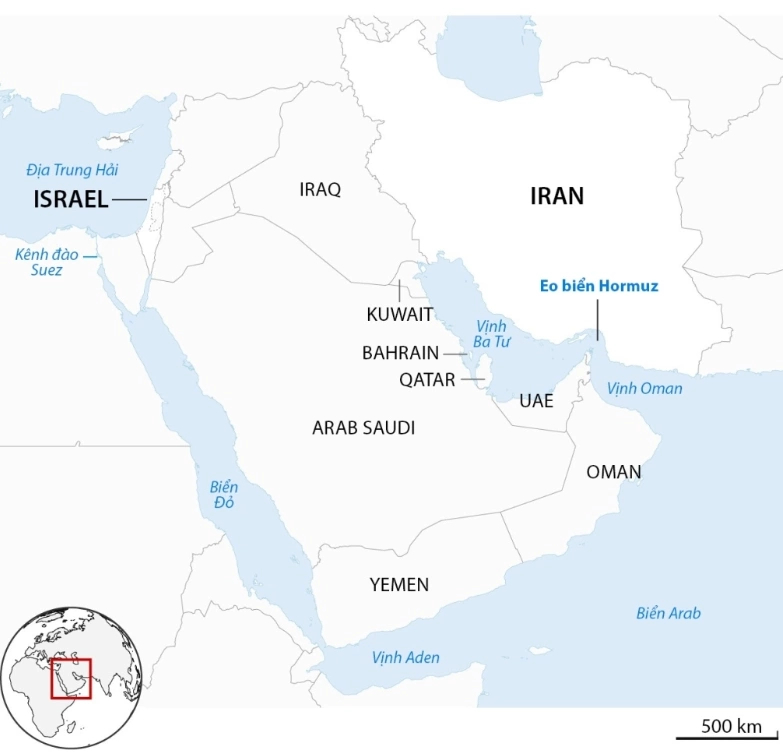 |
Location of the Strait of Hormuz. Graphic: Guardian
The mines, along with the threat from unmanned aerial vehicles (UAVs) and missiles, have significantly decreased the number of cargo ships transiting this maritime route, driving up energy prices and providing Iran with its greatest leverage in the conflict.
Reopening this route was an important topic in the recent ceasefire agreement between the US and Iran, although vessel traffic remains limited.
Vu Hoang (According to Times of Israel, AFP, Reuters)