The Strait of Hormuz, a crucial oil shipping route accounting for approximately 20% of the global oil supply, has seen its traffic come to a halt. "Immediately after US President Donald Trump's announcement of a sea blockade, all traffic through the strait ceased," reported London-based maritime monitoring firm Lloyd's List regarding the situation on 12-13/4.
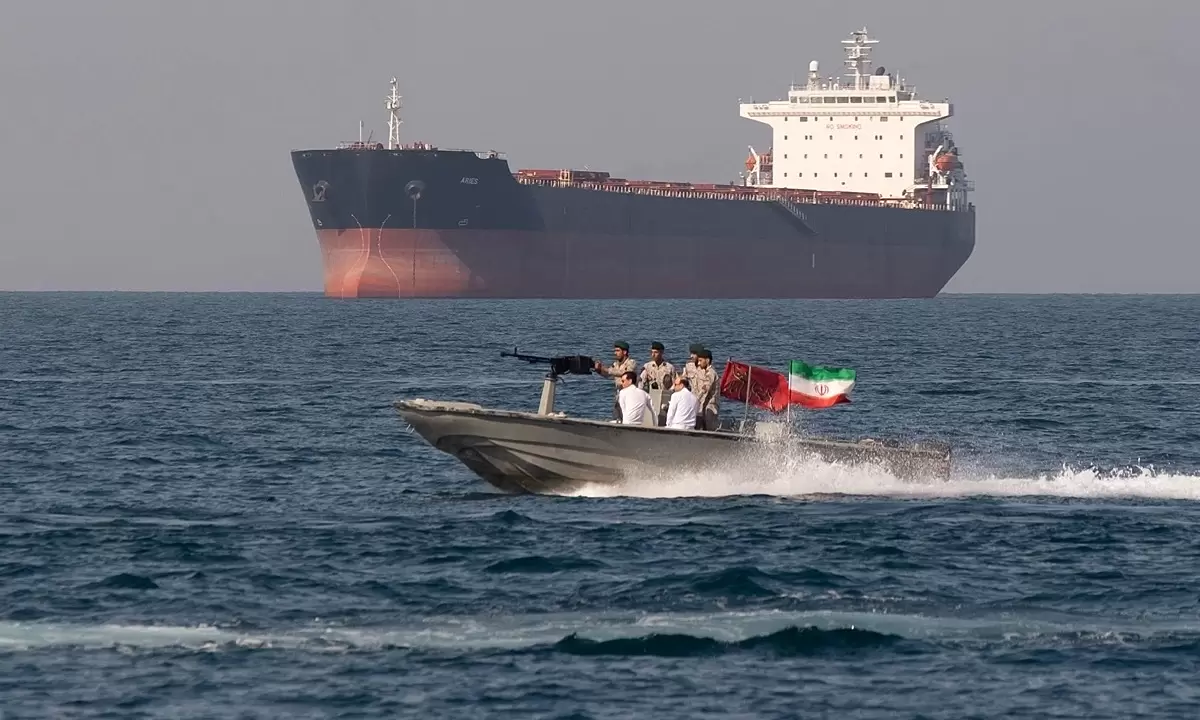
This development follows a period of tension. On 28/2, after the US-Israel launched an attack campaign against Iran, Tehran deployed numerous speedboats to lay naval mines in the Strait of Hormuz. These mines, combined with threats from unmanned aerial vehicles (UAVs) and missiles, caused cargo ship traffic through this maritime route to plummet. This pushed energy prices higher and gave Iran leverage in the conflict.
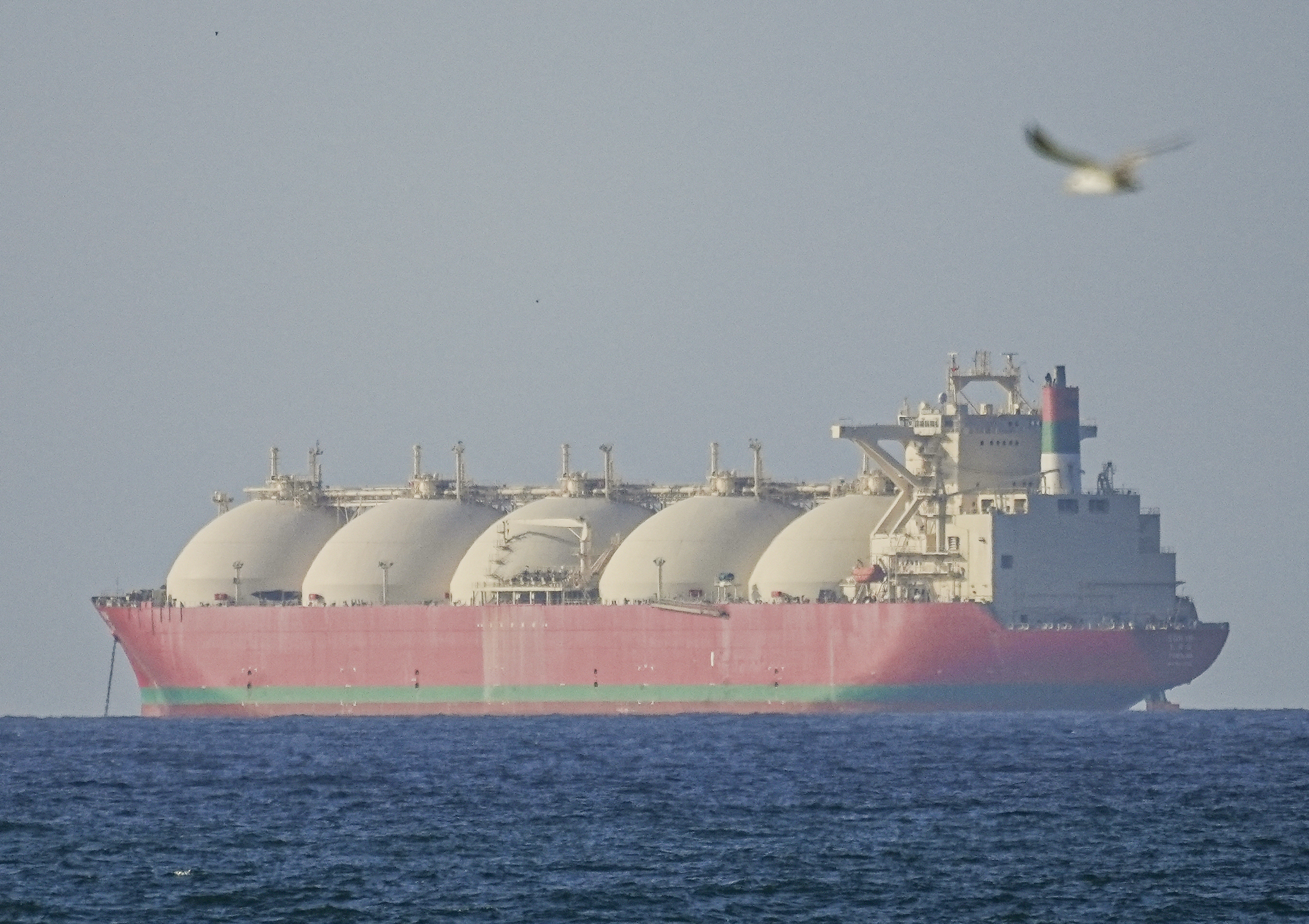 |
A ship moving through the Strait of Hormuz as seen from Oman on 8/4. *AFP*.
A temporary lull in hostilities occurred when the US and Iran agreed to a two-week ceasefire and direct negotiations in Islamabad, Pakistan. During this time, on 11/4, oil tanker traffic through the strait saw an increase as some shipping companies sought to pre-empt risk, utilizing the temporary ceasefire to move vessels out of the Middle East. Reuters transportation data showed at least three very large crude carriers (VLCCs) passed through the Strait of Hormuz on 12/4, believed to be the first VLCCs to depart the Persian Gulf since the ceasefire agreement last week.
However, this brief resumption of activity declined after US-Iran negotiations concluded without an agreement. President Trump then announced the blockade of the Strait of Hormuz, effective from 10h today (21h Hanoi time). Data indicated the Malta-flagged VLCC Agios Fanourios I attempted to traverse the strait to enter the Gulf and receive Iraqi oil, but had to turn back and is currently anchored near the Gulf of Oman. Reuters observed that "oil tankers are avoiding the Strait of Hormuz ahead of the US blockade order."
The US Central Command (CENTCOM) announced it would begin interdicting vessels of all nations entering and exiting Iranian coastal areas, including all Iranian ports in the Persian Gulf and Gulf of Oman. CENTCOM clarified that this action would "not impede freedom of navigation" for vessels traveling to and from non-Iranian ports.
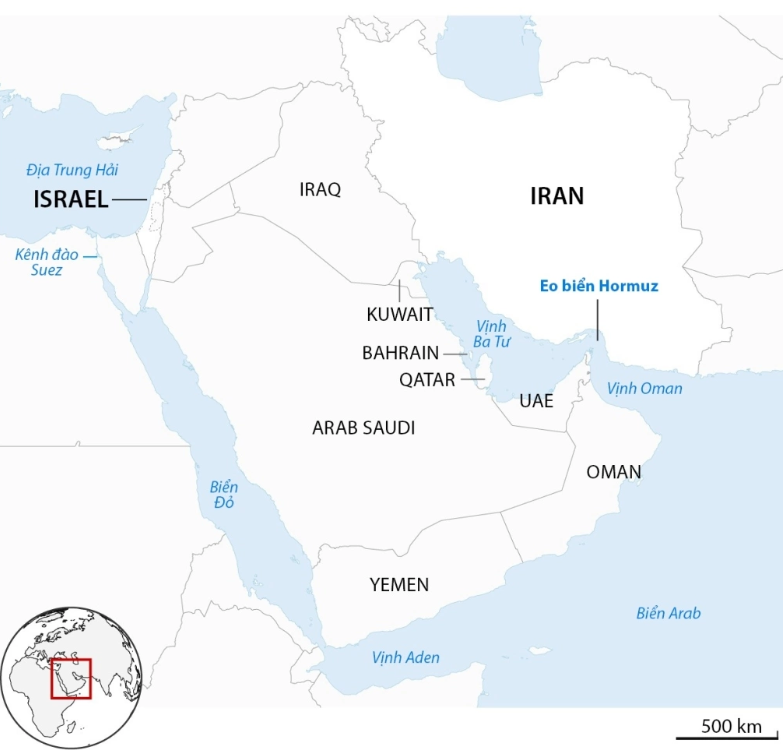 |
Location of the Strait of Hormuz. *Guardian*.
Earlier, after the ceasefire and the strait's reopening, the Islamic Revolutionary Guard Corps (IRGC) announced on 9/4 an alternative route for vessels to avoid the risk of hitting naval mines. However, US officials stated that this alternative route offered restricted movement, primarily due to Iran's unsystematic mine-laying.
By Thanh Danh (Reuters, Anadolu, Lloyd's List).