Following 21 hours of failed negotiations between the US and Iran, President Donald Trump announced a blockade of the Strait of Hormuz on 12/4.
"Effective immediately. The US Navy, the world's most elite force, will begin the process of blocking all vessels entering and exiting the Strait of Hormuz," Trump wrote on Truth Social.
The blockade's focus is that the US Navy will inspect any vessel entering or exiting Iranian ports or coastal areas, effectively intercepting ships that have paid fees to Iran to pass through the strait. "Any Iranian forces that fire upon us or peaceful ships will be destroyed," he warned.
Iran's prior decision to close the strait inflicted severe economic damage on several nations dependent on Middle Eastern crude oil, causing global energy prices to soar, including in the US. So why would Trump want to blockade a strait he had previously sought to open?
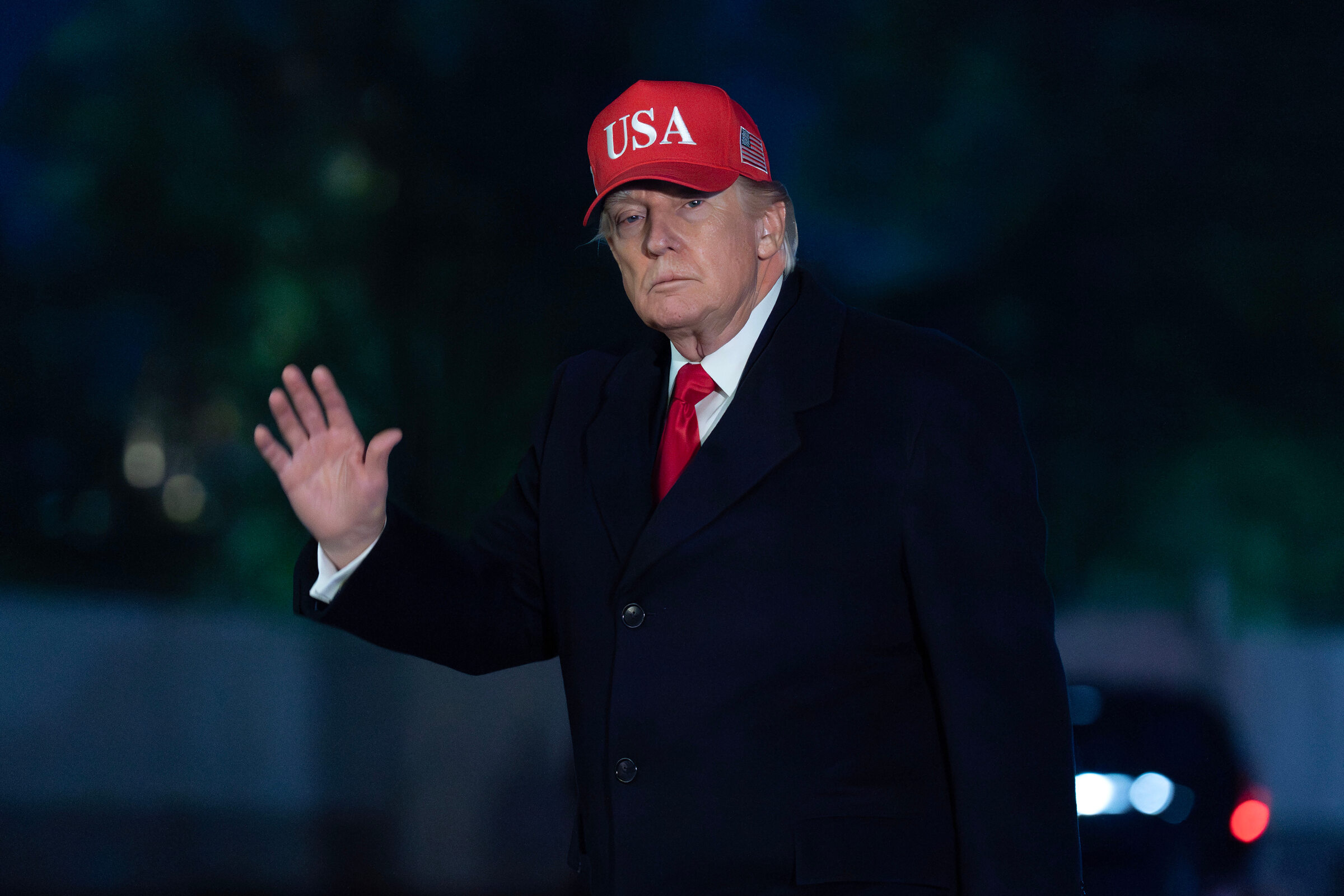 |
US President Donald Trump on the White House grounds on 12/4. Photo: AP
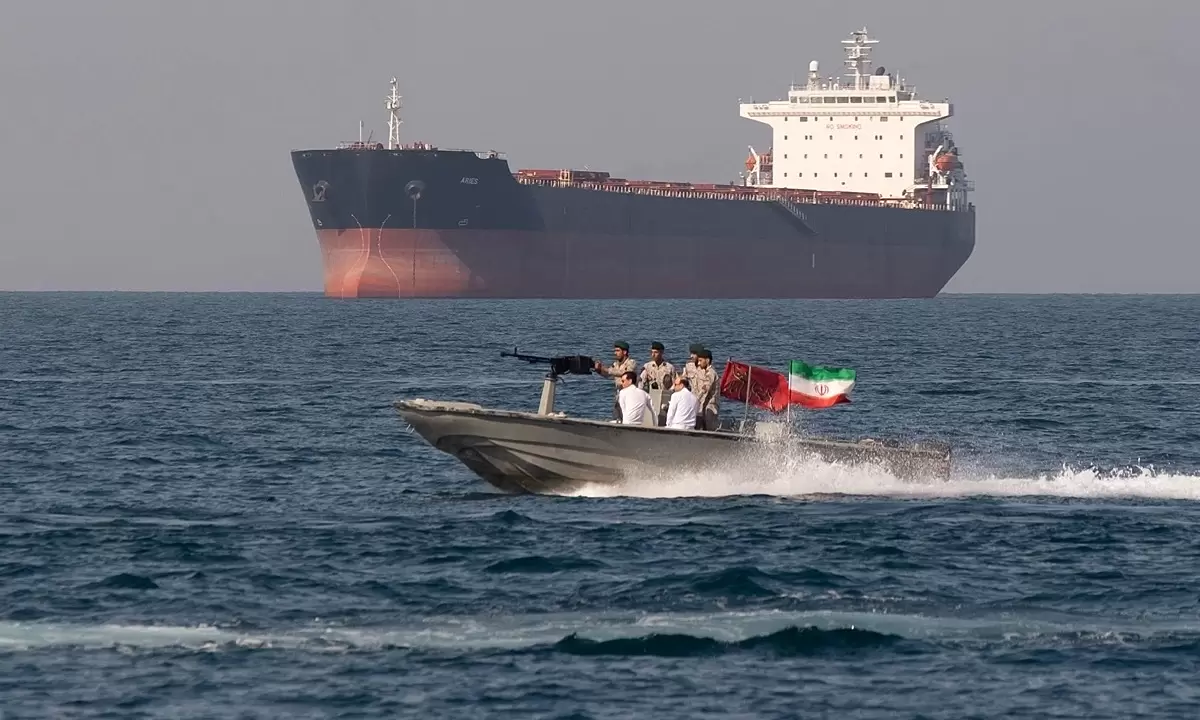
David Goldman, a CNN analyst, noted that the Strait of Hormuz had not been completely closed recently. Iran had allowed oil tankers from some countries to pass through, even turning Hormuz into a "toll booth" with fees reaching 2 million USD per vessel.
Crucially, Iran continued to allow its oil to flow in and out of the region throughout the conflict. Iran exported an average of 1,85 million barrels of crude oil per day through March, approximately 100,000 barrels per day more than three months prior, according to data from oil analytics firm Kpler.
Therefore, by imposing a blockade, Trump could cut off a critical financial lifeline for the Iranian government and its military operations. "This is leverage that the US administration did not want to use. Blocking the strait, even to Iranian oil, could cause global oil prices to skyrocket," Goldman wrote.
That is why the US Navy, for over a month, had allowed Iranian oil tankers to pass through the area, despite a heavy presence of US warships. Any oil exported from the Middle East at this time could help curb world oil prices to some extent, according to Goldman.
The analyst added that in February, the US granted temporary sanction waivers to Iran to sell oil that had already been loaded onto ships. The US has imposed intermittent sanctions on Iranian oil for decades, and the Trump administration blocked the sale of its crude oil since withdrawing from the Iran nuclear deal in 2018.
Trump's decision to ease sanctions last month helped release approximately 140 million barrels of oil, enough to meet global demand for about 1,5 days, according to the US Energy Information Administration. Iran benefited from these sales, with its oil selling for several USD more than international benchmark Brent crude.
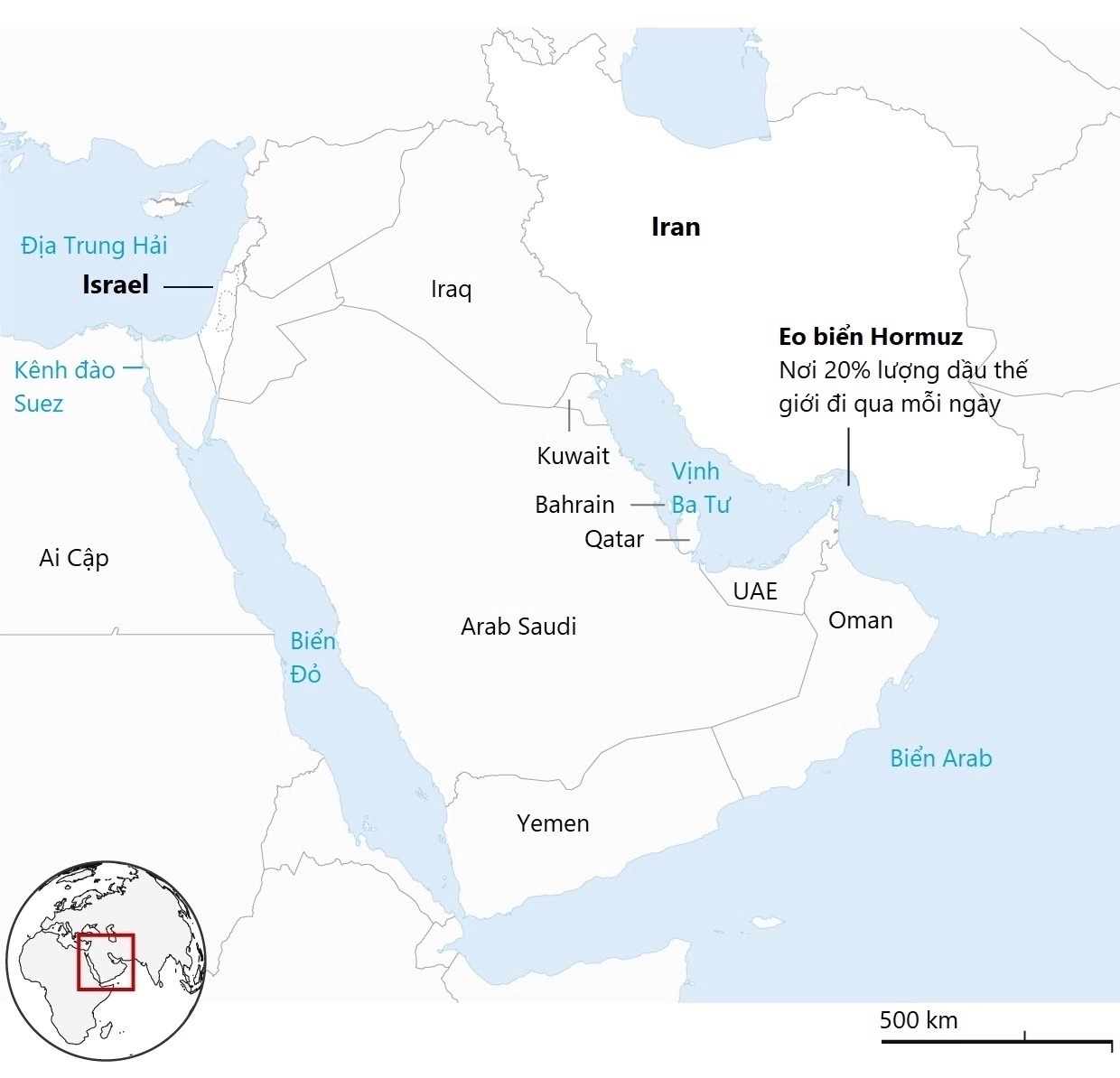 |
Location of Iran and the Strait of Hormuz. Graphic: Guardian
The White House has sought feasible measures to curb oil prices during the conflict. In addition to coordinating global oil reserve releases, the Trump administration also lifted sanctions on hundreds of millions of barrels of Russian oil last month.
"Now Trump is risking even higher oil and gas prices to maximize leverage with Iran, aiming to end the conflict," Goldman stated.
Andrew Tillett, an analyst for the Australian Financial Review, noted that Trump believes the Hormuz blockade could inflict significant economic pain on Iran, depleting its cash reserves without needing to destroy oil facilities on Kharg Island, which handles 90% of Tehran's oil exports.
Tillett added that the White House also seems to calculate that a complete blockade of the Strait of Hormuz would impact buyers of Iranian oil, forcing them to pressure Tehran into conceding to US demands made during negotiations.
An unnamed US official told the Washington Post that negotiations in Pakistan last weekend failed because Tehran did not accept several Washington demands. The US wanted Iran to cease all uranium enrichment activities, allow Washington to recover highly enriched uranium, and dismantle all major nuclear enrichment facilities.
Washington also sought Tehran's acceptance of a broader de-escalation framework involving regional powers, as well as an end to funding for militia groups such as Hamas, Hezbollah, and Houthi. A key point was that Iran must fully open the Strait of Hormuz without charging fees for passing vessels.
Iran's Tasnim news agency called these "exorbitant demands" that Iran could not accept. Iran warned that the status quo in the Strait of Hormuz could not change "unless the US agrees to a reasonable deal." "We are in no hurry," an Iranian negotiating team member said.
Nevertheless, Trump expressed optimism that a deal would still be signed with Iran and reiterated Vice President JD Vance's earlier assessment that the primary sticking point was disagreement over Tehran's nuclear program.
When asked if he would continue to attack Iran if it did not abandon its nuclear program, Trump replied "yes." He indicated that attacks on power plants, missile production facilities, bridges, and even desalination plants could occur. However, he added that he "hates" having to target the nation's water sources.
"I predict they will come back and give us everything we want," Trump said.
Trump's announcement of the Hormuz blockade, made just hours after negotiations concluded, suggests that the US President still expects Tehran to make concessions, according to Susannah George, a Washington Post analyst.
When Vance spoke to reporters just before departing the Pakistani capital on 12/4, he suggested that the US remained open to a diplomatic solution, but only if Iran accepted "our final and best offer."
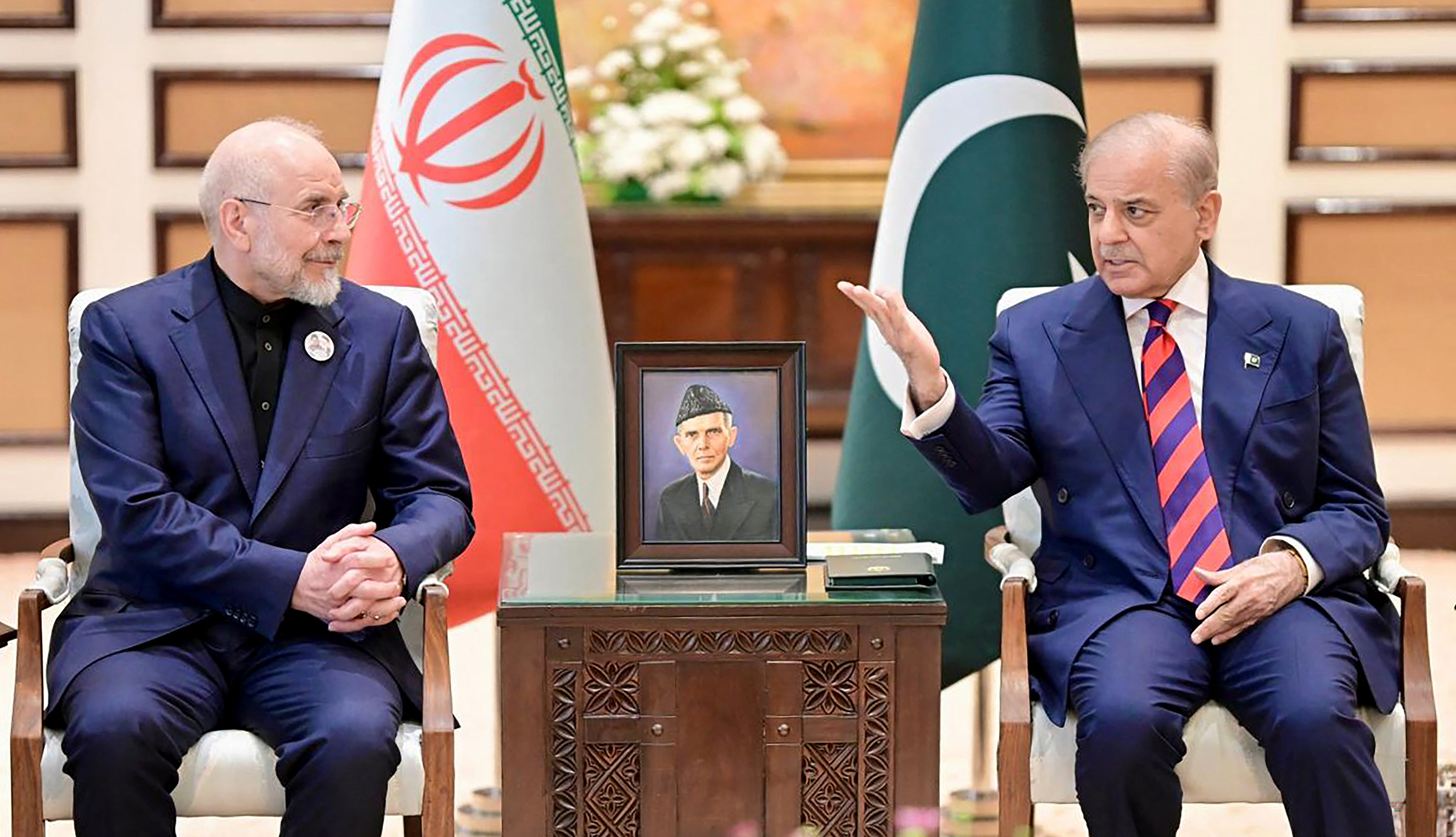 |
Pakistan Prime Minister Shehbaz Sharif (right) meets Iran's Parliament Speaker Mohammad Bagher Ghalibaf in Islamabad on 11/4, before Tehran began negotiations with Washington. Photo: AFP
Before Trump announced the Hormuz blockade, Iranian officials also indicated they remained open to diplomacy. However, their top negotiator, Parliament Speaker Mohammad Bagher Ghalibaf, suggested that Washington must first make moves to build trust with Iran.
Danny Citrinowicz, formerly head of Iran analysis for Israeli military intelligence, believes that a complete closure of the strait is unlikely to compel Iran to yield.
"What was not achieved after five continuous weeks of pressure through airstrikes is unlikely to succeed through pressure at sea alone," Citrinowicz wrote on X. "It is unlikely to make Iranian leaders accept what they perceive as US impositions. Tehran may not oppose reaching a deal, but it will not accept terms it feels are forced upon it."
Iran's Islamic Revolutionary Guard Corps (IRGC) also issued a statement asserting that the Strait of Hormuz "is being intelligently and safely managed and controlled for civilian vessels adhering to specific regulations." The IRGC's statement did not mention collecting fees from ships.
The agency also warned that any military vessel attempting to cross the Strait of Hormuz would be considered a violation of the ceasefire and "will be dealt with appropriately."
Tasnim news agency quoted an unnamed Iranian official as saying that Trump's statements about blockading and restricting vessels through the Strait of Hormuz were "unreliable and ineffective."
"Such a stance will not help improve the problem-solving process, and Trump should fear losing the Bab al-Mandab Strait if he continues to issue such threats," the Iranian official said, referring to the strait connecting to the Red Sea, considered the region's second energy chokepoint. Houthi forces, allies of Iran, nearly control this strait.
However, some observers are more optimistic about Trump's new measure.
"A blockade is always more sensible than occupying Kharg Island. It halts Iran's exports and revenue, and it serves as a counterweight to their closure of the strait. Iran might retaliate by attacking oil facilities in the Gulf, but that would put greater pressure on Tehran," commented former US Ambassador Dennis Ross, a longtime Iran expert.