Japan's Ministry of Defense announced today that its military detected an unmanned aerial vehicle (UAV), believed to be Chinese, flying between Yonaguni Island and Taiwan on 15/11. Yonaguni is a frontline island in southern Japan, located approximately 111 km from Taiwan.
Fighter jets from Japan's Southwestern Air Defense Force were dispatched to monitor the aircraft. A map released by Japan's Ministry of Defense indicated the UAV flew near Yonaguni Island in a north-to-south direction, circling at least one round before returning to its origin point.
China has not yet commented on the information provided by Japan's Ministry of Defense.
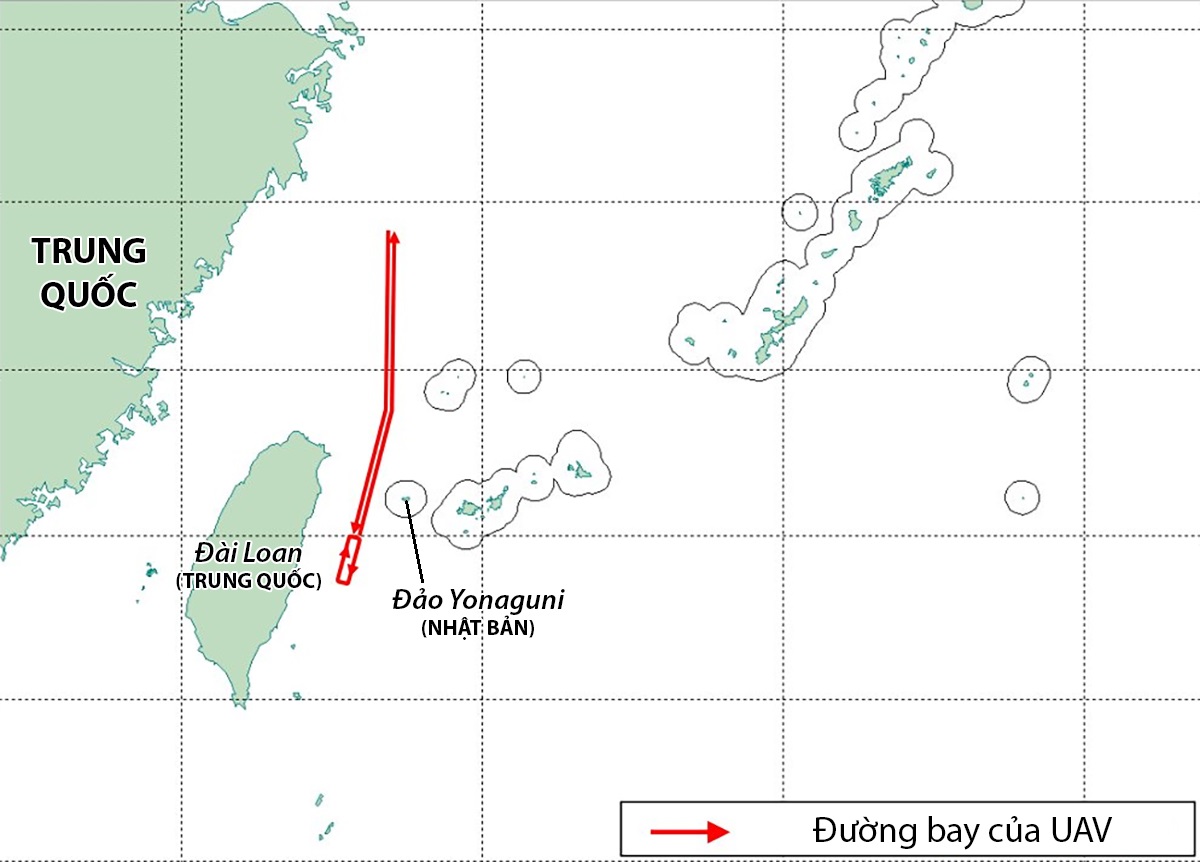 |
The flight path of the suspected Chinese UAV near Japan's frontline island on 15/11. Graphic: Japan MoD |
This incident occurred one day before the China Coast Guard announced the deployment of patrol vessels to the waters around the disputed Senkaku/Diaoyu islands, which are controlled by Japan in the East China Sea.
Tensions between Beijing and Tokyo have escalated after Prime Minister Sanae Takaichi declared on 7/11 that Japan might take military action if Taiwan were attacked. China reacted strongly to this statement, summoning Japan's ambassador for the first time in two years.
Chinese officials advised citizens not to travel to Japan on 14/11. Tokyo subsequently urged Beijing to "take appropriate measures," though no further details were provided.
Masaaki Kanai, head of the Asia and Oceania Affairs Division at Japan's Ministry of Foreign Affairs, arrived in China today to meet his counterpart Liu Jinsong, aiming to de-escalate rising tensions with China.
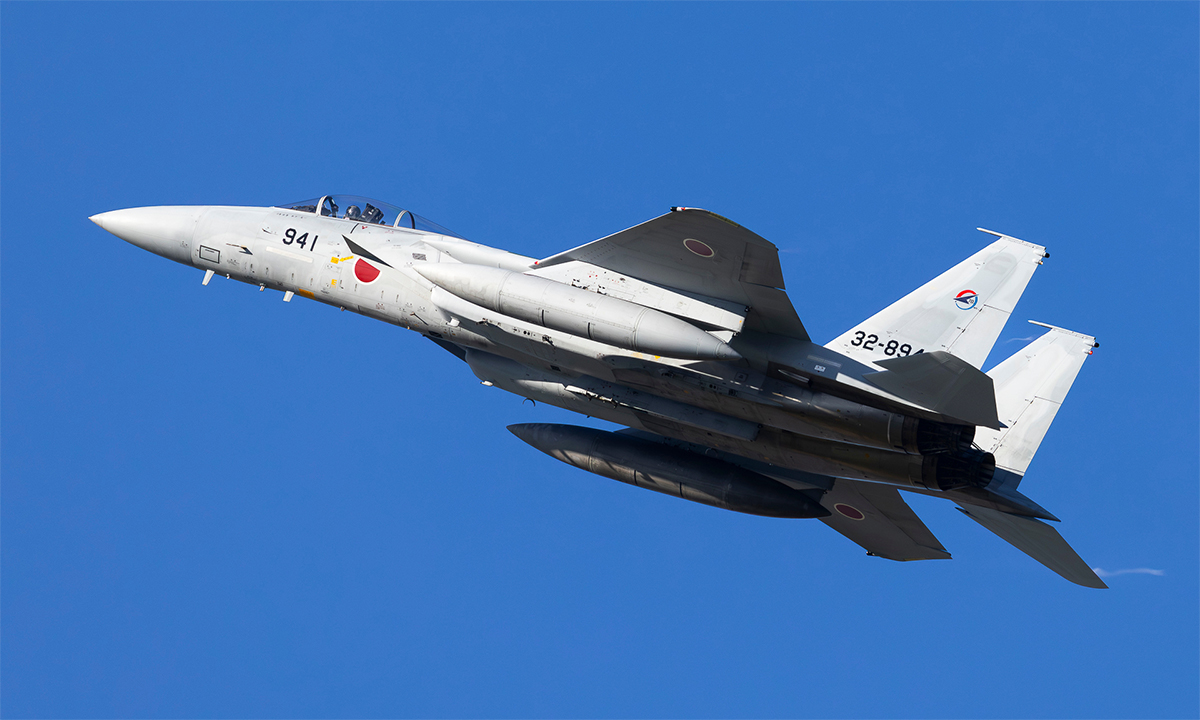 |
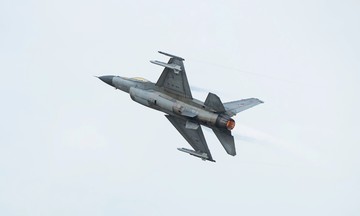
A Japanese F-15J fighter jet flying near Gifu city on 9/10. Photo: Jet Photos |
China consistently views Taiwan as an inseparable part of its territory. While advocating for peaceful dialogue and reunification, China has repeatedly stated it does not rule out the use of force to reclaim the island.
Japanese leaders have historically avoided publicly mentioning Taiwan when discussing regional military scenarios. This approach is considered Japan's "strategic ambiguity" policy, which is supported by its ally, the United States.
Nguyen Tien (According to AFP, AP, Kyodo)