"Remember when I gave Iran 10 days to make a deal or open the Hormuz Strait. Time is running out, only 48 hours left before hell is unleashed upon them," US President Donald Trump wrote on social media today, 3/4.
Iranian officials have not commented on the statement.
The US leader had threatened on 21/3 to "wipe out all" power plants in Iran, starting with the largest facility, if Iran did not fully open and cease threats in the Hormuz Strait within 48 hours. Two days later, President Trump announced that the US and Iran had "very good and effective exchanges," adding that he decided to postpone attacks on power plants for 5 days. By 26/3, he further announced a 10-day postponement of the plan, setting a new deadline for 8 p.m. on 6/4 (7 a.m. on 7/4 Hanoi time).
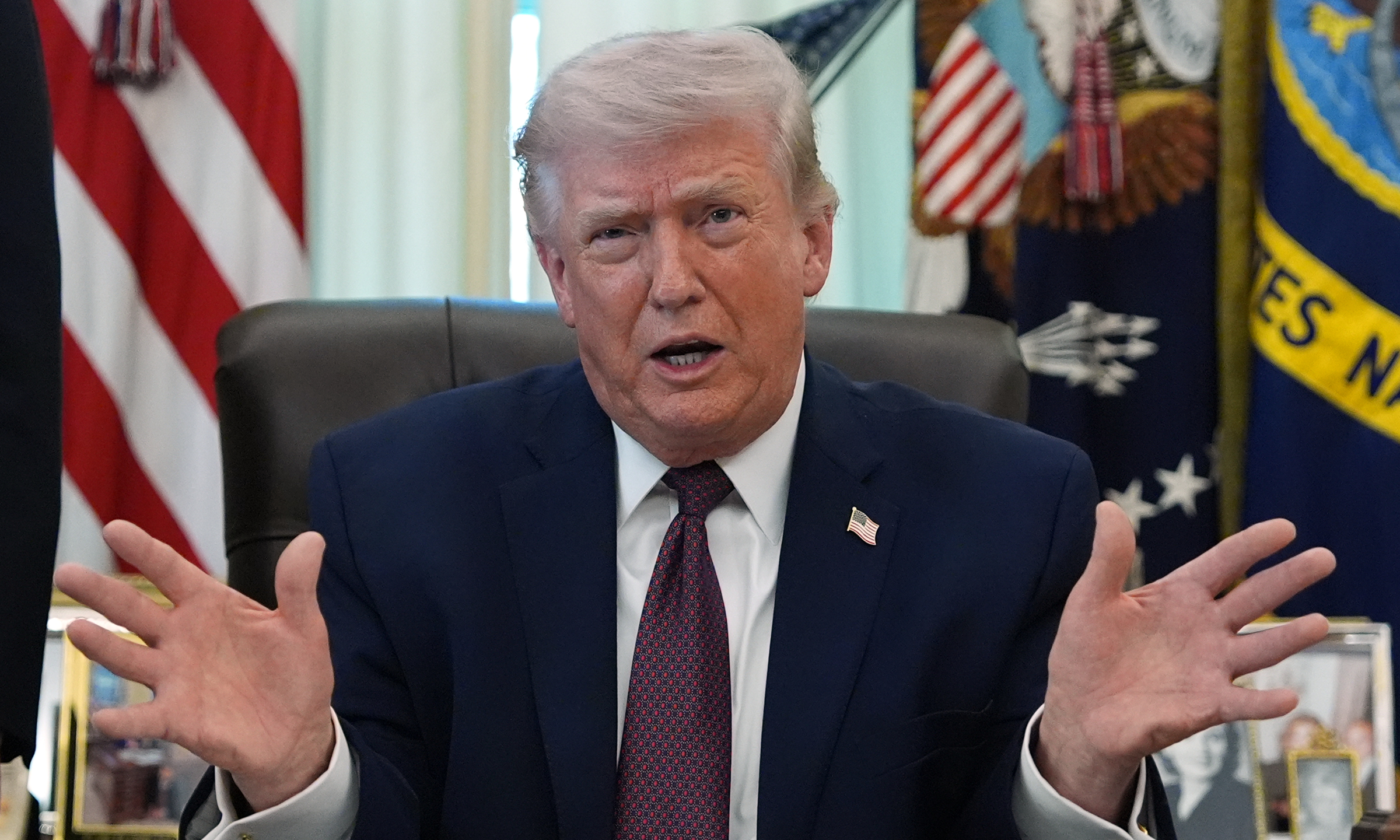 |
Tong thong My Donald Trump phat bieu tai Nha Trang hom 31/3. Anh: AP
Iranian Foreign Minister Abbas Araghchi stated on 31/3 that he had directly exchanged messages with US envoy Steve Witkoff, but noted that this did not mean Tehran was negotiating with Washington. He affirmed that Iran no longer trusted dialogue with the US after many past lessons. White House spokesperson Karoline Leavitt said on 2/4 that the US President intended to reach an agreement with Iran before 6/4. According to US Secretary of State Marco Rubio, contacts with Iran were continuing, including through intermediaries.
However, the Wall Street Journal reported on 3/4, citing sources, that reconciliation efforts toward a ceasefire between the US and Iran, mediated by Pakistan, had "stalled." According to the US newspaper, Tehran had told intermediaries that it was unwilling to send officials to Islamabad for negotiations in the coming days. Foreign Minister Araghchi today implicitly rejected this information, while affirming that Tehran's top priority was to achieve "terms that definitively and permanently end the illegal war against Iran."
Before the conflict erupted on 28/2, the Hormuz Strait was a vital artery for approximately 20% of the world's crude oil and gas supply, along with one-third of raw materials for global agricultural fertilizer production. Currently, about 1,000 ships are stranded in the Gulf due to the war between Iran and the US-Israel.
According to Kpler data, about 240 ships passed through the Hormuz Strait between 1/3 and 3/4, a 94% decrease compared to pre-conflict levels. Of these, 151 were oil and gas tankers, which is only equivalent to the daily density before hostilities began.
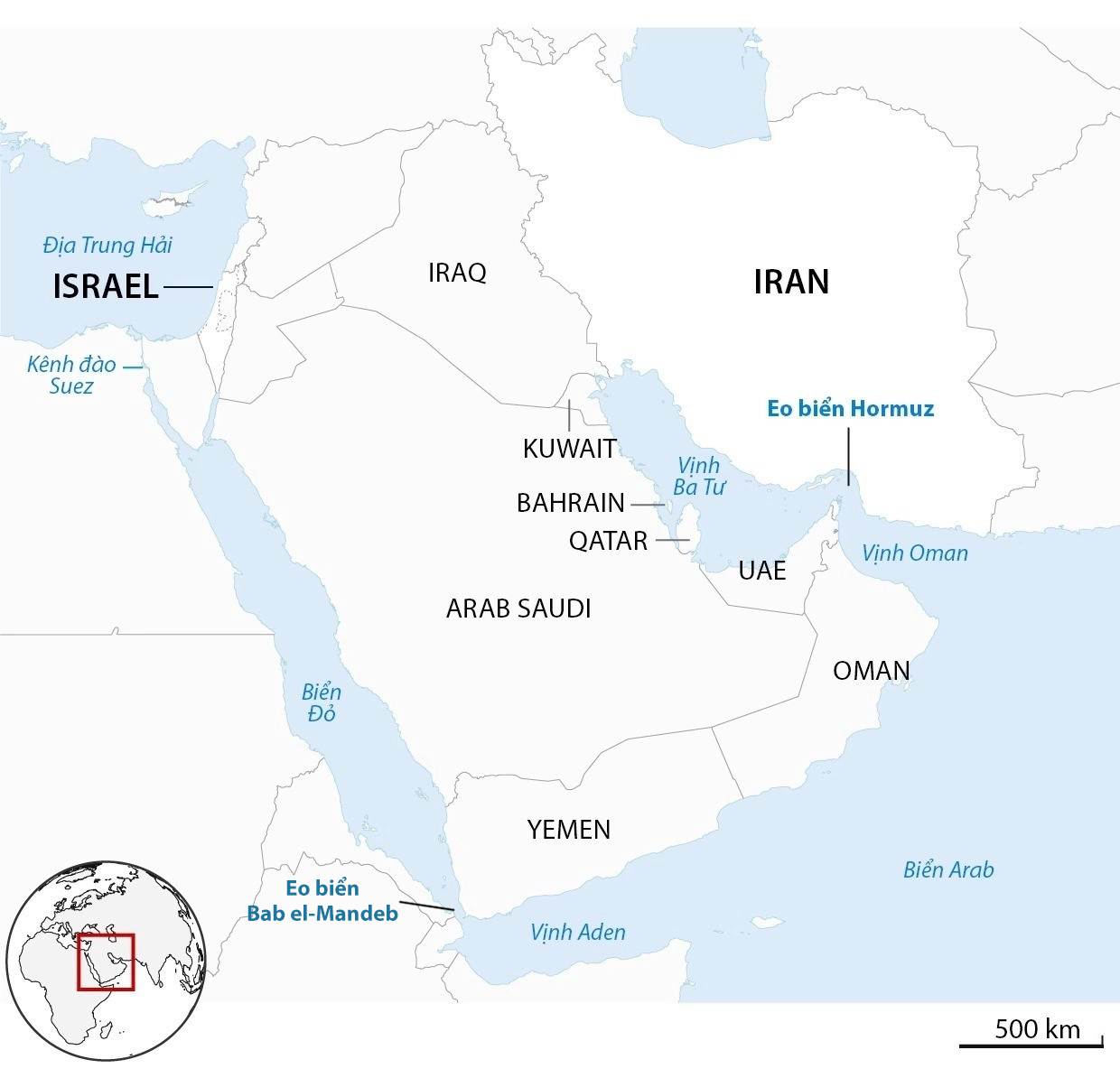 |
Vi tri eo bien Hormuz. Do hoa: Guardian
The Islamic Revolutionary Guard Corps (IRGC) announced on 1/4 that the Hormuz Strait remained "closed to hostile nations" and that its navy maintained full control over traffic. French President Emmanuel Macron said on 2/4 that "there are those who advocate opening the Hormuz Strait by force," adding that the US "sometimes supports this view." Nevertheless, he affirmed that France considered this an "unrealistic" solution and would never choose that option.
Pham Giang (According to AFP)