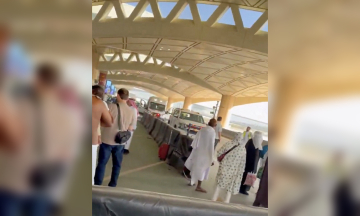
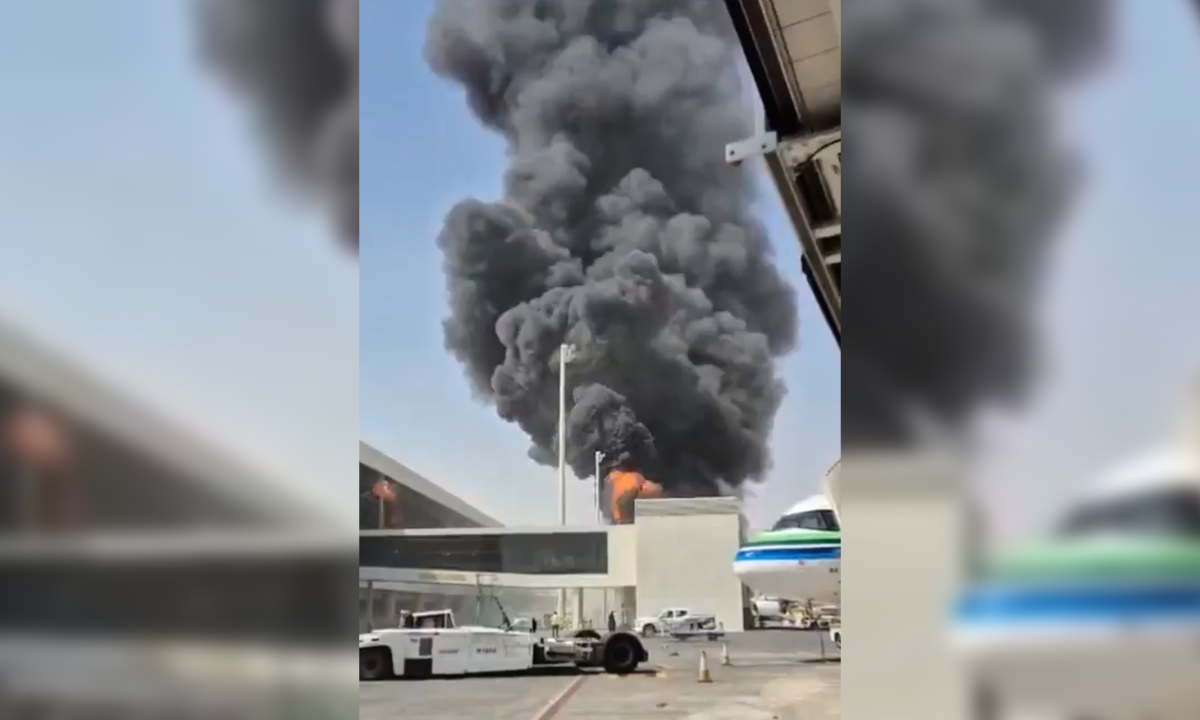
Turki al-Maliki, spokesperson for the Saudi-led military coalition, accused Houthi forces in Yemen of being behind the 10/10 attack on King Khalid airport in Riyadh, which killed at least 12 people and injured 309. Maliki labeled the incident a "war crime" and vowed a decisive response from the Saudi coalition.
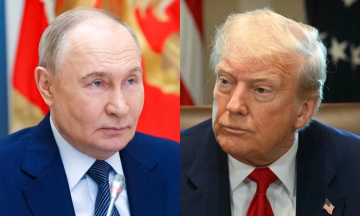
US President Donald Trump described the attack as "unacceptable" and announced plans to discuss the situation with Crown Prince Mohammed bin Salman, Saudi Arabia's de facto leader. Trump indicated he would soon decide whether the US would participate in strikes against Houthi alongside Saudi Arabia.
"We may do that. We just heard about the attack and we'll make a decision. We'll act very quickly," Trump stated.
 |
US President Donald Trump at Joint Base Andrews, Maryland on 10/10. Photo: AP |
Houthi has not yet commented on the attack, which occurred amidst escalating conflict in Yemen.
Hans Grundberg, the United Nations envoy for Yemen, characterized the 10/10 attack as a "serious escalation". He warned that "such actions pose a major threat to regional security, perpetuate the cycle of violence, and complicate peace efforts for Yemen".
Among the 12 killed were four Saudi citizens, two Bangladeshis, one American, one Egyptian, one Jordanian, one Syrian, one Palestinian, and one Sudanese. Egypt strongly condemned the incident, describing it as a violation of international law and a disregard for civilian safety.
United Nations Secretary-General Antonio Guterres expressed "profound shock", emphasizing that attacks targeting civilians and civilian infrastructure violate international law and "must cease immediately".
Qatar also condemned the attack as a "serious violation of Saudi Arabia's sovereignty, posing a direct threat to regional security, civilian safety, civilian facilities, and air operations". Qatar voiced support for all legitimate measures Saudi Arabia takes to protect itself.
Pakistan, which recently joined a joint defense treaty with Saudi Arabia, called the attack a "barbaric act, seriously threatening peace and security" in the Middle East.
In its statement, the Palestinian Ministry of Foreign Affairs expressed "solidarity with the brotherly Kingdom of Saudi Arabia" and supported all measures taken to protect its security, sovereignty, and the safety of its citizens and residents.
Oman stressed that all parties "need wisdom and should prioritize restraint, avoiding actions that broaden the scope of escalating tensions to ensure regional security and stability".
Saudi Arabia intervened in the Yemen conflict in 2015, leading an Arab coalition to push Houthi forces out of the capital, Sanaa, which the armed group had seized from government forces a year prior.
The conflict subsequently reached a stalemate, resulting in hundreds of thousands of Yemenis dying from fighting and famine. By 2022, Riyadh had reached an agreement with Houthi to freeze the conflict.
 |
Location of the Red Sea, Yemen, and Saudi Arabia. Graphic: Guardian |
However, the ceasefire collapsed this summer. Houthi launched a swift offensive, seizing control of Bab el-Mandeb, a strategic strait on the Red Sea, from government forces.
This week, the Yemeni government army initiated a counter-offensive to retake the area but has made slow progress, as Houthi tightens its siege on Taiz, the country's third largest city.
By Nguyen Tien (AP, AFP, Al Jazeera)