In a 6-3 ruling issued on 25/6, the US Supreme Court stated that the Department of Homeland Security's decision to terminate Temporary Protected Status (TPS) for approximately 350,000 Haitian and 6,000 Syrian immigrants "will not be subject to judicial review of its legality".
Temporary Protected Status shields recipients from deportation. The US grants TPS to individuals who would face danger upon returning to their home countries due to ongoing conflict, natural disasters, or other extraordinary conditions.
According to AFP, this ruling could impact over one million TPS holders from more than 10 countries, extending beyond just Syrian and Haitian residents in the US.
 |
Protesters in Washington called for maintaining TPS for Haitians in April. *Reuters*
During court arguments in April, attorneys representing Haitian and Syrian TPS recipients contended that their home countries remain unsafe. They also alleged that the Trump administration's action was "motivated in part by racial animus."
Justice Samuel Alito, who authored the majority opinion supported by five other justices, dismissed the accusation that race was a factor in the US government's decision to revoke TPS for Haitians.
"No quoted statement from the President or the Secretary of Homeland Security is overtly racist," Alito stated. "In essence, all expressed policy views could be based on racially neutral reasons."
Justice Elena Kagan, one of the three dissenting justices, declared that race clearly influenced the decision to revoke TPS for Haitians. She cited previous statements by Trump that she considered "so racially charged that the majority refused to include them in the text."
During the arguments, Acting Solicitor General John Sauer contended that President Trump's comments were misunderstood, and he was actually referring to "issues related to crime, poverty, and welfare dependence."
 |
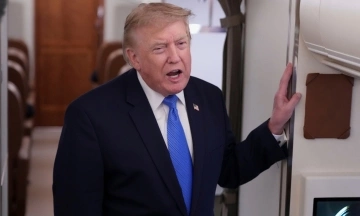
US President Donald Trump at the White House on 25/6. *AP*
President Trump had previously vowed to deport millions of immigrants and actively sought to dismantle the TPS program as part of a broader crackdown.
Since Trump assumed office, the US has revoked TPS for citizens from Afghanistan, Cameroon, Ethiopia, Honduras, Myanmar, Nepal, Nicaragua, Somalia, South Sudan, Venezuela, Yemen, in addition to Haiti and Syria.
Haitian citizens became eligible for TPS in 2010 following a major earthquake. The nation continues to grapple with extreme poverty, gang violence, and prolonged political instability. The US Department of State advises citizens against traveling to Haiti "due to kidnapping, crime, civil unrest, and a limited healthcare system."
TPS was extended to Syrian citizens in 2012 as the country was ravaged by conflict.
By Pham Giang (AFP)