Having topped Japan's electric vehicle sales charts for four years, the Nissan Sakura's latest update focuses on maintaining its strong market position rather than setting new benchmarks.
While not experiencing failures, the Nissan Sakura is facing increasing competition. Japan's best-selling electric vehicle (EV) has received a minor refresh to stay competitive in the kei-car segment, especially with the formidable Chinese rival, BYD, entering the market. This small EV debuted in 2022 as the production version of Nissan's IMk concept, introduced three years prior.
The most notable change is at the front, where the design has been refined with a body-colored grille, mirroring the Nissan Leaf. A revised front bumper features sharper angles and more prominent vertical elements along the sides. The LED headlights remain unchanged, as do the metal accents along the body and rear.
However, these updates apply only to the X and G trims, while the entry-level S version retains its original design.
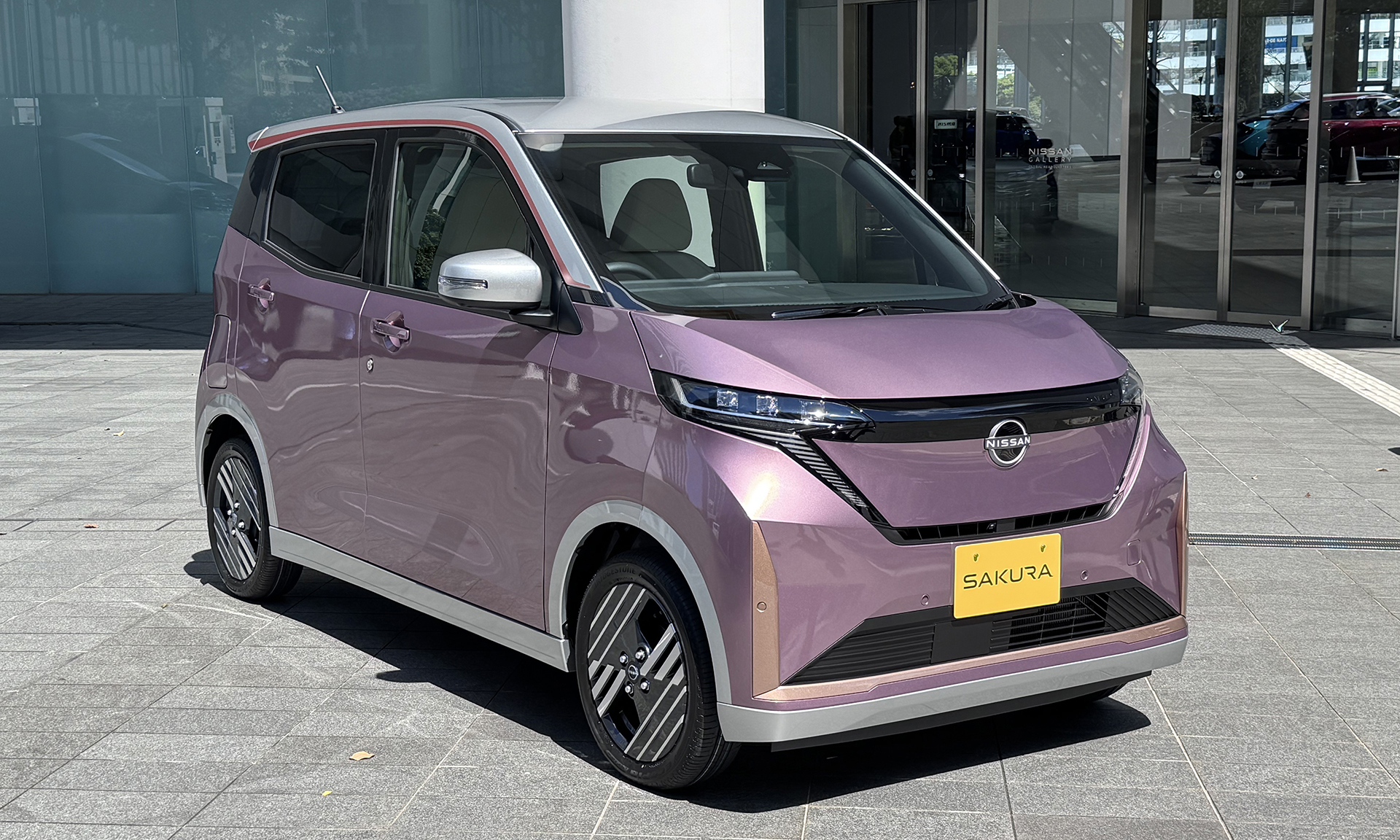 |
Nissan Sakura G version, featuring a two-tone body. Photo: Car Watch
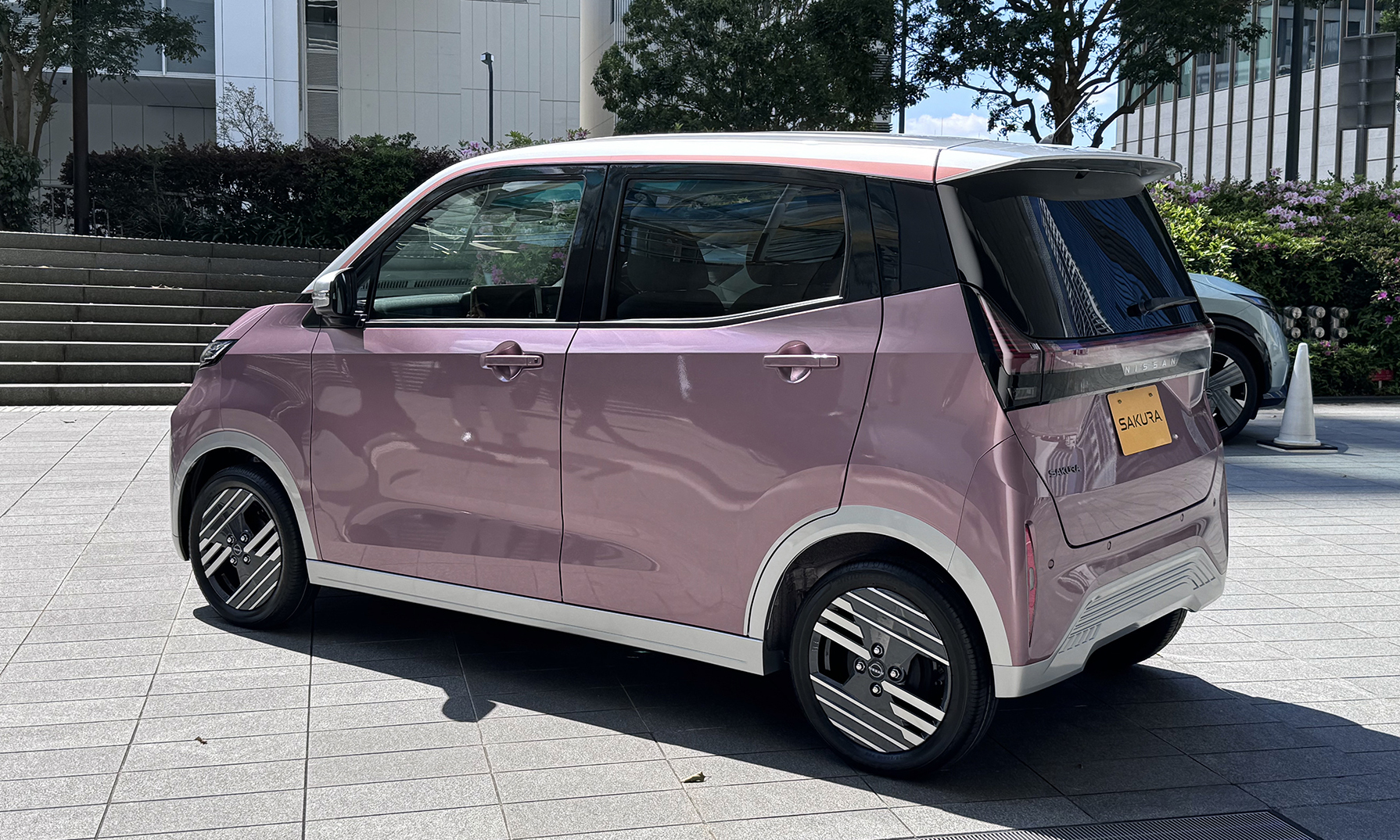 |
Newly designed 15-inch aluminum alloy wheels.
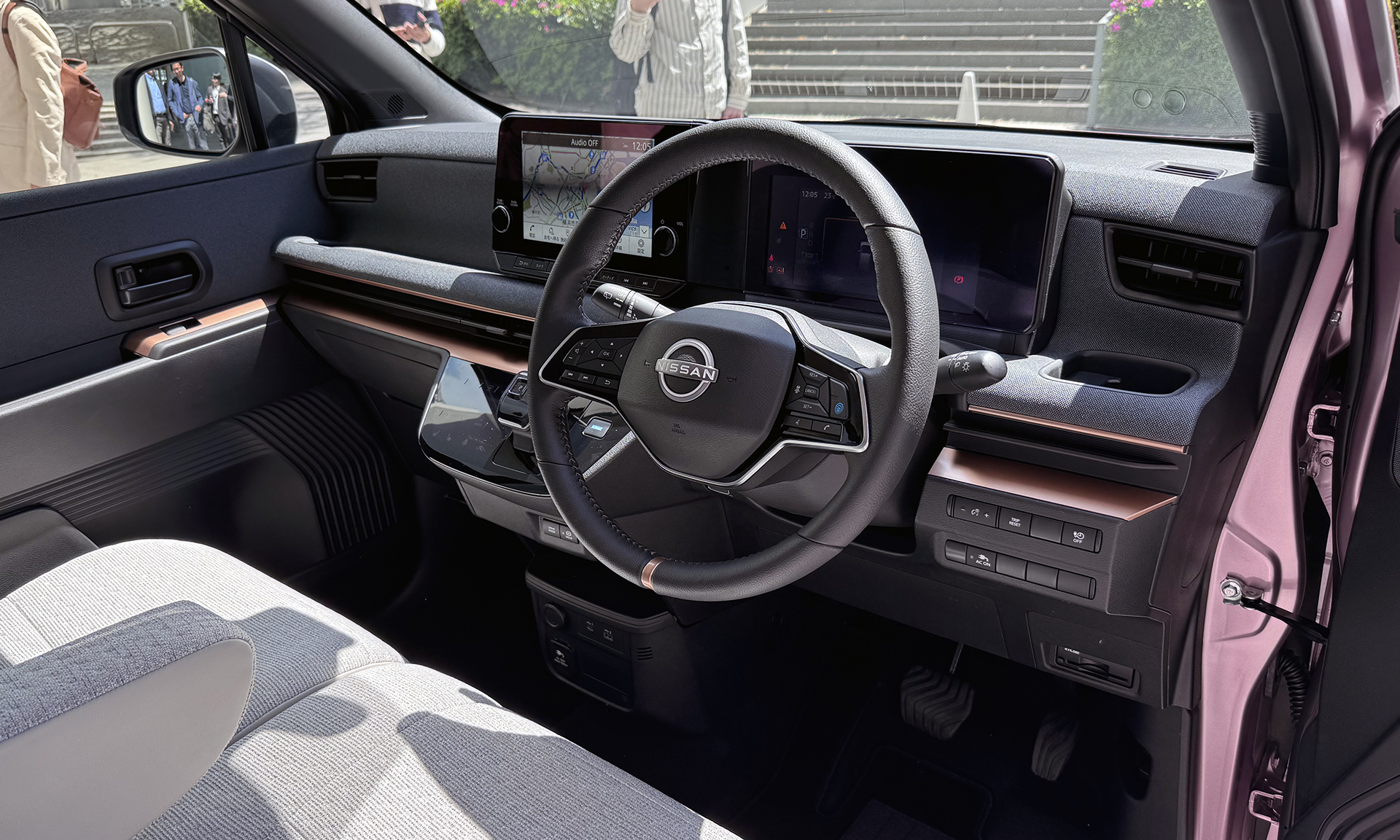 |
Added passenger side cup holder, improved airflow control, and repositioned drive mode switch for convenience.
The color palette now includes a new shade called Minamono Sakura, inspired by cherry blossom petals floating on water. This new color, combined with bronze accents and a Sterling silver roof, creates a distinctive three-tone appearance for the top-tier Sakura G.
The interior maintains a familiar look, but Nissan has introduced several functional enhancements. The drive mode switch has been moved to a more ergonomic position, and the passenger side now includes an additional cup holder.
Designers opted not to alter the 7-inch digital instrument cluster and 9-inch infotainment system but did relocate the USB Type-C ports lower on the center console.
For the mid-range X version, Nissan has made several popular options standard, including the intelligent around view monitor, heated front seats, and a heated steering wheel. The EV also gains automatic lock and unlock functionality, a rear seat reminder, a locking mechanism for the charging port, and an optional 1,500 W AC power outlet.
The Sakura retains its single electric motor, producing 63 horsepower and 195 Nm of torque. The 20 kWh lithium-ion battery remains unchanged, allowing the vehicle to travel up to 180 km on a single charge according to the WLTC cycle.
The updated kei-car is available for order in Japan, with initial deliveries expected this summer. Prices range from 2,448,600 yen ($15,400) for the standard X version to 2,998,600 yen ($18,900) for the top-of-the-line G version. With Japan's current clean energy subsidy of 580,000 yen ($3,650), the starting price drops to approximately 1,870,000 yen ($11,800).
Since its launch, the Sakura has played a pivotal role in popularizing and expanding electric vehicles in Japan. For three years leading up to fiscal year 2024, it topped the list of best-selling EVs in the country. However, similar to Europe and the United States, where EV market growth is slowing, sales in Japan are not trending upward. In fiscal year 2024, sales fell to just under 70,000 units, a decrease of 14,000 units from the previous year. Sakura's sales also saw a significant decline, prompting Nissan to implement these improvements.
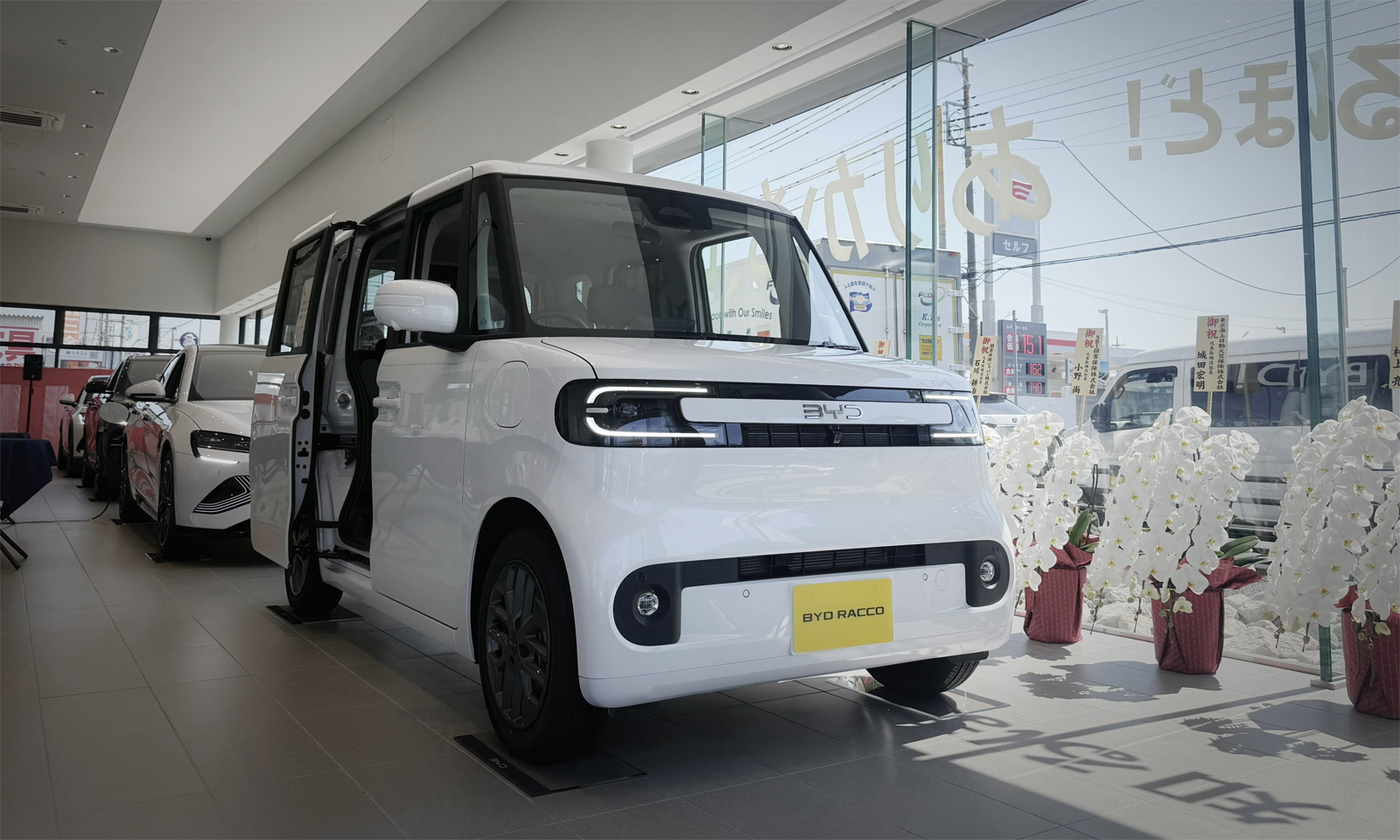 |
BYD Racco EV at a showroom in Japan. Photo: BYD
A primary objective of this upgrade is to attract customers to switch from gasoline-powered kei-cars to electric vehicles. With the clean energy subsidy, a basic model starting at 1,870,000 yen is positioned for mainstream consumers. Amid rising gasoline prices, the company will also emphasize the benefits of reduced operating costs, aiming to become a viable option for current kei-car users.
The small EV market in 2026 is expected to see a wave of new competitive models, leading to fierce competition. The Sakura's rivals include familiar domestic automakers: its twin, the Mitsubishi eK X EV, the Honda N-One e: and N-Van e:, as well as the upcoming BYD Racco.
The Racco is a wagon, a popular choice in the small car segment, and the Chinese automaker's pricing strategy is being closely monitored. The Racco's expected starting price is 2,600,000 yen (approximately $17,000). This is not BYD's first vehicle sold in Japan, but it is the first designed specifically for this market.
My Anh (according to Newswitch)