The city of Fort Collins, Colorado, recently incurred a USD 500,000 budget deficit after paying compensation to a driver who was handcuffed by police immediately after stopping to help victims of a traffic accident.
This incident adds to a growing list of controversial events where drivers have been wrongly accused despite not being under the influence of any substances. It also serves as a reminder that immediate roadside tests could prevent such mistaken arrests from the outset.
According to CBS Colorado, Jesse Cunningham, a Nebraska resident with medical training, pulled over to assist after witnessing a serious motorcycle accident in July 2021. Cunningham provided first aid, stating his actions helped save the injured motorcyclist's life.
However, once emergency responders secured the accident scene, attention shifted from the victims to Cunningham.
Fort Collins Police Department officer Jason Haferman reported smelling alcohol on Cunningham. Cunningham informed the officer he had consumed two beers several hours earlier.
Within minutes, Cunningham transformed from a good samaritan into a suspect for driving under the influence (DUI) of alcohol or drugs.
The lawsuit stated that Cunningham repeatedly requested a breathalyzer test at the scene, believing the device would prove he had not been drinking.
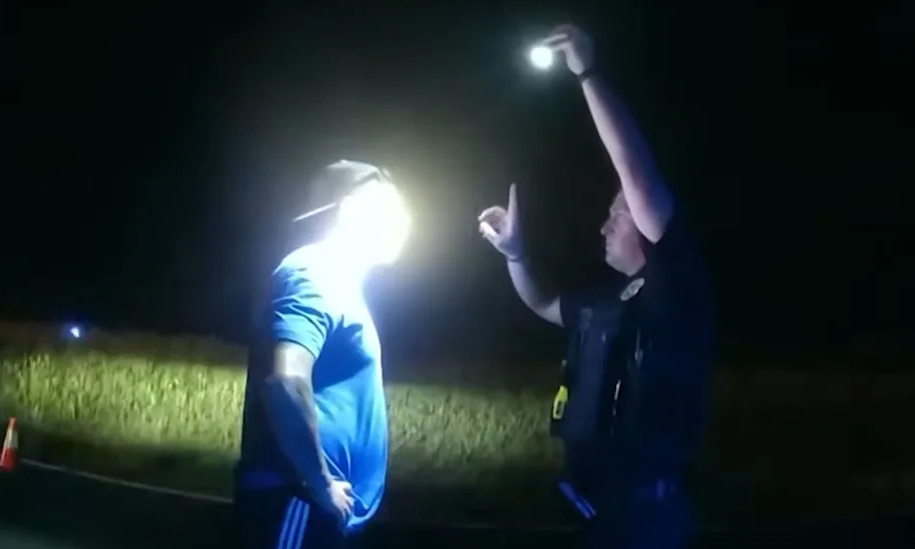 |
Jesse Cunningham (left) is asked by police to perform a field sobriety test. Photo: CBS News
Instead, Haferman directed Cunningham to perform field sobriety tests, which the officer concluded Cunningham failed. Police then proceeded with an arrest and compelled him to undergo a blood test.
Subsequent results confirmed he tested negative for both alcohol and illicit drugs. The charges were dismissed by the prosecutor's office approximately three months later. However, the lawsuit took years to reach a settlement between the two parties.
This is not the first time a sober driver has been charged with DUI, only for later tests to prove otherwise. In many similar previous cases, including another lawsuit in Colorado, drivers with 0,000% breathalyzer results or negative blood tests were still arrested and prosecuted by authorities before their cases were dismissed.
The problem of wrongly arresting so many sober drivers has even led Tennessee to recently re-equip its patrol force with breathalyzer devices.
This detail makes Cunningham's allegations particularly noteworthy. Had authorities conducted a preliminary alcohol test at the scene, they could have immediately determined the driver had not consumed alcohol. While a zero reading does not entirely rule out the possibility of a driver being impaired by drugs or controlled substances, such a result would help narrow the scope of the investigation. Depending on the context, a quick test could prevent an unnecessary arrest and save local budgets from expensive compensation payouts.
My Anh