In recent years, major Chinese cities such as Shenzhen, Shanghai, Guangzhou, and Nanjing have seen a surge in electric motorcycle battery swapping. This model allows users to fully "power up" their vehicles in minutes at a swap station, eliminating the need to plug in for hours at home or centralized charging points. This rapid development stems not only from public demand for convenience but also reflects market, safety, and policy shifts in these urban centers.
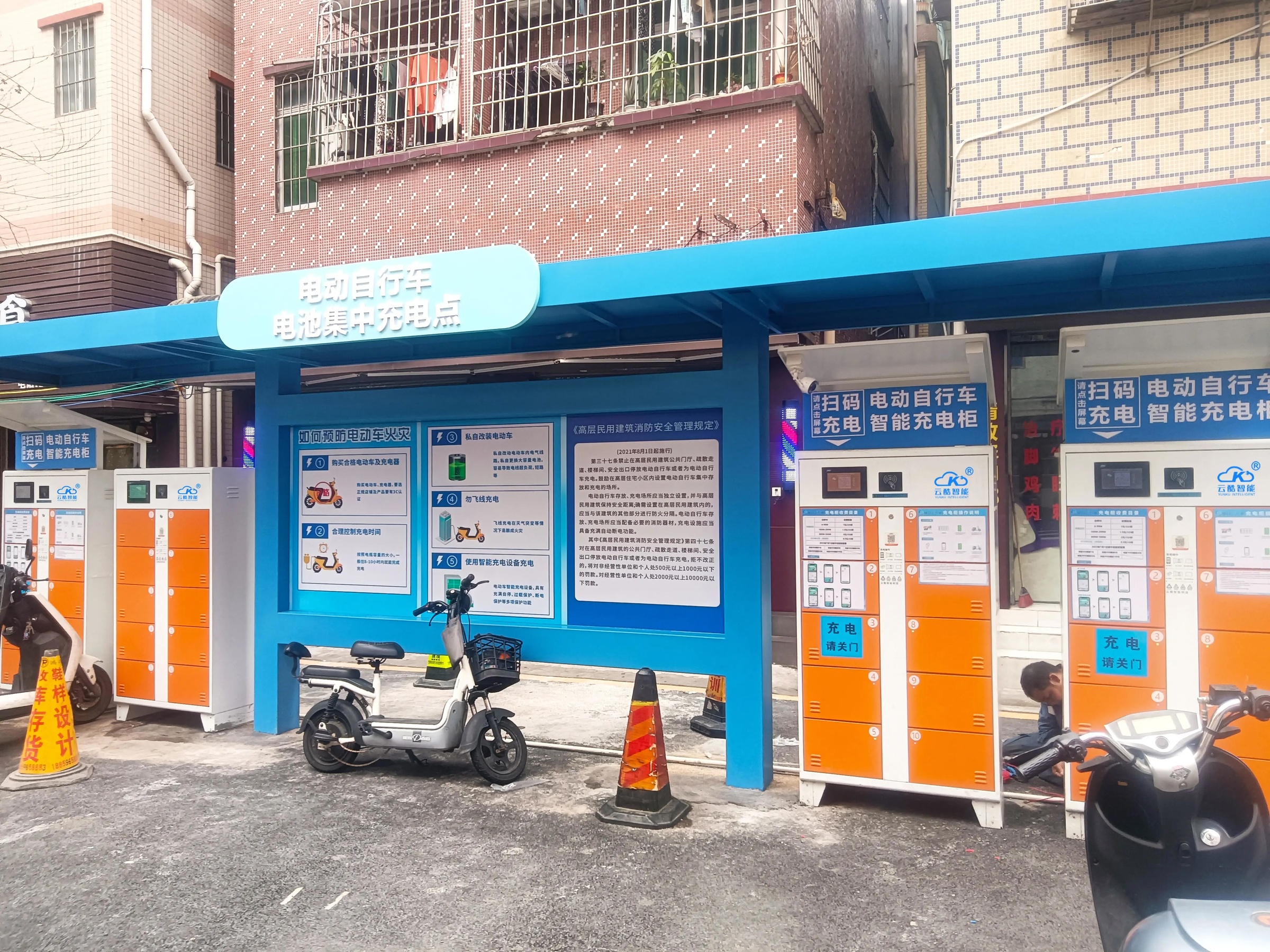 |
Battery swap station for electric motorcycles located in the courtyard of a residential area in Guangzhou. *Photo: Gzyunku*
Reasons for the rising popularity of battery swapping
China is the world's largest motorcycle market, with an estimated over 420 million vehicles in circulation. These vehicles are primarily used for personal commuting, delivery services, and urban transportation. The sheer volume of vehicles poses challenges for traditional charging, as residential electricity infrastructure is often insufficient. Many buildings lack dedicated charging areas, increasing the risk of power grid overload and fires. Consequently, battery swap stations have rapidly expanded to address these shortcomings.
Furthermore, major residential fires in China in recent years, often caused by charging electric motorcycle batteries in hallways or apartments, have prompted many cities to tighten regulations on in-building charging. These regulations require charging areas to be relocated to separate spaces or completely prohibit charging in non-compliant residential areas. In this context, battery swap stations offer a viable solution. Batteries are centrally managed by businesses, charged through automated processes, and equipped with temperature sensors and circuit breakers. Faulty batteries are removed before being returned to users, and stations feature fire extinguishing systems and warning alerts for dangerous situations.
Significantly, the battery swapping model is also popular among service drivers. It eliminates the need to lose valuable hours charging or searching for charging locations during their workday. This convenience has quickly led to greater adoption by service drivers, who are the most frequent users of electric motorcycle charging.
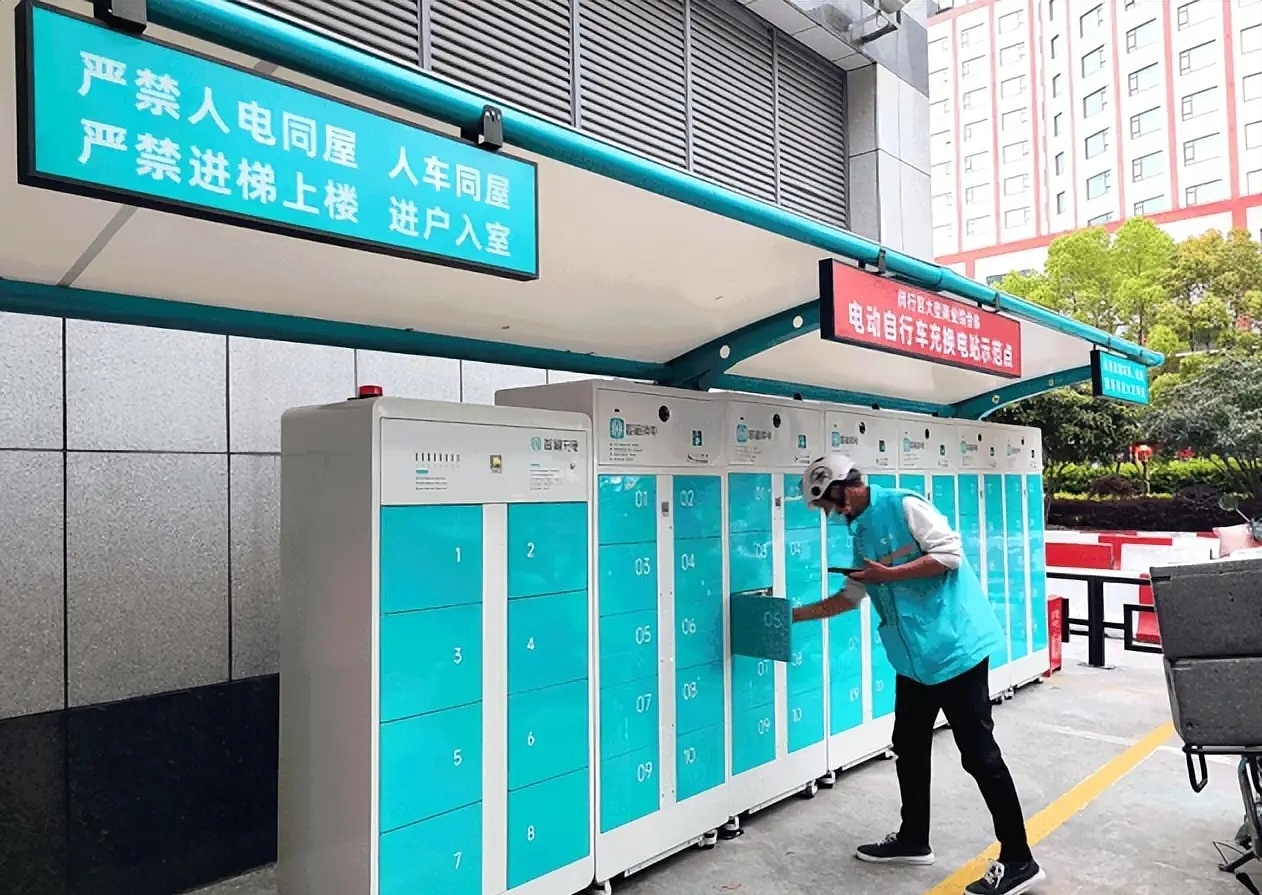 |
Battery swap stations are popular among service drivers in China. *Photo: Sohu*
Additionally, the battery is the most expensive component of an electric vehicle, accounting for approximately 30-40% of the vehicle's value. By switching to a battery rental model, with monthly or per-swap fees, users can purchase vehicles at a significantly lower price compared to those with included batteries. They also avoid concerns about battery degradation after a few years, as businesses are responsible for maintenance, replacement, and recycling of old battery packs. This makes electric motorcycles more accessible and accelerates the public's transition to electric vehicles.
According to an analysis by Tycorun, a battery and charging infrastructure provider in China, cities like Shenzhen, Guangzhou, Shanghai, and Nanjing have issued regulations supporting the deployment of battery swap stations. Some areas consider battery swapping the primary energy replenishment method for urban electric vehicles, with personal charging serving as a supplementary option. Businesses receive support for station installation space, expedited operating permits, and investment cost incentives. The direct involvement of local governments facilitates rapid station coverage, creating a dense network in residential areas, office buildings, and traffic hotspots.
Despite rapid growth, the battery swapping model still faces inherent barriers, such as high investment costs for stations and a lack of fully standardized batteries, which prevents different vehicle manufacturers from using each other's batteries. There is also a segment of users who prefer to own their batteries. Nevertheless, given the large market size and high demand for mobility, battery swapping is considered a practical solution for balancing mobility needs and public safety in China.
Battery swapping model in Vietnam
In Vietnam, the electric motorcycle battery swapping model has existed for some time but has not yet gained widespread popularity. VinFast piloted battery swapping in 2020 with its Ludo, Impes, and Klara S models, but discontinued it in late 2022 due to low demand. In 2024, driven by increasing electric motorcycle sales and the demand for fast charging from service drivers, the company re-entered this model through its partner V-Green. VinFast aims to build 50,000 battery swap stations this year and 150,000 stations in three years, alongside launching a series of "Max" models that support battery swapping.
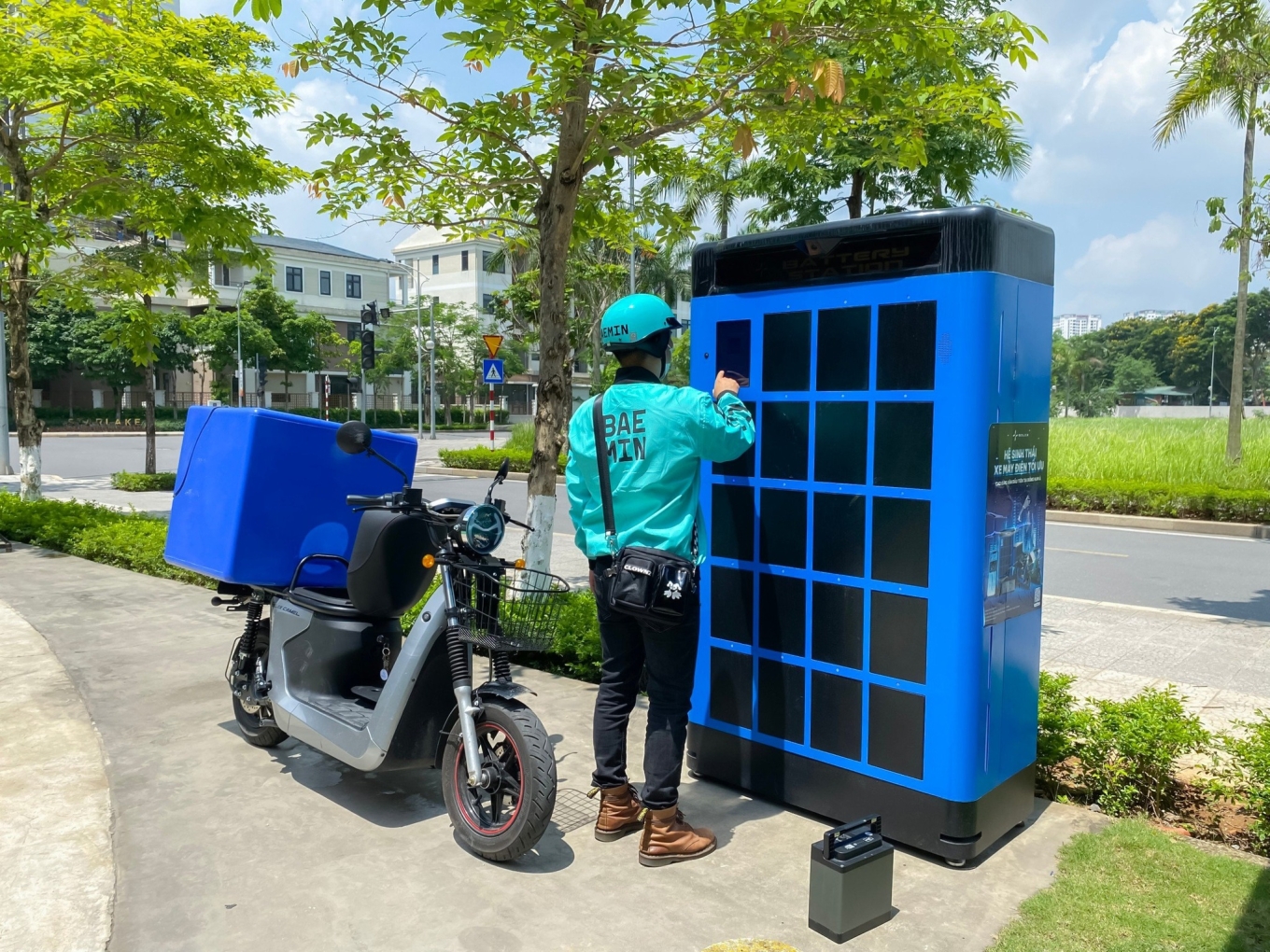 |
A battery swap station for Selex electric motorcycles in Hanoi. *Photo: Selex Motor*
In addition to VinFast, Selex Motor has continuously maintained a battery swapping model since 2023, with approximately 100 stations, over 523,000 battery swaps, and plans to expand to 10,000 stations, strongly targeting the delivery sector. Honda also began its participation in mid-2024 with the CUV e: model and 18 dealers supporting battery swapping, based on the Mobile Power Pack e: battery standard used across multiple vehicles. TMT is expected to join in 2025 with a network of battery swap stations at gas stations, though the specific scale and roadmap have not yet been announced.
Ho Tan