Following the Tet holiday, vehicles left idle for several days may exhibit issues like difficult starting, unstable operation, or unusual noises. A basic inspection of key components before resuming use can prevent malfunctions and ensure safe driving.
Battery
For both motorcycles and automobiles, the battery is the first component to inspect after a prolonged period of inactivity. Batteries naturally self-discharge even when the vehicle is off, with some electrical systems continuing to draw power in the background, leading to a gradual voltage drop. Consequently, if a vehicle remains unused for two weeks or more, the battery's voltage can fall below the acceptable level, particularly for older batteries.
Common indicators of a weak battery include difficult starts, requiring multiple attempts to crank the engine, or flickering headlights and dashboard displays. In rare instances, the vehicle may not respond to the ignition button or produce only a "click" sound, signaling insufficient power to turn the engine. If the battery is weak, owners should recharge it. Motorcycle owners can remove the battery for charging at a service center or use a specialized home charger. For automobiles, an external charger or jump-starting from another vehicle can provide temporary power, after which the engine should run for 15-30 minutes to allow the battery to recharge.
 |
An automobile battery being inspected and replaced. Photo: Ho Tan |
Engine oil
Allowing the engine to idle also helps circulate lubricating oil to the engine's metal components. After a long period of disuse, engine oil settles at the bottom of the oil pan, leaving internal parts inadequately lubricated compared to regular vehicle operation.
Tires
Tires naturally lose pressure over time, even when a vehicle is not in use. Air can gradually escape through the valve or tire walls, leading to a pressure drop after several weeks. For motorcycles, this typically results in a heavy steering feel and reduced handling agility. For automobiles, the vehicle may feel sluggish upon startup or exhibit increased fuel consumption.
Automobiles parked in a single spot for extended periods may also develop temporary flat spots on the tires at the point of ground contact. Upon driving, owners might notice a slight vibration during the initial few kilometers. This phenomenon typically resolves as the tires warm up and regain their original shape. However, if a vehicle is left unused for too long or with critically low pressure, the tires could sustain structural damage and may not recover their original form.
Before resuming use, vehicle owners should check tire pressure using a specialized gauge or a tire inflator. The recommended pressure is typically found on a sticker on the frame for motorcycles or on the driver's side door jamb for automobiles. Maintaining correct tire pressure ensures stable vehicle operation, optimal road grip, and minimizes the risk of uneven wear on the tire sidewalls.
Brake disc rust removal
After a prolonged period of inactivity, the braking system, particularly automobile brake discs, can develop a thin layer of rust from exposure to humid air. This is a common occurrence, especially in damp conditions or when vehicles are parked outdoors.
Upon resuming operation, this rust layer may cause the brakes to emit a slight squeak or feel less smooth than usual. For motorcycles, a similar condition can affect the brake pad and disc surfaces, leading to reduced braking effectiveness during initial applications.
In most cases, this is a temporary issue. Owners can resolve it by driving at low speeds and lightly applying the brakes a few times to clean the contact surface between the pads and discs. After a short distance, the braking system should return to normal operation.
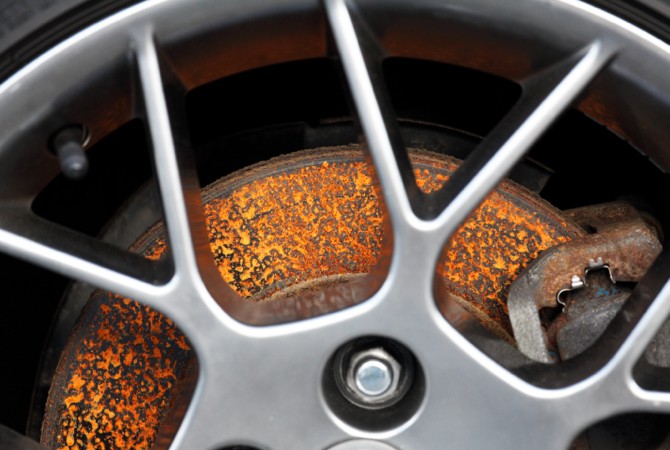 |
Brake discs can rust after a long period of parking in damp, humid conditions. Photo: Wagnerbrake |
Engine bay inspection
In Vietnam, vehicles parked for extended periods, particularly in less-frequented areas or near trees and vacant lots, can attract pests like mice, cockroaches, or other insects. The automobile engine bay, with its numerous crevices, insulation materials, and electrical wiring, offers a suitable environment for rodents to build nests.
Rodents can chew through electrical wires, hoses, or rubber components, compromising the vehicle's electrical system and operation. This can lead to warning light errors, starting failures, or even potential electrical shorts. Additionally, insect carcasses or waste may cause unpleasant odors when the vehicle is restarted.
Before starting the vehicle, owners should open the hood to conduct a preliminary inspection of the engine bay. Look for signs like chewed wires, disturbed insulation, or accumulated debris and dry leaves. If any abnormalities are detected, address or clean them before operation to prevent potential damage.
Ho Tan