A report released today, 9/12, by professional services group EY indicates that policy shifts are occurring as the transition to electric vehicles (EVs) progresses slower than anticipated. While Chinese consumers are purchasing more EVs, their interest lies less in the vehicles' operational mechanics and more in their integration into a digital lifestyle.
While automakers advocate for a gradual reduction in fossil fuel use as an industry solution, electric transport advocacy groups contend that a rapid shift to EVs is essential to curb CO2 emissions.
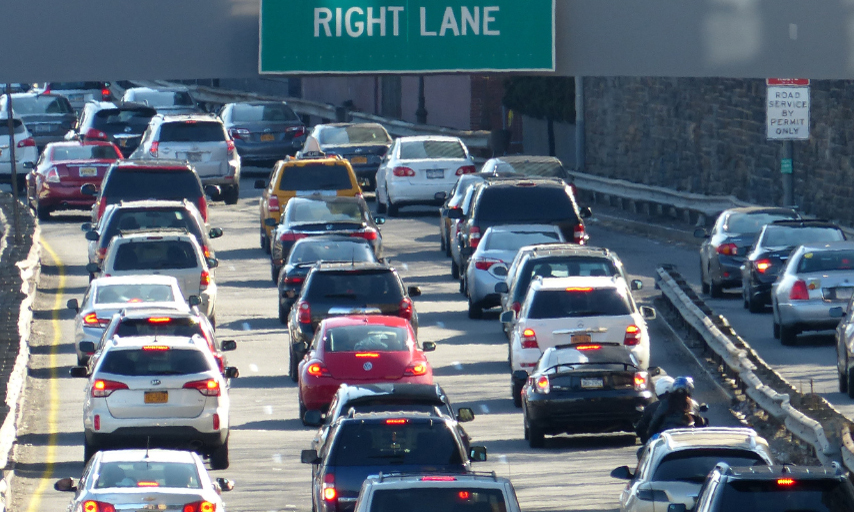 |
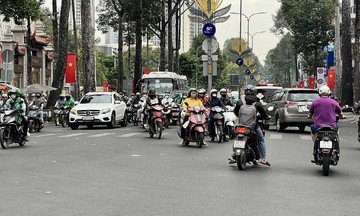
A crowded street with vehicles in New York, US. Photo: Traffictickets. |
Western policymakers have implemented measures, such as import tariffs, to shield their markets from the influx of heavily subsidized Chinese electric vehicles. However, US and European automakers also face competition from Chinese gasoline-powered vehicles in the global market.
In a bid to boost gasoline-powered vehicle sales, last week, US President Donald Trump proposed rolling back fuel efficiency standards introduced by his predecessor. Meanwhile, the European Union may soon unveil a scaled-back version of its plan to phase out internal combustion engines by 2035.
According to the EY report, half of global car buyers plan to purchase a new or used internal combustion engine vehicle in the next 24 months, marking a 13 percentage point increase compared to 2024.
The preference for battery electric vehicles and hybrid vehicles decreased by 10 and 5 percentage points, respectively, falling to 14% and 16%.
Among potential EV buyers, 36% are reconsidering or postponing their purchase due to geopolitical developments, EY stated.
Recently, 6 EU member states jointly petitioned the European Commission (EC) to relax the ban on the sale of internal combustion engine vehicles, effective from 2035. The joint letter, signed by the prime ministers of Bulgaria, the Czech Republic, Hungary, Italy, Poland, and Slovakia, requested the inclusion of low-carbon and renewable fuels in the plan to reduce carbon emissions from transport.
Early in December, according to a report by Handelsblatt, the EC might delay the announcement of an automotive industry support package. This package could potentially weaken the 2035 internal combustion engine phase-out plan, a move lobbied for by Germany and automakers.
My Anh (according to Reuters)