SUVs are ubiquitous, growing larger, taller, and outselling other segments. Most automakers capitalize on this trend, though they rarely openly admit it. SUVs generate high profits and benefit from more lenient emission regulations related to vehicle size. However, the Lexus ES is bucking this trend with its new generation.
During the first test drive event for the 2026 ES, chief engineer Kohei Chiashi was asked: "Why are luxury sedans still important in a world of SUVs?" His response deviated from the typical polished answers often heard from executives.
"Personally, I prefer sedans," Chiashi stated, adding that the current proliferation of SUVs makes him unhappy. He expressed a strong commitment to not abandoning the ES line, a sentiment that carries significant weight given Lexus's recent history.
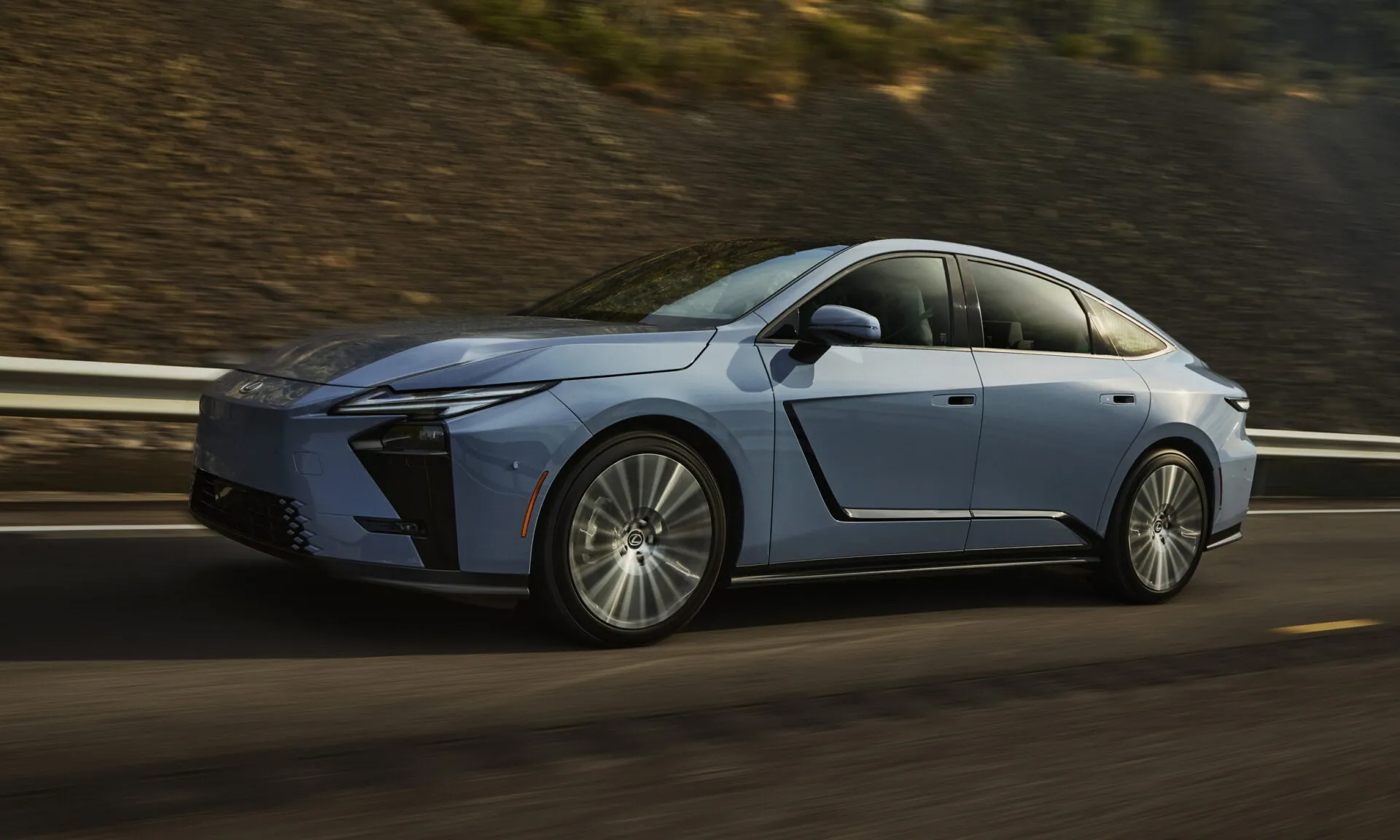 |
2026 Lexus ES in the U.S. Photo: Lexus |
Lexus has witnessed several of its sedan lines disappear or diminish in importance. The GS model was discontinued in 2020, and the LS model is becoming increasingly niche, with Lexus even considering replacing it with a 6-wheel minivan. The future of traditional luxury sedans appears more uncertain as SUVs continue to dominate nearly every segment.
In this environment, ensuring the ES remains relevant involves more than just refreshing its existing formula. Lexus has significantly expanded the sedan's role. The new generation now supports both hybrid and all-electric powertrains, while also becoming larger and more spacious.
A major challenge involved innovating the platform itself. According to Chiashi, the performance differences when utilizing various powertrains on the same platform were far more pronounced than initially anticipated. Achieving the target performance values for each version required entirely distinct engineering solutions.
This proved much more difficult than the chief engineer predicted, particularly concerning collision resistance, operational performance, and handling. Different weights and centers of gravity fundamentally altered each vehicle's movements.
For example, the all-electric version features its main battery centrally located within the chassis. In contrast, the hybrid version utilizes a different type of battery positioned elsewhere. This distinction means the way vibrations transmit through the chassis varies entirely, leading to distinct characteristics for each model.
Consequently, the design team had to reinforce the core frame of the hybrid version. This step was unnecessary for the electric version, as the battery's placement already contributed to structural integrity.
Chiashi affirmed that Lexus does not view the ES as a reluctant compromise or a farewell. Instead, the focus remains on preserving the model's core identity: comfort, generous cabin space, and effortless long-distance driving.
In the U.S., all new 2026 Lexus ES models will integrate 5G connectivity. They will also feature a standard integrated dash camera, or "drive recorder" as Lexus calls it, capable of storing up to 90 one-minute continuous video clips, while simultaneously recording vehicle speed and location. Owners can play back these video clips on the infotainment screen and download them to a USB.
Pricing for the 2026 Lexus ES starts at USD 48,895 for the 350e version, increasing to USD 51,095 for the ES 350h version, and peaking at USD 51,895 for the ES 500e version.
By My Anh (according to Carscoops)