 |
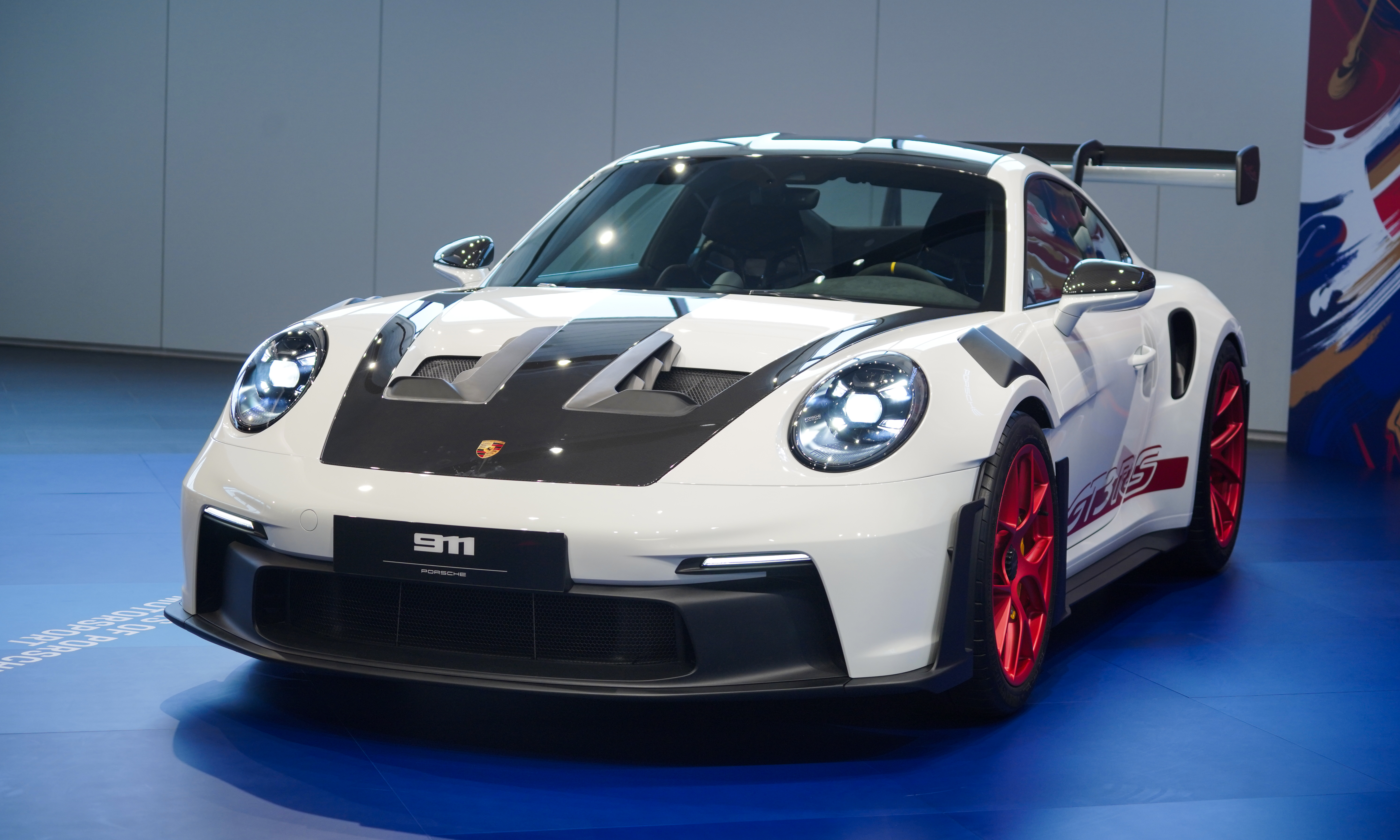
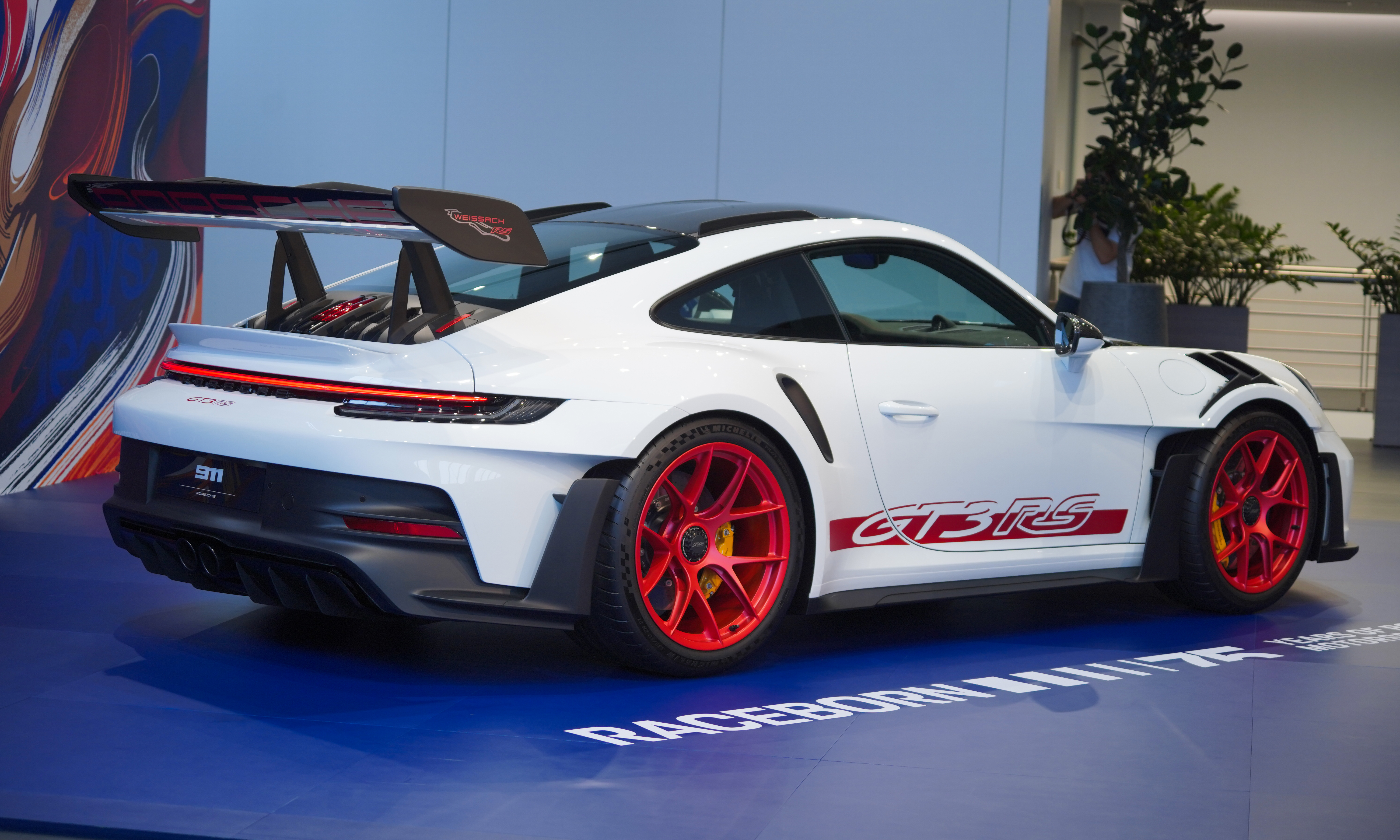
The 911 GT3 RS Weissach was showcased at the Porsche Sai Gon center. This street-legal race car, engineered by Porsche, integrates advanced technologies derived from motorsports, catering to enthusiasts who seek track performance alongside daily driving practicality.
The standard Porsche 911 GT3 RS starts at nearly 17.7 billion VND. However, the specific model featured in this article, equipped with the Weissach package and additional options, commands a price exceeding 21.7 billion VND.
 |
The GT3 RS builds upon the standard GT3, featuring a refined chassis, enhanced aerodynamic solutions, and lightweight materials. These modifications reduce weight and optimize the car's handling for track performance.
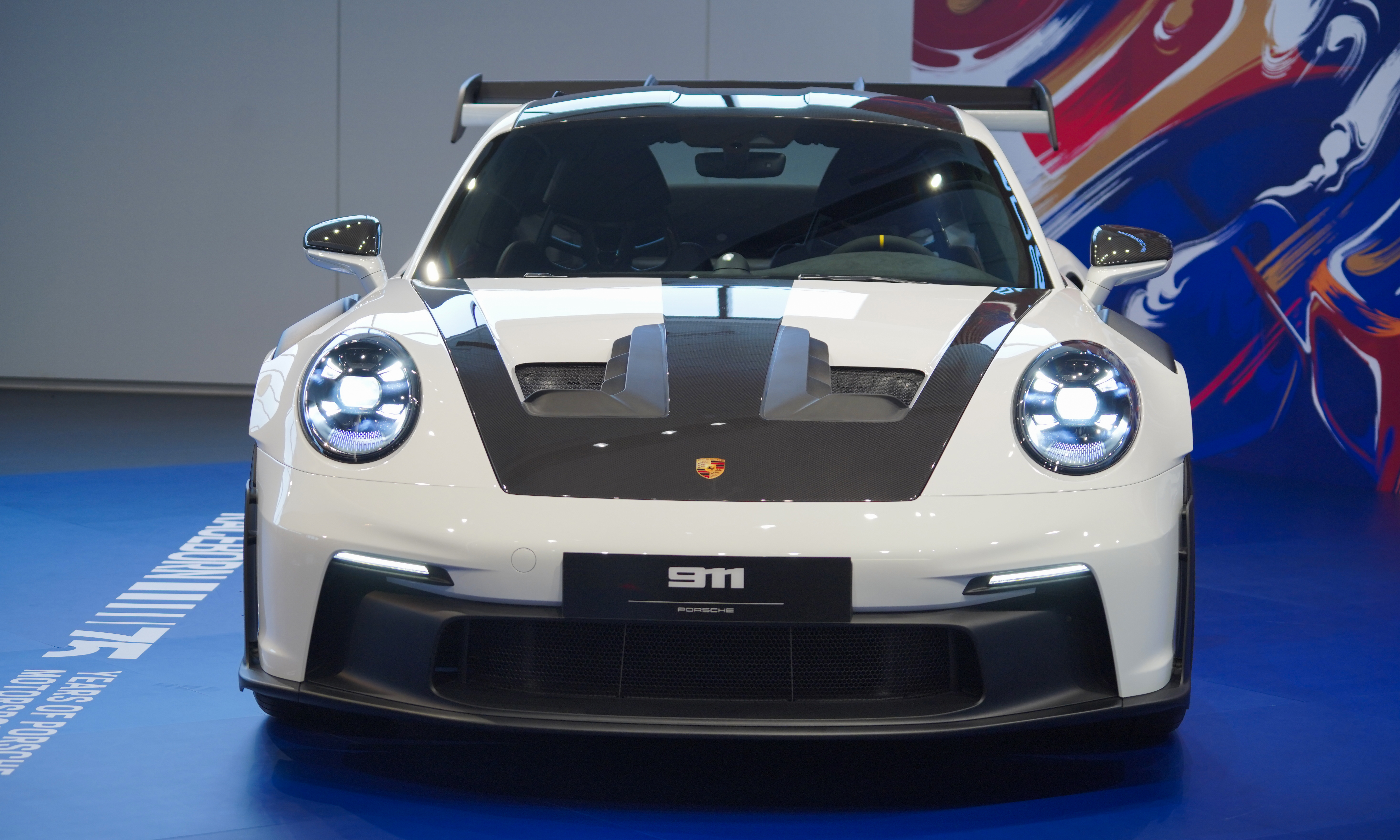
The front fascia boasts two prominent S-Duct style air intakes, typical of high-performance race cars. For this model, Porsche replaced the traditional three-radiator configuration with a single, large, angled radiator. This design, inspired by the Le Mans-winning 911 RSR and the GT3 R race car, enhances cooling efficiency and aerodynamics. As a result, the front trunk storage is eliminated.
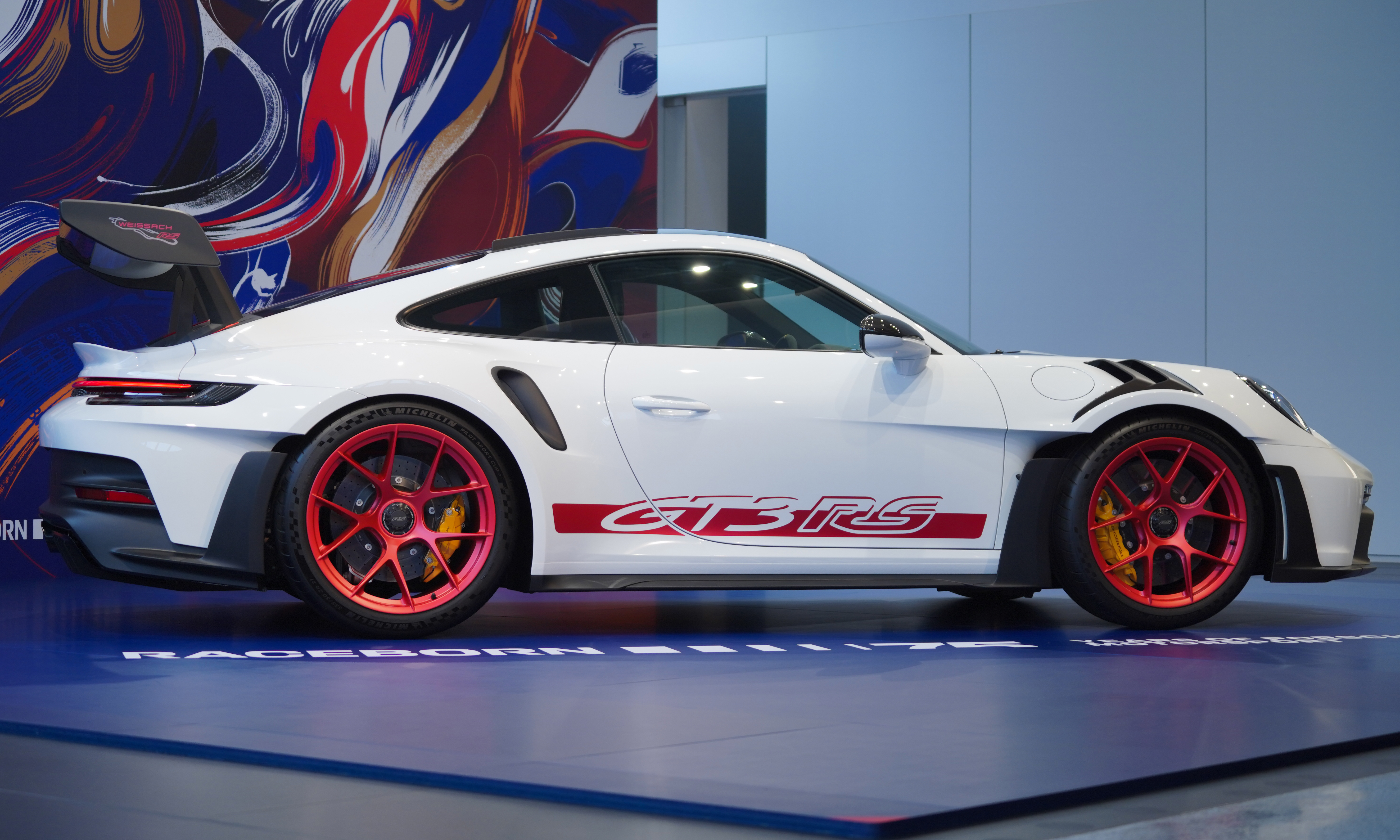 |
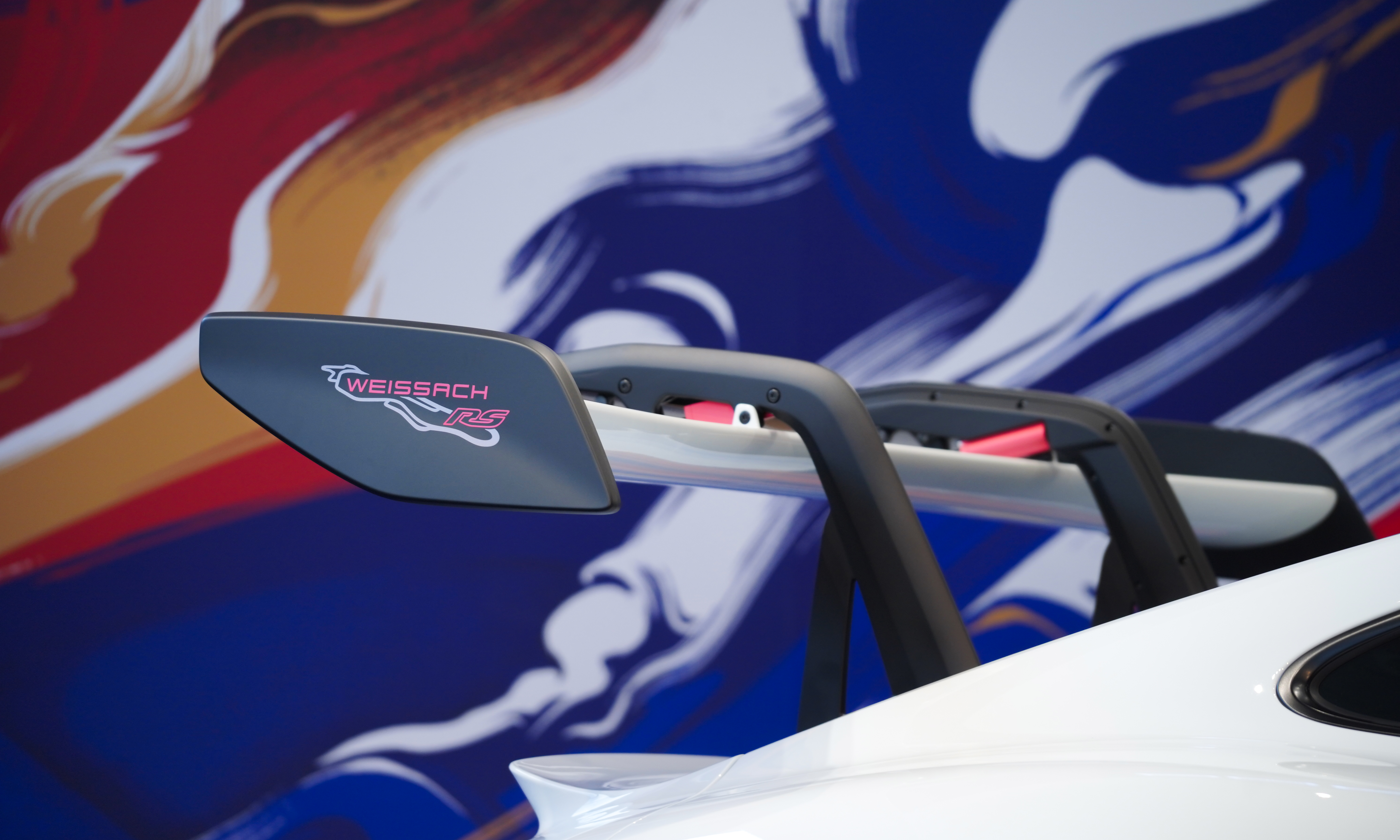
Weissach, a town in Baden-Württemberg, Germany, serves as Porsche's global hub for product research and development (R&D), housing its largest R&D center.
The Weissach package incorporates carbon fiber components on the roof, hood, and a section of the rear wing, shaving an additional 15 kg off the car's weight. The standard vehicle weighs around 1,450 kg.
 |
To reduce weight, the GT3 RS utilizes thinner glass than the standard model. Its front double-wishbone components are teardrop-shaped to minimize air resistance and enhance high-speed stability.
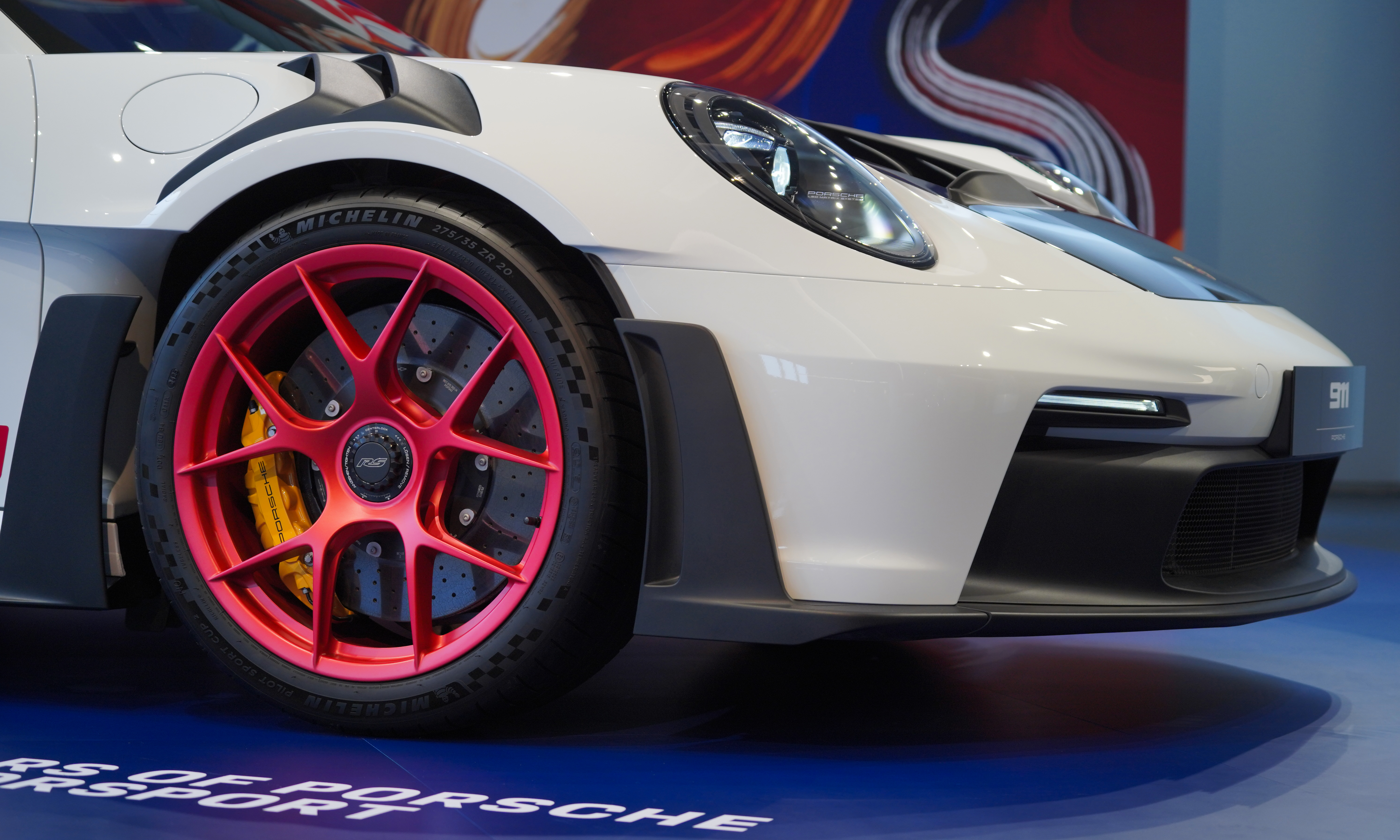 |
The standard GT3 RS is equipped with aluminum alloy wheels. However, the Vietnamese owner selected optional lightweight magnesium wheels. The high-performance ceramic brake system is also an optional extra, costing over 676 million VND.
The ceramic brakes are paired with yellow calipers, featuring 6 pistons at the front and 4 at the rear. The car rides on 20-inch front and 21-inch rear wheels. Air fins, side air intakes near the wheel arches, the hood, and both front and rear bumpers collectively generate a maximum downforce equivalent to 40 kg.
 |
 |
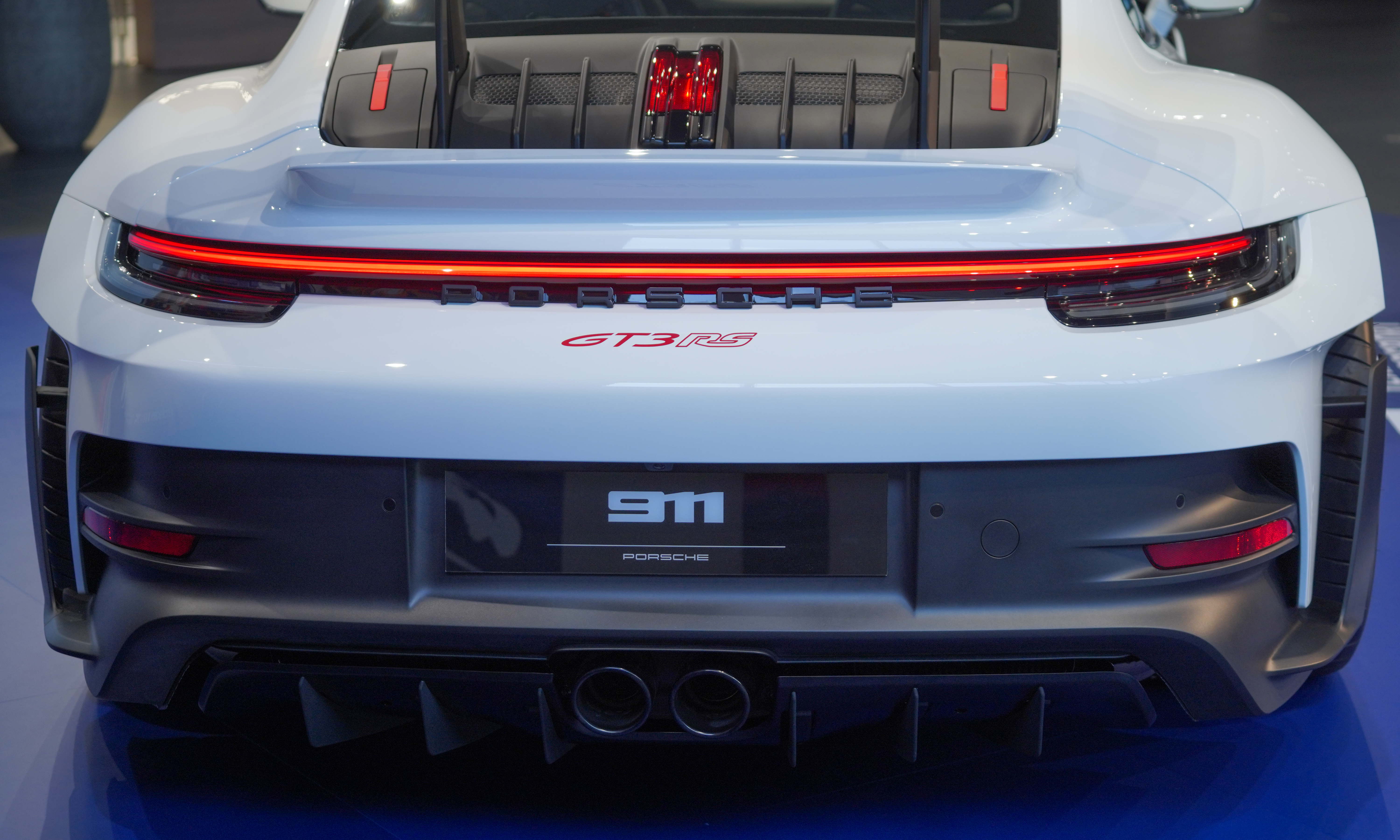
The GT3 RS Weissach incorporates a drag reduction system (DRS). Strategic airflow management, including side air channels, underbody aerodynamics, front and rear bumper designs, and the rear wing, produces downforce of 409 kg at 200 km/h and 860 kg at 285 km/h.
The GT3 RS's rear wing automatically adjusts to enhance downforce. It also functions as an "air brake" when the driver initiates deceleration.
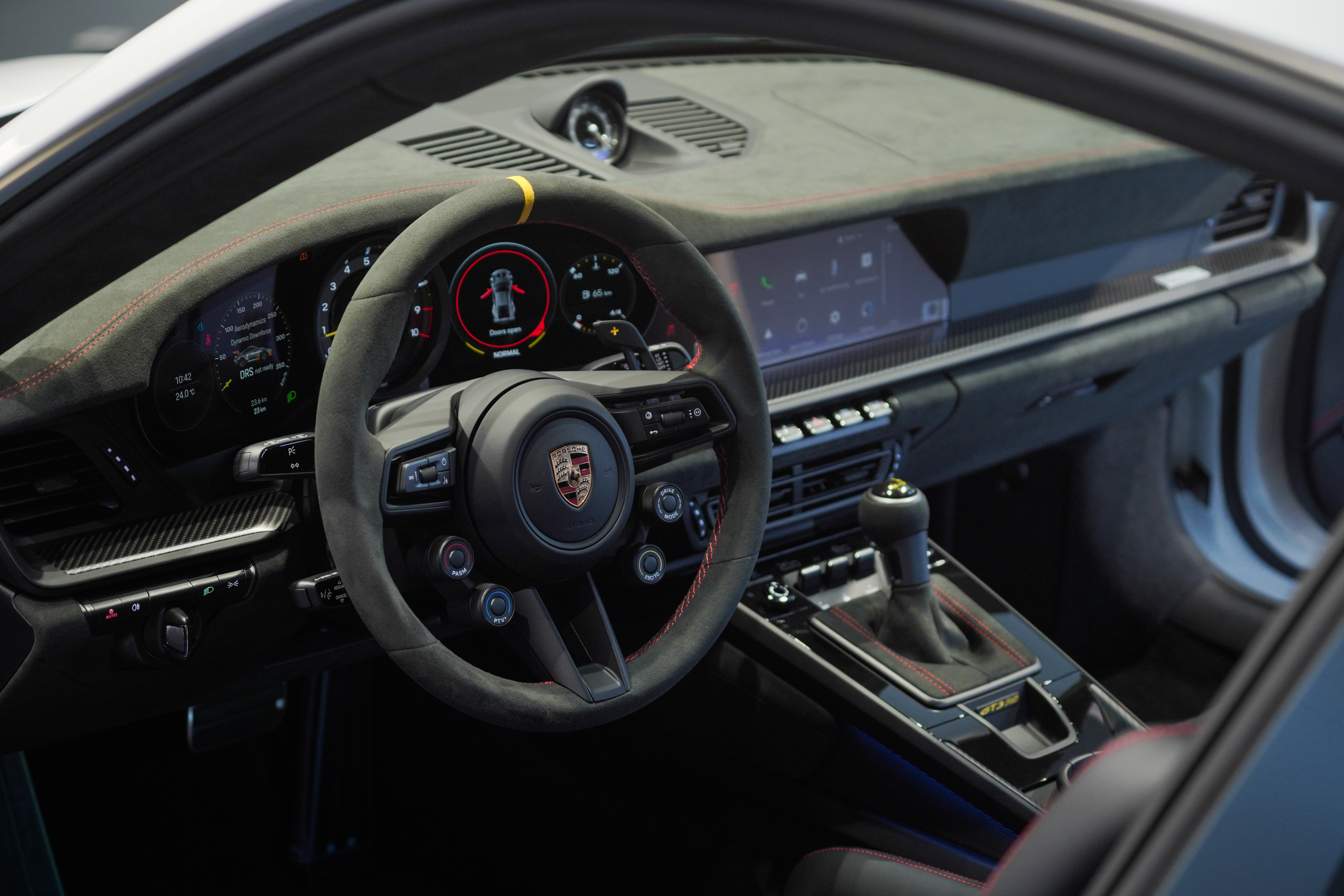 |
The GT3 RS cockpit largely mirrors the standard version. The Weissach interior package adds numerous black carbon fiber accents.
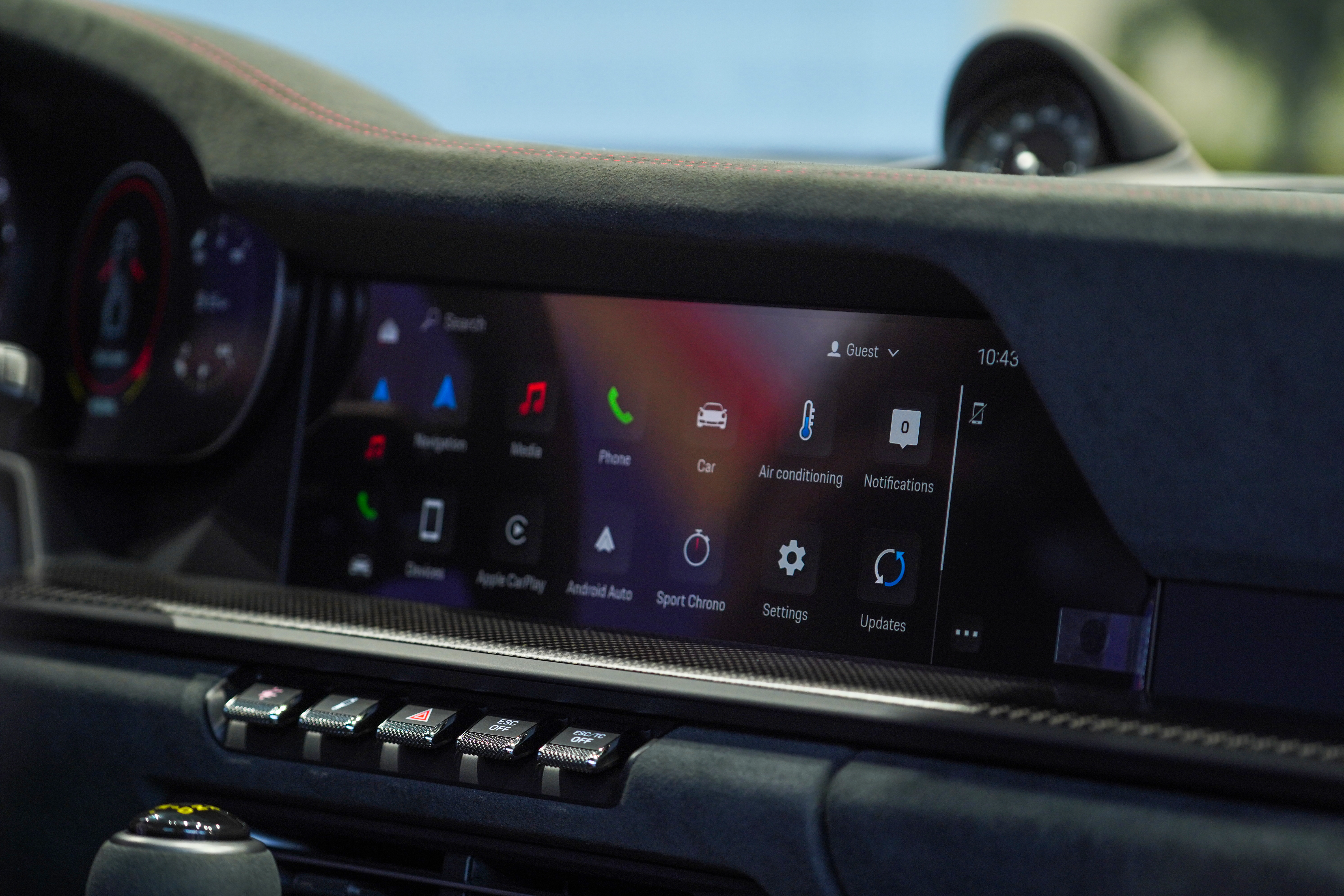 |
The infotainment system is consistent with other 911 models. A prominent feature of the cockpit is the suede-wrapped dashboard, accented with contrasting red stitching.
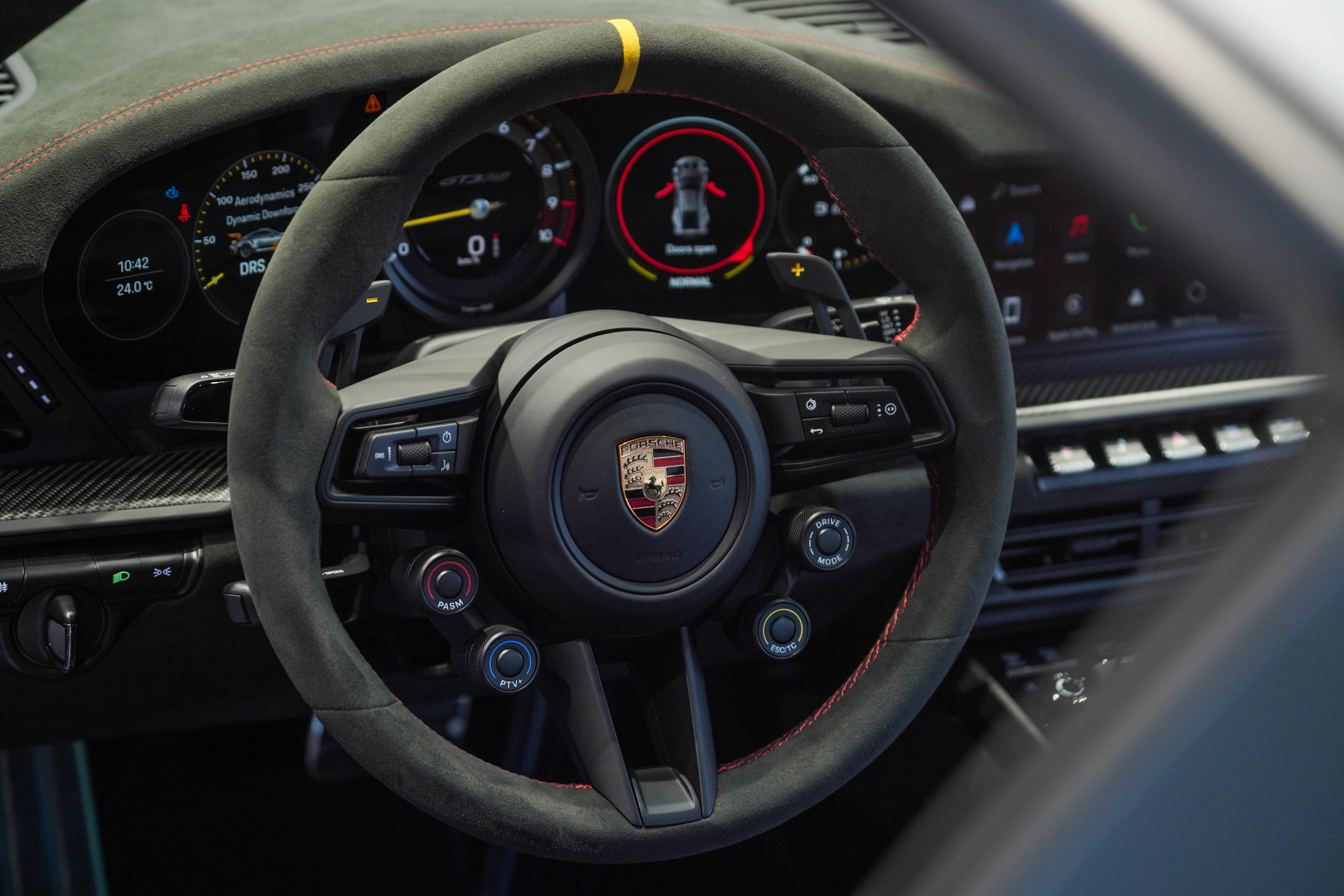 |
The GT3 RS steering wheel features additional rotary knobs, allowing the driver to fine-tune the suspension (PASM), torque vectoring (PTV+), and vehicle stability control (ESC/TV).
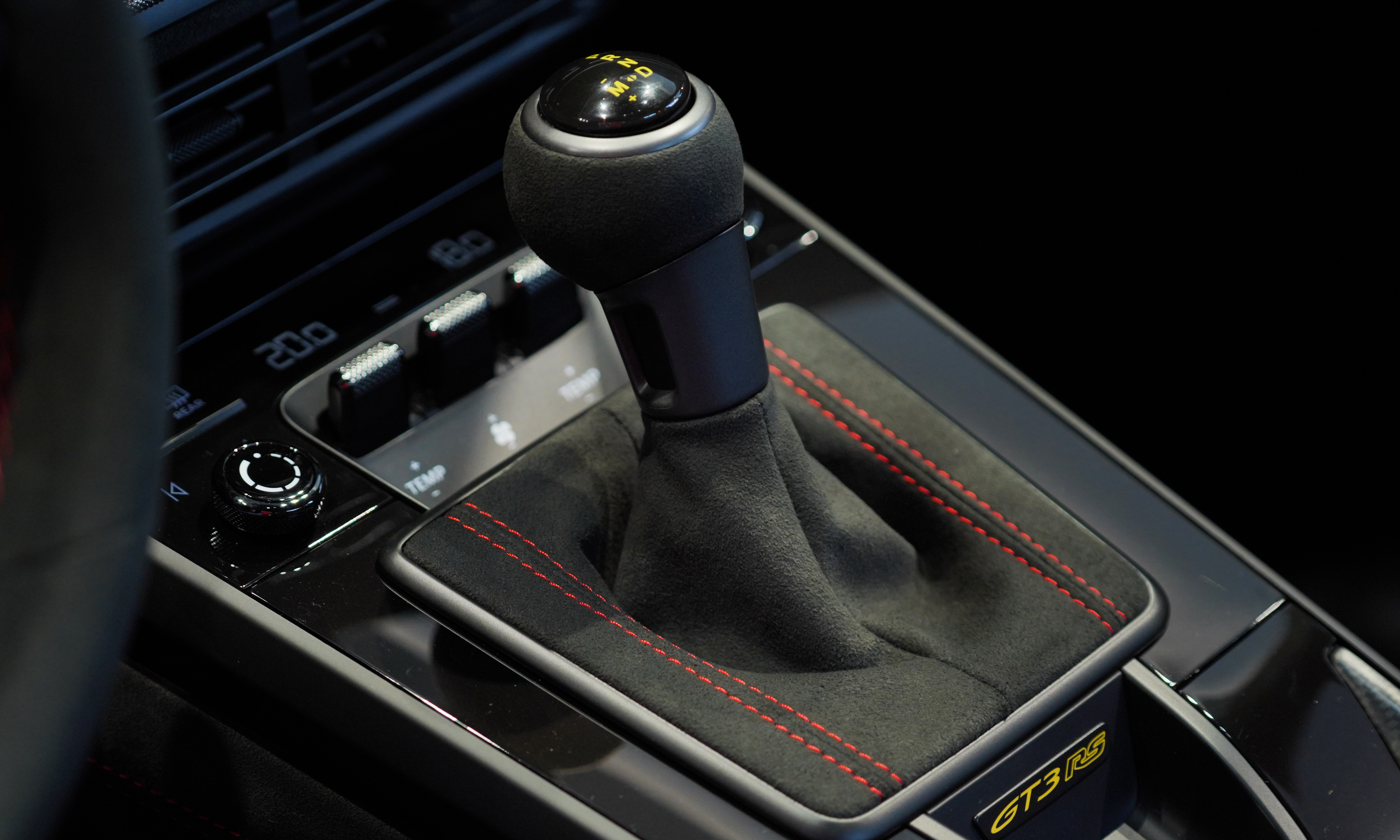 |
A 7-speed PDK gearbox is standard on the GT3 RS. It is powered by a 4.0 I6 naturally aspirated engine, producing 525 horsepower and 465 Nm of torque. The car accelerates from 0-100 km/h in 3.2 seconds.
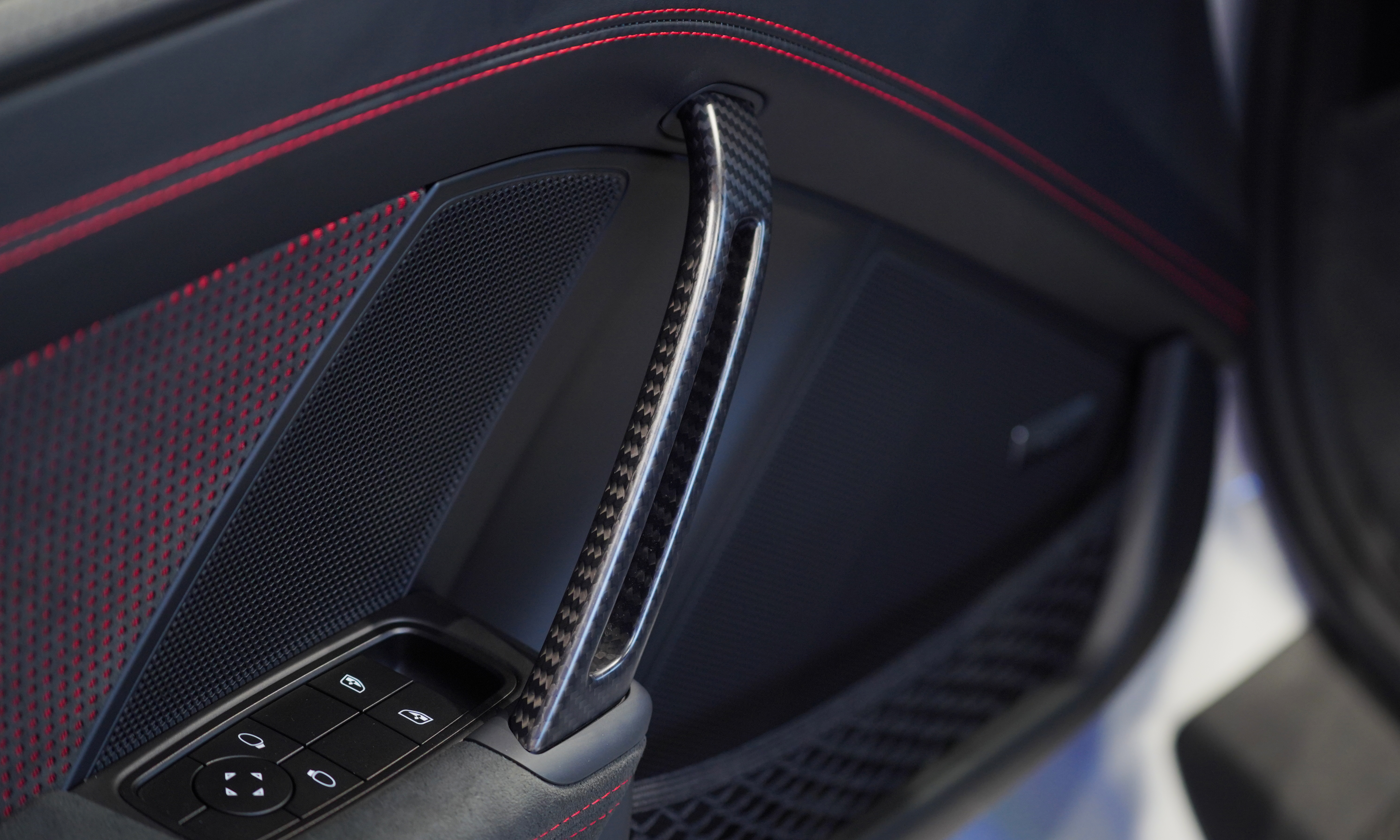 |
The door handles are also crafted from carbon fiber.
The car offers three driving modes: normal, sport, and track. The GT3 RS achieves a top speed of 296 km/h, with a maximum engine speed of 9,000 rpm.
 |
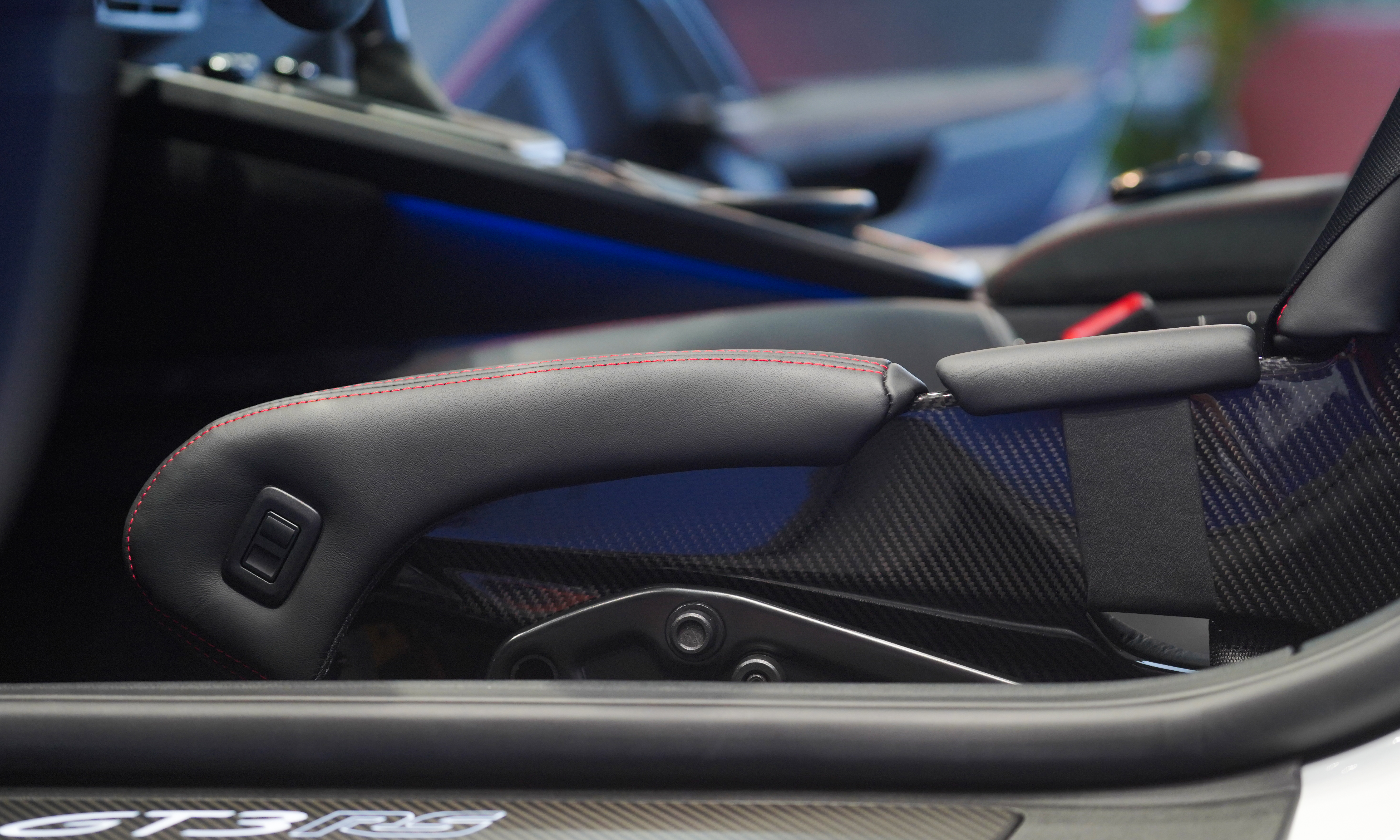 |
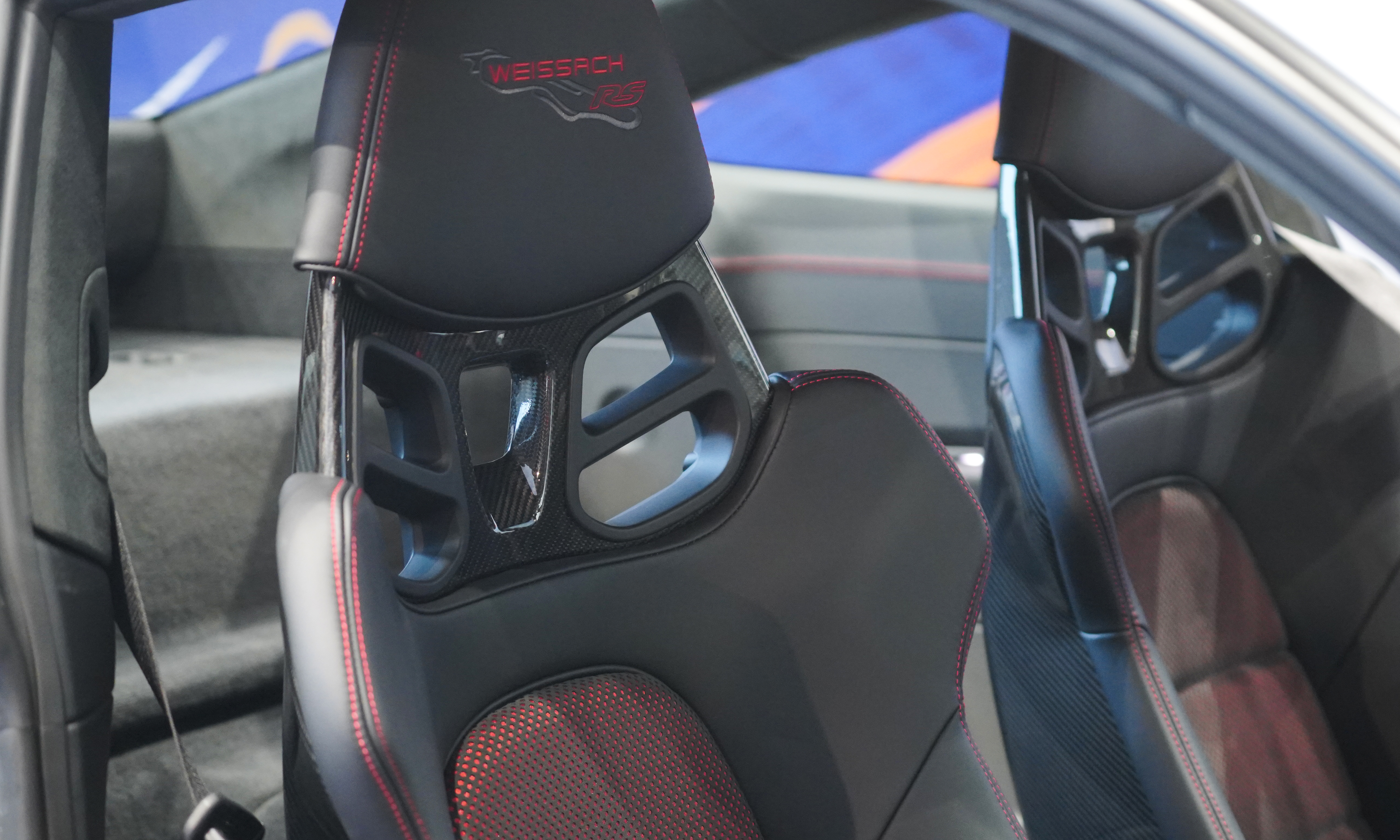
The car is equipped with bucket race seats featuring carbon fiber-reinforced plastic frames, offering only forward and backward adjustment. The second row of seats is removed, either to accommodate a roll cage (not present in this specific car) or for additional storage.
Thanh Nhan