Toyota Vietnam (TMV) confirmed the discontinuation of diesel Fortuner versions but did not provide a specific reason. Dealerships with existing stock will sell them off, as the Japanese joint venture's factory in Phu Tho (formerly Vinh Phuc) will not assemble new units.
Toyota Fortuner currently offers only three gasoline-engine options with either one or two-wheel drive. These include the 2.7 4x2 AT version priced at 1,19 billion dong, the 2.7 4x2 AT Legender at 1,29 billion dong, and the 2.7 4x4 AT Legender at 1,395 billion dong.
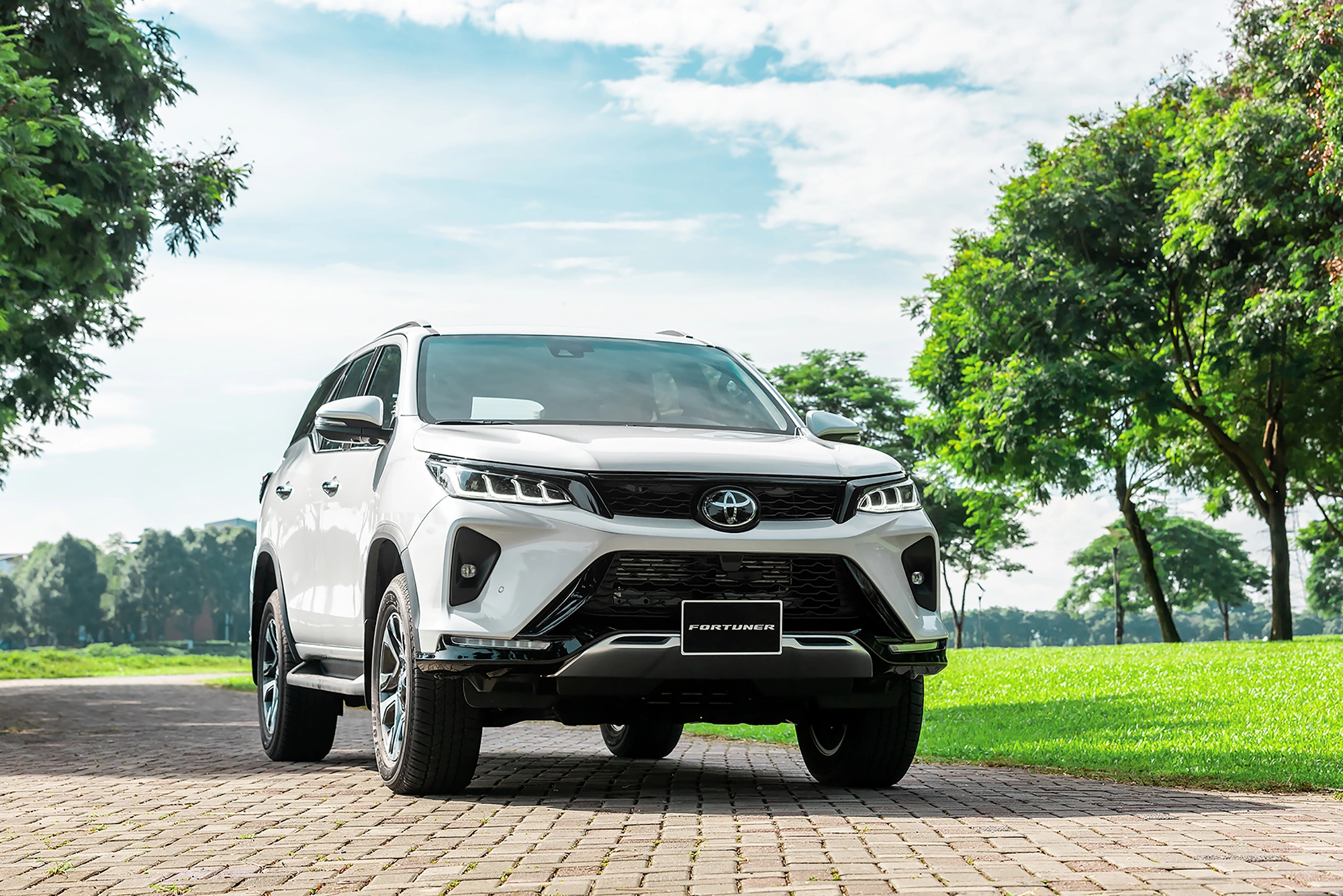 |
Fortuner 2.8 diesel version in Vietnam. Photo: TMV
This D-segment SUV has seen no significant upgrades since 2024. The current generation of the Fortuner was introduced in Vietnam in 2016, about 10 years ago. The vehicle shares its platform with the Hilux pickup truck. However, the new generation Toyota Hilux was launched in the market in early 2026.
Like many competitors in the segment offering both gasoline and diesel versions, the diesel variant was the primary sales driver for the Toyota Fortuner. Before 2018, the Fortuner dominated the segment in annual sales. However, the introduction of the new generation Hyundai Santa Fe and later the Ford Everest shifted the competitive balance against the Fortuner.
The market's growing selection of 7-seater diesel vehicles, featuring dynamic designs and more amenities, challenged the Fortuner. As a model not frequently updated in design or equipment, its influence became difficult to sustain. In the D-segment, the Fortuner gradually lost ground to products from Hyundai or Ford. Additionally, diesel versions of the Kia Carnival, the best-selling mainstream MPV in the segment priced above one billion dong, also competed with the Fortuner in the 1-1,3 billion dong price range.
Even within Toyota's own product lineup, the Fortuner's appeal has somewhat diminished. Despite being a D-segment SUV, many individual Vietnamese customers and companies used the diesel Fortuner versions for ride-hailing and service operations. However, the introduction of the Avanza, Veloz, and more recently the Innova Cross has shifted customer demand due to lower investment costs and nearly identical functionality for passenger transport services.
In the current generation, TMV locally assembled the 2.4 and 2.8 diesel versions of the Fortuner. With sales no longer high and the vehicle nearing the end of its lifecycle, maintaining local assembly might not be cost-optimal. The recent trend of the Japanese joint venture is also towards importing vehicles, only continuing local assembly for versions with strong sales.
TMV is comprehensively restructuring its product lineup to enhance market competitiveness. The company has discontinued slow-selling models or versions, such as the Altis, gasoline Camry, and likely the Wigo in the near future. Concurrently, it is focusing on hybrid vehicles, MPVs, and B-segment CUVs, which are key industry trends and show strong sales.
After the Toyota Fortuner discontinued its diesel versions, the D-segment SUV segment still offers diesel options from the Ford Everest, Isuzu mu-X, and Kia Sorento. Before the Fortuner, the Hyundai Santa Fe and Mitsubishi Pajero Sport also ceased selling diesel versions due to low sales or the parent company's overall strategy.
Pham Trung