The US National Highway Traffic Safety Administration (NHTSA) on 15/9 requested Tesla to answer a series of questions by 30/9. This request aims to clarify if the company's self-certification of the autonomous robotaxi Cybercab model adhered to regulations.
NHTSA specifically requested Tesla to clarify whether temporary controls for human drivers or other auxiliary devices formed the basis for its standard compliance certification. Previously, the agency was reviewing the technical process and data the electric vehicle manufacturer used to demonstrate compliance with federal motor vehicle safety standards prior to robotaxi deployment.
Tesla and other robotaxi companies, such as Waymo (an Alphabet subsidiary), have supported President Donald Trump's administration's plan to adjust regulations. These adjustments would allow such vehicles to operate without a steering wheel, brake pedals, rearview mirrors, or other mandatory equipment. Conversely, critics opposed this, arguing that regulations should not be lifted until companies have demonstrated the safety of self-driving cars.
NHTSA also requested Tesla to confirm if the Cybercab has human-operable capabilities and to verify if the in-vehicle touchscreen includes a feature allowing passengers to move the vehicle. Tesla must also provide information on maximum speed, operating range by geographical area, time of day, and other operational restrictions.
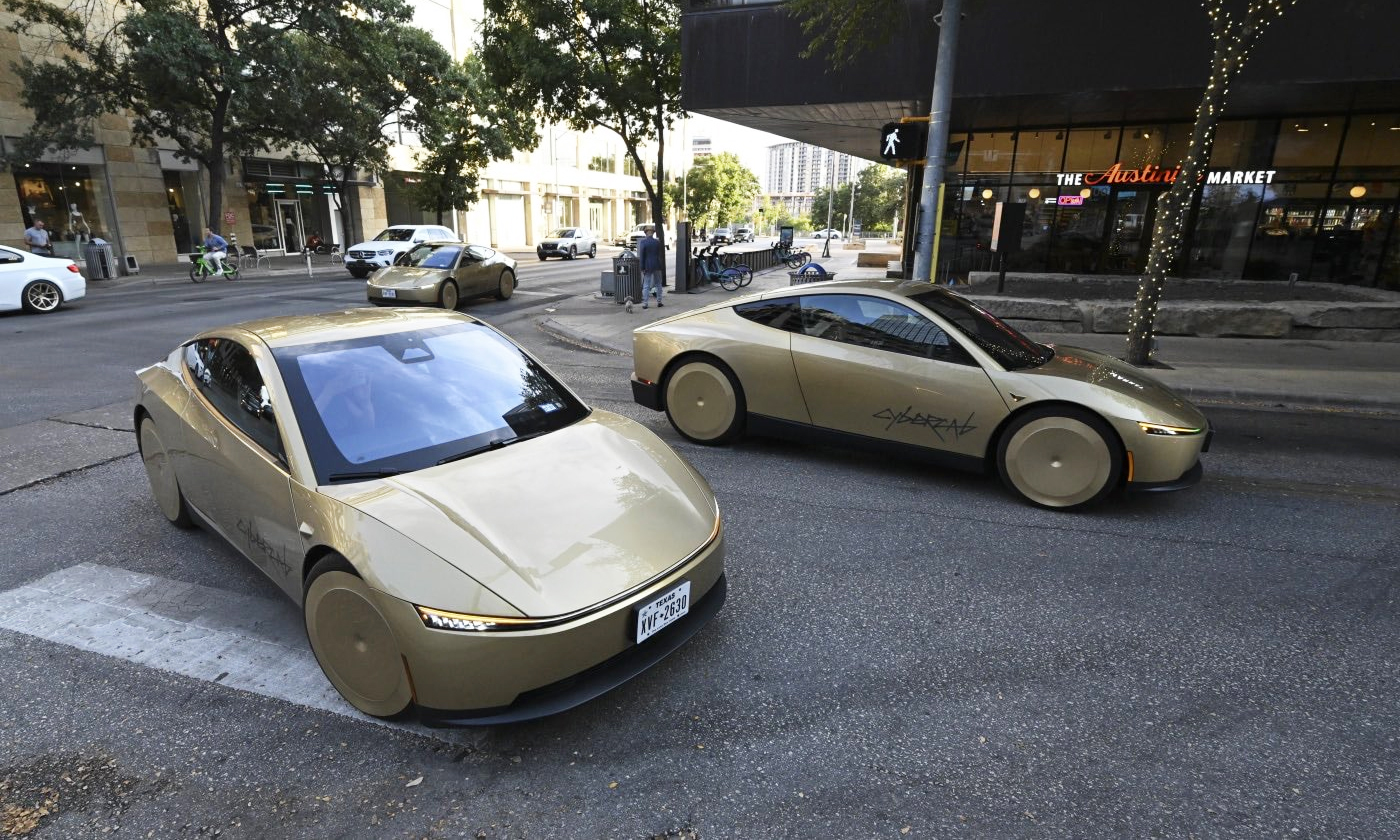 |
Three Tesla Cybercabs on a street corner in September in Austin, Texas, US. *Photo: Zuma Press*
On 3/9, Tesla began commercial deployment of a small number of two-seater Cybercab vehicles in Austin, Texas, with plans to gradually expand services to other areas and vehicle types. NHTSA noted that the Cybercab model completely lacks traditional manual controls, including a steering wheel, brake pedals, an accelerator pedal, and mirrors.
In June, NHTSA had proposed abolishing the mandatory requirement for manual brake pedals in self-driving vehicles, which would facilitate the operation of cars without traditional controls. While some proposals to adjust federal safety standards have been made, NHTSA affirmed that current regulations remain in effect until any changes are officially approved.
Under current law, fully self-driving vehicles do not require NHTSA approval if they retain a steering wheel, brake pedals, mirrors, and other standard features. Furthermore, NHTSA can permit each manufacturer to operate up to 2,500 vehicles annually without traditional controls. Last July, the agency approved a permit application from Zoox (an Amazon subsidiary), marking the first limited commercial deployment of a robotaxi without a steering wheel in the self-driving vehicle industry.
My Anh (Reuters)