On the afternoon of 21/9, the 7th Regional Logistics Forum 2026 took place in Hai Phong, focusing on creating new development space for the Red River Delta.
Rapid Growth, Persistent High Costs
Vietnam's logistics sector is currently in a phase of rapid development. According to the Vietnam Chamber of Commerce and Industry (VCCI), the market size now reaches 45-50 billion USD, equivalent to 10% of GDP. With an average annual growth rate of 14-16% (more than 2 times GDP growth), Vietnam is now among the top 10 emerging logistics markets and ranks 4th in the ASEAN region for its Logistics Performance Index (LPI).
However, logistics costs, despite some reduction, still account for about 16% of GDP, a high level compared to global averages. Delegates at the forum attributed this primarily to a significant imbalance in the transport structure and a fragmented infrastructure system.
Tran Tien Dung, Chairman of the Hai Phong Logistics Association, noted that road transport continues to carry over 98% of goods connecting seaports to localities, warehouses, and factories. In contrast, railways and inland waterways have not fully utilized their advantages of transporting large volumes at low costs. This results in congestion, increased costs per unit of goods, and a lack of synchronization between production areas and dry ports.
Additionally, some delegates pointed out that several maritime regulations, enacted 10-20 years ago, are no longer suitable. A key example is the import age limit for vessels, currently set at 17 years. Businesses proposed relaxing this to allow the import of larger vessels (over 1,500 TEU) under 25 years old.
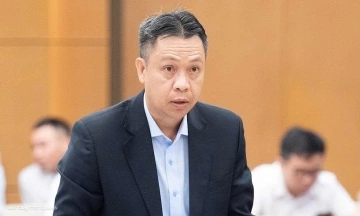
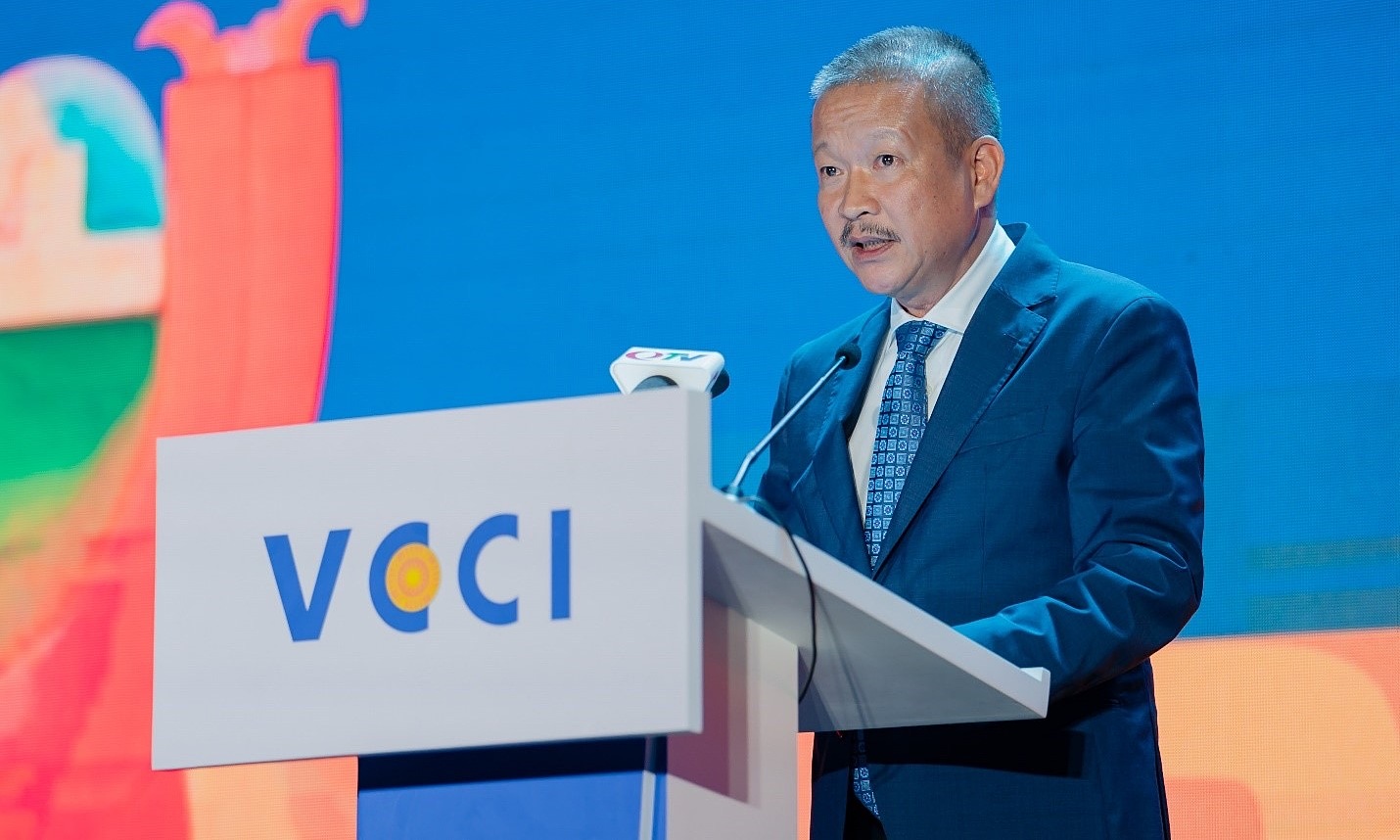
Ho Sy Hung, Chairman of VCCI, also emphasized that improving the business environment in logistics requires a holistic view across the entire supply chain: from planning, investment, seaports, transport, customs, specialized inspections, warehousing, to electronic transactions and payment activities. "One hour of waiting for goods is a cost, an overlapping procedure is also a cost, a disjointed connection between road and rail, waterway, or sea also becomes a business cost. Ultimately, all these costs accumulate into the overall cost for the economy," he stated.
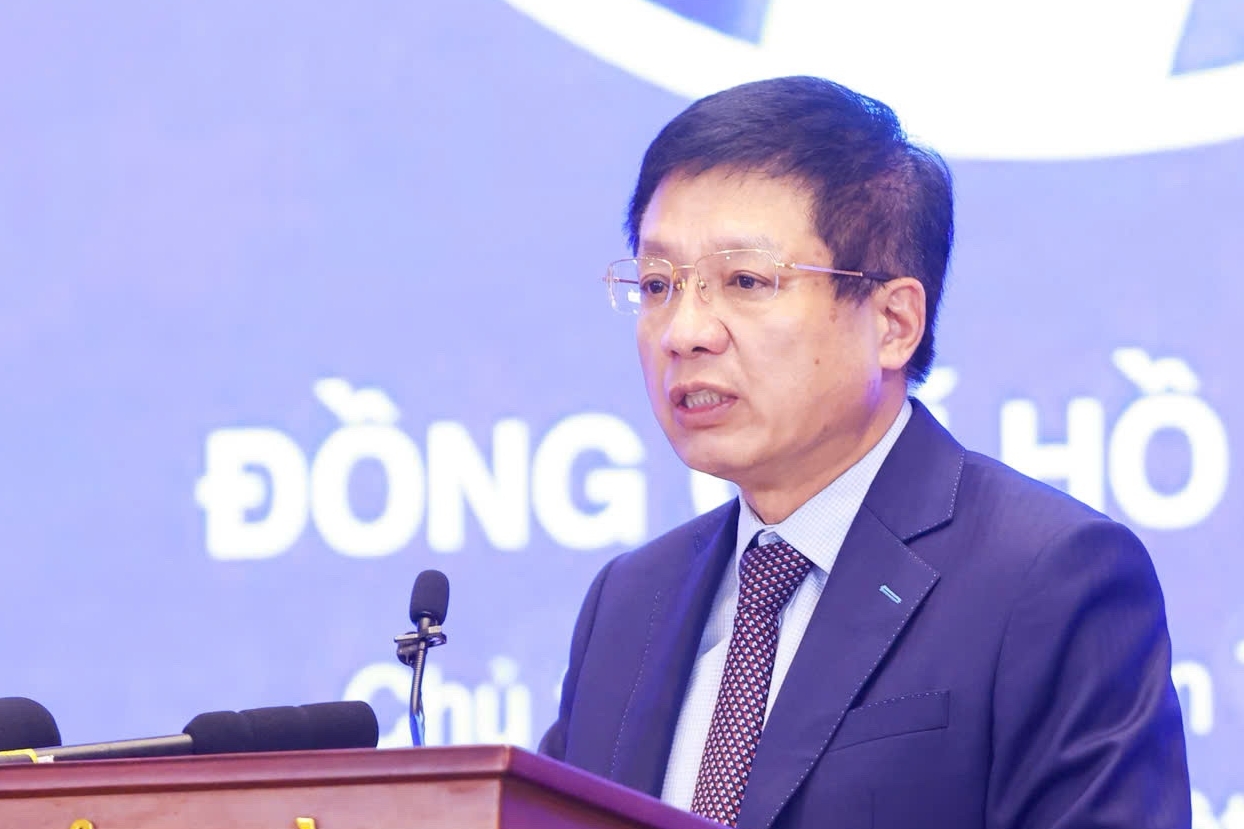 |
VCCI Chairman Ho Sy Hung shares at the forum. *Photo: Le Tan* |
Solutions to Overcome Bottlenecks
Deputy Prime Minister Ho Duc Dung reiterated that logistics is not merely a supporting service but a vital component of national economic infrastructure, directly determining the competitiveness of goods, businesses, and the entire economy.
To achieve the Logistics Development Strategy goal of reducing costs to 12-15% of GDP by 2035, the Deputy Prime Minister urged ministries, sectors, and localities to immediately shift their mindset from "managing and supporting" to "creating and serving."
He stressed the importance of practical implementation for the national logistics strategy. "Absolutely do not pursue quantity; focus on the ultimate outcome: reducing logistics costs for the overall economy, for individual businesses, and for each product."
He suggested developing integrated logistics infrastructure in sync with national and regional transport infrastructure planning and investment, as well as local areas. This requires long-term, scientific planning, integrated and efficient investment, increasing connectivity among transport modes and logistics systems.
The Deputy Prime Minister proposed reviewing the legal framework related to logistics, multimodal transport, maritime, waterways, customs, trade, electronic transactions, and investment. Institutional and legal refinement must follow principles: regulations are clear, uniformly understood, procedures are simplified, responsibilities are defined, logistics data is interconnected and efficiently shared; easy for businesses to implement and for State agencies to inspect and supervise.
"The government will continue to refine institutions, develop infrastructure, improve the business investment environment, and create the most favorable conditions for businesses investing seriously, long-term, and sustainably in Vietnam," Deputy Prime Minister Ho Duc Dung affirmed.
He also outlined the direction to focus on developing Vietnam's seaport system into a modern, green, and smart hub for the logistics and marine economy. This includes prioritizing the development of gateway ports such as: Lach Huyen, Nam Do Son in the North; Da Nang, Van Phong, Quy Nhon in the Central region; Cat Lai, Cai Mep - Thi Vai, Hon Khoai in the South. Concurrently, the goal is to attract major shipping lines, international port operators, regional distribution centers, global logistics companies, and technology investors to operate long-term in Vietnam.
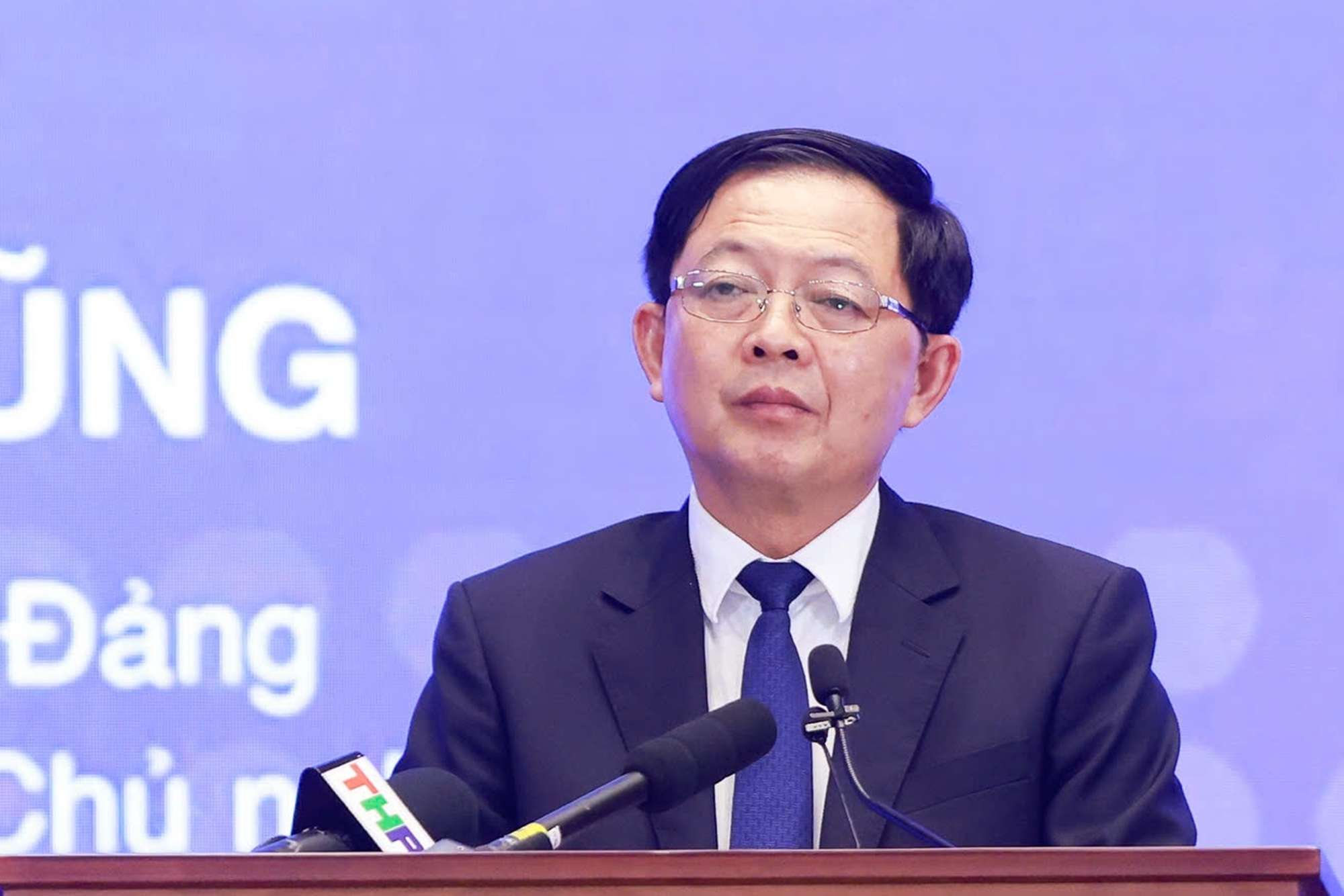 |
Deputy Prime Minister Ho Duc Dung speaks about bottlenecks and tasks for the logistics sector. *Photo: Le Tan* |
Crucially, he demanded a strong shift in mindset and action from developing logistics based on administrative boundaries to organizing logistics by economic regions, economic corridors, and supply chains. This is a vital requirement in the development approach for the six socio-economic regions outlined in Politburo resolutions. "The logistics sector has no administrative boundaries; therefore, individual localities cannot build a self-contained logistics system but must be synchronized, connected, and efficiently shared," the Deputy Prime Minister stated.
Le Tan