On 21/9, the National Assembly Standing Committee provided feedback on the draft Law amending and supplementing a number of articles of the Electricity Law. Authorized by the government, Deputy Minister of Industry and Trade Nguyen Viet Son presented the draft law proposal.
According to Deputy Minister Son, the government proposes amending some content related to electricity pricing policies to reflect "full and reasonable production and business costs". This aims to help investors recover investment, financial, and operational costs, and achieve profits commensurate with risk levels. The policy also seeks to ensure capital mobilization, energy security, and the sustainable development of the power system and socio-economic sectors, especially in disadvantaged regions.
Unlike current regulations, the government proposes adding a provision for the state to implement a mechanism to compensate for reasonable costs if electricity retail prices cannot be adjusted in time to maintain macroeconomic stability and social welfare.
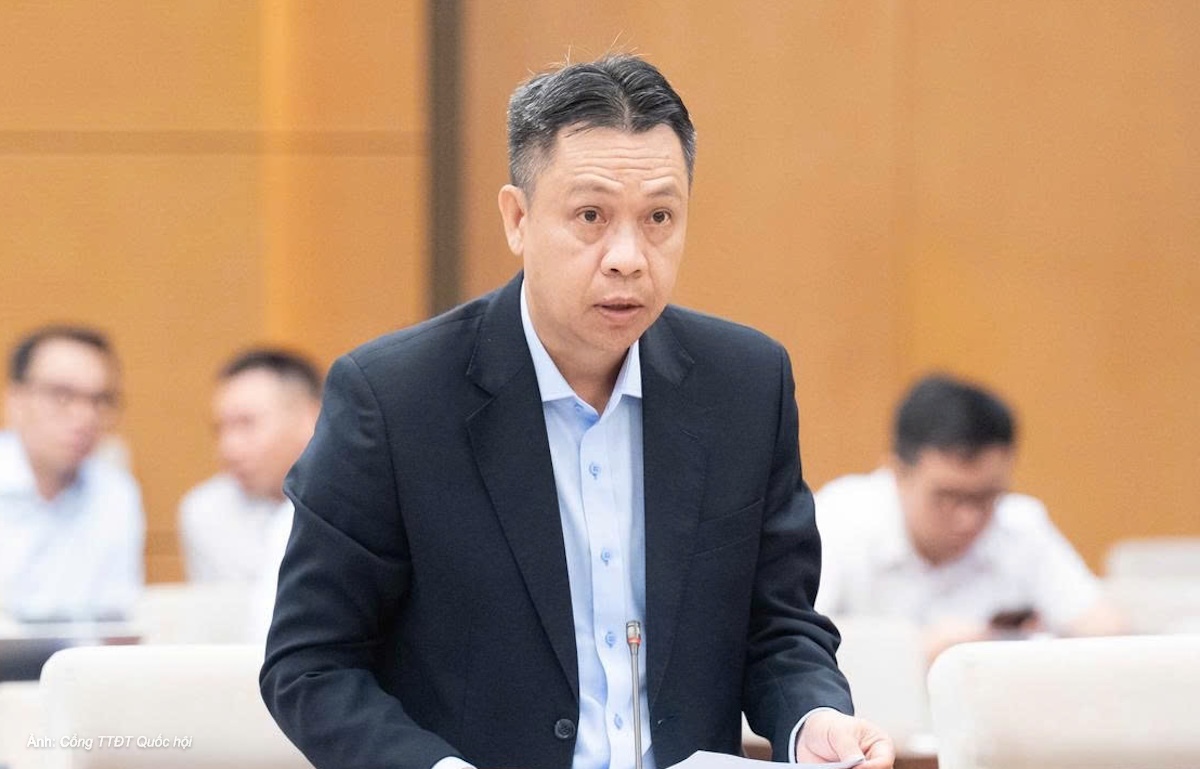 |
Deputy Minister of Industry and Trade Nguyen Viet Son presented the draft Law amending and supplementing a number of articles of the Electricity Law on the morning of 21/9. Photo: National Assembly Portal
In a preliminary review, Nguyen Thanh Hai, Chairman of the Committee for Science, Technology, and Environment, stated that the Committee's Standing Board generally agreed with the principle that electricity prices should reflect reasonable and legitimate costs. However, the current wording, which states that power purchase agreement prices must "ensure full recovery" of costs, investment capital, and reasonable profits, could be interpreted as the state guaranteeing financial outcomes for investors.
Therefore, the Committee suggested clarifying that electricity prices are formed based on reasonable and legitimate costs, investment efficiency, risk levels, and market conditions. The pricing mechanism should not transfer all investment and business risks to the state, buyers, or electricity users.
Regarding the compensation mechanism when electricity prices are delayed, the verification agency also requested clarification on the source, method, timing of confirmation, and cost processing. This is to avoid any "implicit understanding that state budget obligations would arise".
According to the proposal, the draft law introduces amendments to electricity pricing policies, outlining a roadmap to eliminate electricity cross-subsidies, following the direction set in Resolution 70 of the Politburo. The draft also includes provisions for electricity bill support for consumers, aligning with socio-economic development in each period. A roadmap for applying residential retail electricity prices based on peak, off-peak, and normal hours may be implemented when technical conditions permit.
Regarding the policy to eliminate electricity cross-subsidies, Ms. Thanh Hai stated that the verification agency recommended clarifying its scope and implementation roadmap. This policy needs to be distinguished from direct support for poor households, policy beneficiaries, and residents in areas with especially difficult socio-economic conditions.
Additionally, for the direct power purchase agreement (DPPA) mechanism, the verification agency proposed adding principles to fully and fairly determine the costs of grid usage, dispatch, reserves, and system services that participating parties must pay. This aims to prevent the transfer of costs from customers participating in direct power purchase agreements to other customers.
The draft Law amending and supplementing a number of articles of the Electricity Law will be submitted to the National Assembly for consideration and discussion during its October session.
Phuong Dung