On 16/6, the Government Office conveyed Deputy Prime Minister Nguyen Van Thang's directive to address difficulties in fulfilling tax obligations when exiting the country.
Accordingly, the Deputy Prime Minister instructed the Ministry of Finance to study emerging issues and amend the tax payment regulations for exiting the country, as stipulated in the Decree guiding the Law on Tax Administration. The government leader noted that the amendments and additions must be practical and facilitate taxpayers. The Ministry of Finance must submit these revisions to the government by 20/6.
The Ministry of Culture, Sports and Tourism and the State Bank of Vietnam were also tasked with reviewing the Ministry of Finance's recommendations to develop appropriate management solutions related to citizens' exit from the country and tax debt payments.
The government's directive followed reports from the press and social media regarding cases where individuals were temporarily banned from exiting due to small tax debts. Previously, at a press conference on 22/5, a representative from the Tax Department stated that the agency was collaborating with the Immigration Department to explore real-time solutions for canceling temporary travel ban decisions immediately after taxpayers settle their outstanding debts.
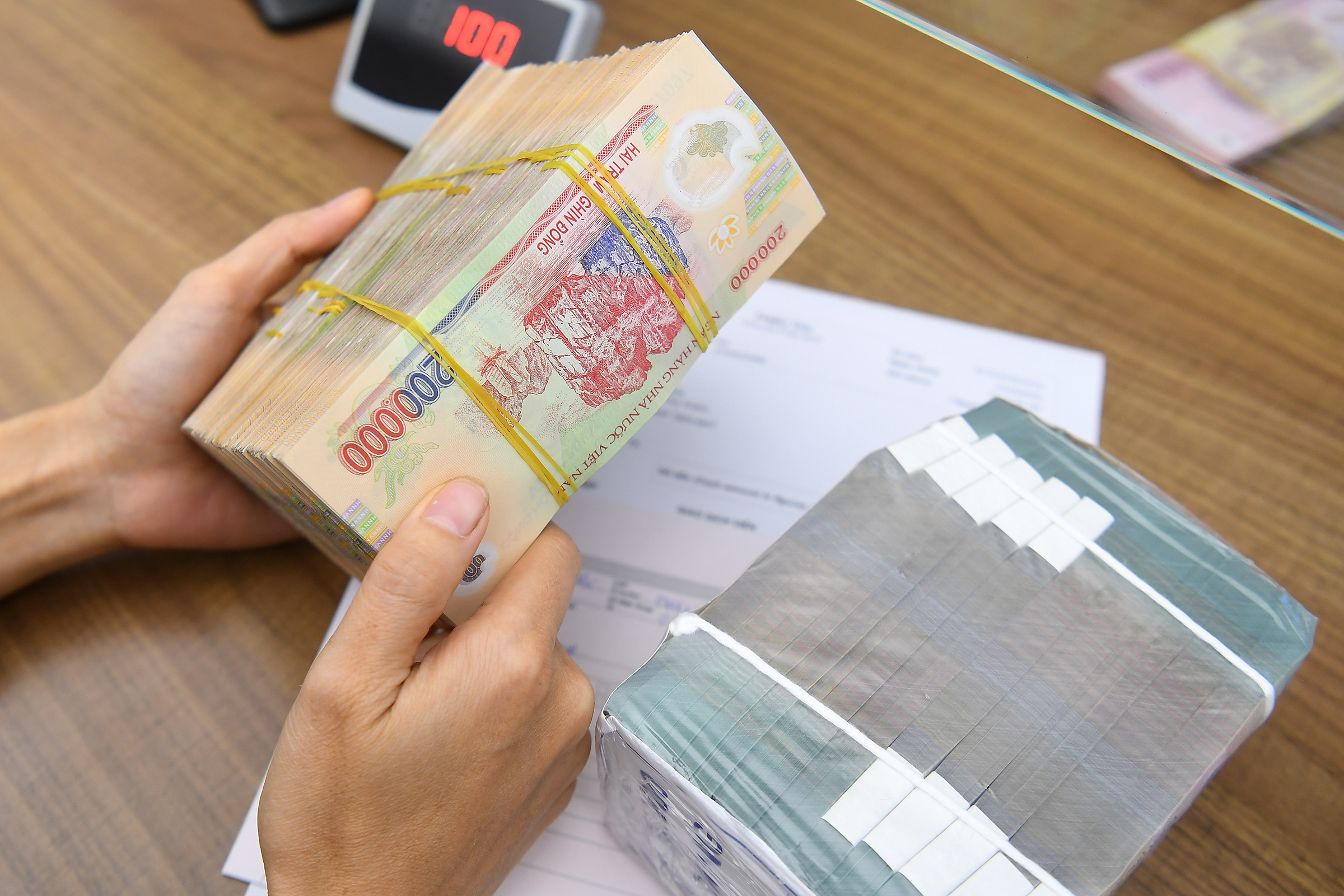 |
Cash transaction at a bank. Photo: Giang Huy
Regulations on temporary travel bans are outlined in the Law on Tax Administration and Decree 49/2025, which guides this law. Accordingly, cases subject to travel bans include business individuals and household business owners with debts of 50 million VND or more, or representatives and owners of businesses and cooperatives with debts of 500 million VND or more, overdue by over 120 days; and individuals leaving the country to settle abroad while still owing taxes.
For businesses and household businesses that owe taxes and have abandoned their registered operating addresses – a sign of violating tax declaration and management obligations – no specific threshold is stipulated.
According to Deputy Director of the Tax Department Mai Son, a review shows that most reported cases of travel bans due to small tax debts involve individuals who have abandoned their business addresses without notifying the business registration authority or the tax sector.
He stated that before implementing temporary travel bans, tax authorities had taken multiple notification steps, such as sending information via electronic tax accounts (eTax), to registered residential addresses, and publicly disclosing it on the tax sector's electronic information portal.
According to data from the Tax Department, over 105,000 taxpayers have been notified of temporary travel bans to date, with total debts exceeding 61 trillion VND. Among these, approximately 60,000 cases involve taxpayers no longer operating at their registered addresses, with total debts around 6.9 trillion VND.
The tax authority reported recovering over 4 trillion VND from approximately 13,000 individuals subject to temporary travel bans. Specifically, from the group that abandoned business addresses, over 100 billion VND was collected from about 7,100 cases.
Phuong Dung