Hanoi Railway One Member Limited Company (Hanoi Metro) achieved a post-tax profit of nearly 22.7 billion VND in 2025, marking its fourth consecutive year of profitability. This figure represents a 47% increase compared to the previous year. The company also contributed 16.5 billion VND to the state budget last year.
Last year, Hanoi Metro operated 162,000 train trips on its two lines: Cat Linh - Ha Dong and Nhon - Hanoi Station (elevated section). The company served over 20.6 million passengers, generating nearly 143 billion VND in ticket revenue. This revenue surpassed its planned target by over 28%. The Cat Linh - Ha Dong line alone recorded nearly 98 billion VND in ticket revenue, an increase of approximately 29% compared to 2024.
Currently, ticket prices on the Cat Linh - Ha Dong line range from 9,000 VND to 19,000 VND per trip. For the Nhon - Hanoi Station line, fares are between 9,000 VND and 15,000 VND. Both lines offer a day pass for 40,000 VND per person, allowing unlimited travel. Monthly passes are available for 280,000 VND for general passengers and 140,000 VND for students and workers in industrial zones.
In 2025, Hanoi Metro upgraded and launched an electronic ticketing system. This system incorporates electronic identification, authentication, and biometric recognition, integrating with cashless payment options across both urban railway lines.
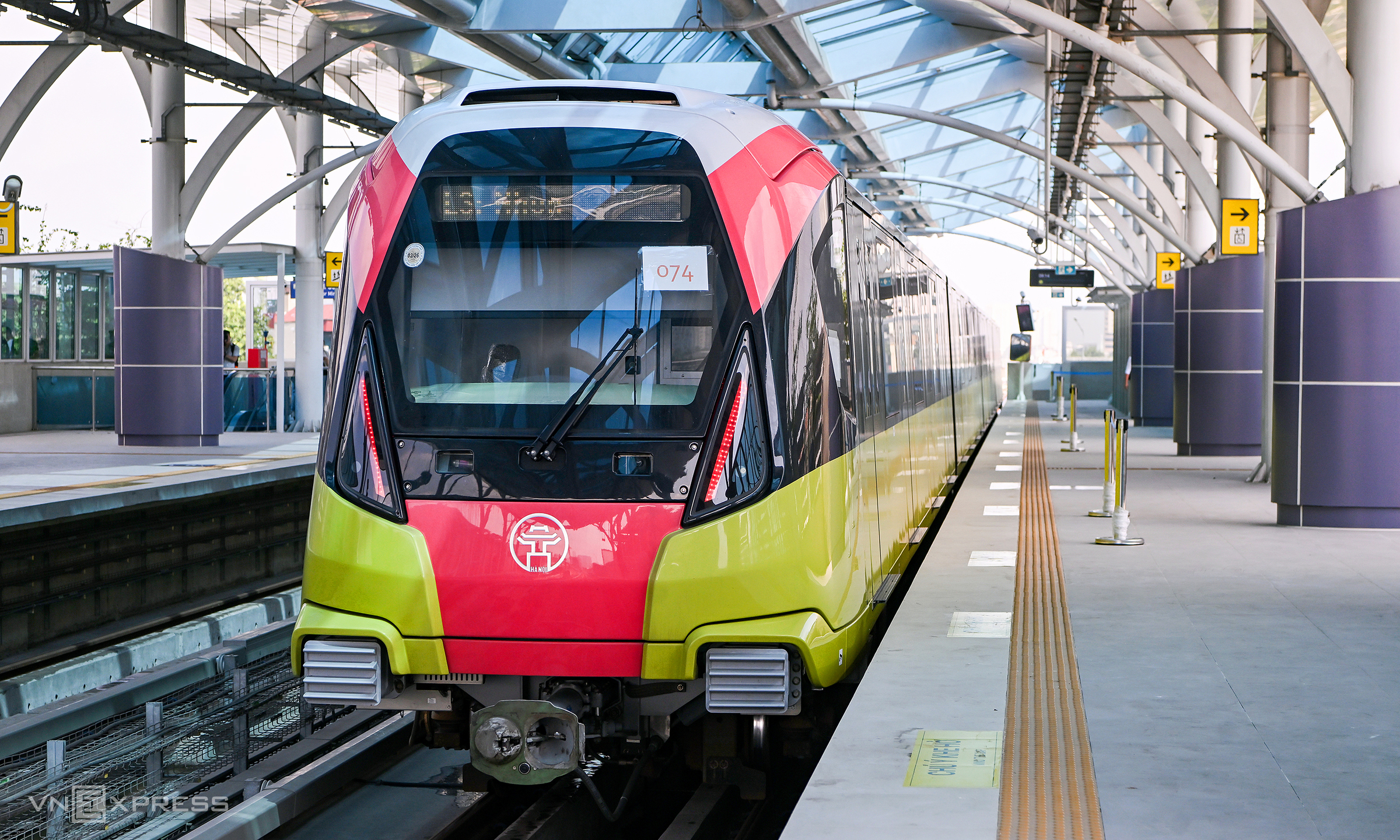 |
A train on the Nhon - Hanoi Station urban railway line (elevated section). Photo: Giang Huy |
For 2026, Hanoi Metro aims to increase its passenger volume and revenue by over 11%. City leaders have urged Hanoi Metro to leverage the potential and advantages of its urban railway infrastructure to boost non-ticket revenue. The company is also expected to research developing commercial spaces at its stations, thereby fostering a modern urban ecosystem linked to public transport.
Hanoi commenced construction on urban railway line 2 (Nam Thang Long - Tran Hung Dao) and line 5 (Van Cao - Hoa Lac) in 2025. Both lines are projected to become operational before 2030. This expansion presents a growth opportunity for Hanoi Metro, but also a significant challenge in preparing the necessary resources to receive, operate, and maintain these new urban railway lines.
Anh Tu