The Ho Chi Minh City People's Committee has launched a plan to implement the Digital Transformation Project for Small and Medium-sized Enterprises (SMEs) by 2026. This initiative aims to boost productivity, improve competitiveness, and enable businesses to adapt to market changes.
The plan includes launching an online Digital Transformation Readiness (DBI) assessment tool city-wide. Approximately 200 exemplary businesses will be surveyed and selected to receive support in developing comprehensive digital transformation models, fostering the sharing of best practices.
Ho Chi Minh City also plans to finalize a geographic information system (GIS) digital map for businesses, categorizing them by industry and digital transformation maturity. Furthermore, 5G network infrastructure will be expanded across industrial parks, export processing zones, and high-tech zones to support smart manufacturing, artificial intelligence (AI), and industrial internet of things (IIoT) applications.
Another key objective involves developing a robust data system for businesses. The city will launch an Open Data Portal, facilitating the controlled public sharing of data across sectors like agriculture, logistics, finance, and manufacturing.
Concurrently, a digital transformation support information portal and a specialized assessment and consulting platform for SMEs will be launched. These resources will help businesses evaluate their current digital standing, select appropriate solutions, and develop tailored roadmaps.
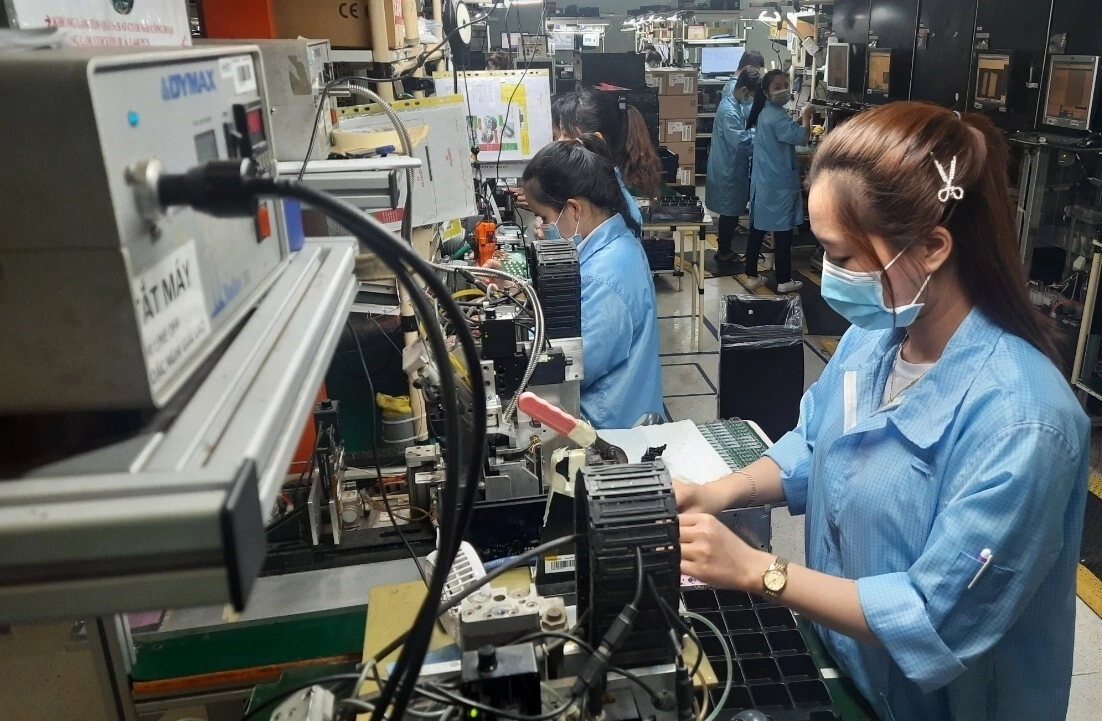 |
Workers at the Datalogic factory, Ho Chi Minh City Hi-Tech Park. *Photo: Ha An*. |
In terms of policy, Ho Chi Minh City plans to finalize mechanisms for implementing the Digital Technology Industry Law. This will focus on critical areas such as semiconductor chip design and manufacturing, artificial intelligence, data centers, and key digital technology products.
Support policies will guide businesses involved in chip research, development, design, manufacturing, packaging, and testing. They will also support the establishment of AI data centers and the production of auxiliary goods for the semiconductor and electronics sectors. The city emphasizes training digital technology professionals to staff projects within these industries.
For SMEs, the program will focus on assisting with the creation of industry-specific digital transformation roadmaps. It will also develop a network of consultants and provide partial funding for consulting services. Businesses will gain access to digital technology products, platforms, AI solutions, and support for innovation and technology transfer activities.
Innovative startups, as well as science, digital, and high-tech companies, may receive support for research and the refinement of products and solutions for digital transformation. The city is also implementing training programs to improve the digital literacy of business owners, key personnel, and employees. Beyond technological aid, the plan includes legal assistance and financial resource mobilization for SMEs undertaking digital transformation.
The Ho Chi Minh City Department of Science and Technology has been designated as the lead agency for implementing, monitoring, and evaluating the plan. Its primary responsibilities include establishing approximately 200 digital transformation business models, developing the business GIS map, and advising on policies related to digital transformation and artificial intelligence.
The Department will also collaborate with telecommunications companies and other relevant entities to develop the necessary infrastructure for SME digitalization.
Meanwhile, the Department of Finance is tasked with overseeing business support initiatives under the Law on Supporting SMEs. It will also coordinate the allocation of resources from the local budget and other legal sources to implement the program.
Minh Ngoc