On 30/9, Vietnam's Ministry of Industry and Trade announced it is finalizing a new decree on petroleum business, aiming to grant businesses more autonomy in pricing. Instead of the State announcing a base price, primary distributors will calculate and determine retail prices. This change means that in the future, each gas station could sell fuel at a different price.
This model is already implemented in many countries worldwide. In the US, data from the US Energy Information Administration (EIA) in late 2025 indicated that retail gasoline prices are calculated based on four factors: crude oil prices (51%), refining costs and profits (14%), distribution and marketing costs (nearly 18%), and state and federal taxes (nearly 17%).
The National Association of Convenience Stores stated that the US currently has about 155,000 gas stations. While these stations carry brand names, they are largely owned and operated by individuals licensed to sell those brands' products. Less than 5% of the country's gas stations are owned by major oil companies.
In the US, gas prices are not determined by the government or any single company, but are primarily influenced by global crude oil prices. Price variations across states result from differences in taxes, regional fuel standards, transportation costs, local supply and demand, and station operating expenses.
The federal gasoline tax is 18,4 cents per gallon (0,48 USD per liter). State taxes, however, vary significantly, ranging from 9 cents in Alaska to 70 cents in California. Some states also impose additional sales taxes, and some local jurisdictions within states collect further fuel taxes.
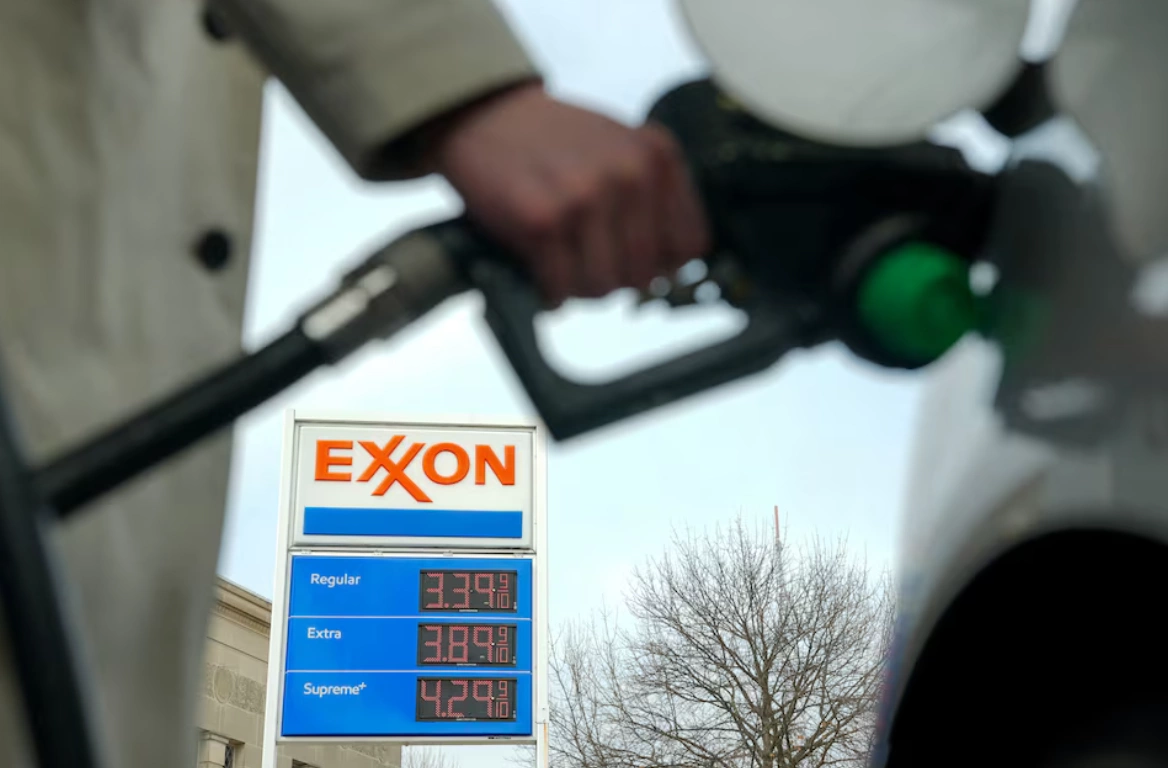 |
People refuel at an Exxon gas station in Washington in 3/2026. Photo: Reuters
Even prices at adjacent gas stations can differ, influenced by factors such as fuel import costs, labor, transportation, operational expenses, and taxes. The EIA reported that gas stations are primarily independent businesses that purchase gasoline from refiners and petroleum marketing companies to resell to consumers. Retail prices also reflect local market conditions and factors like station location or the owner's marketing strategy.
Even gas stations located close to each other can vary in customer volume, rent, and supply sources, which in turn affects their selling prices. The number and location of local competitors also act as influential factors.
The American Petroleum Institute (API) affirmed that the US does not experience price gouging or profiteering during conflicts. "Gasoline prices are primarily determined by global supply and demand and crude oil prices, rather than by any individual company", the agency stated. The Federal Trade Commission (FTC) also conducts regular investigations, concluding that domestic gasoline price changes are due to market conditions, not illegal price manipulation.
In the UK, fuel prices depend on various elements, including wholesale prices (which cover crude oil costs, refining, distribution, and exchange rates), taxes, local competition, the retailer's pricing strategy, and regional factors. Similar to the US, fuel prices in the UK are not subject to government price caps or direct control but are influenced by market competition.
Each retailer determines prices at their gas station based on costs, profit margins, and local competition. This approach means that prices can vary significantly even at stations within the same area selling the same type of fuel. For example, in areas with many gas stations, prices tend to be lower, whereas in areas with fewer stations, prices are often slightly higher and adjust more slowly. Competition can have an even greater impact than factors like brand or location.
To help people compare prices and make easier choices, the UK government implements a fuel price transparency mechanism through its Fuel Finder website. This service assists drivers in finding the cheapest fuel nearby. Gas stations must register with the authorities and update prices within 30 minutes of any adjustment. They are also required to update station information, such as amenities or contact details, within three days of any change.
The UK Competition and Markets Authority (CMA) investigates and addresses non-compliance with information update obligations. This agency also issues quarterly and annual reports on the fuel market, covering retail prices, profit margins, and market competition.
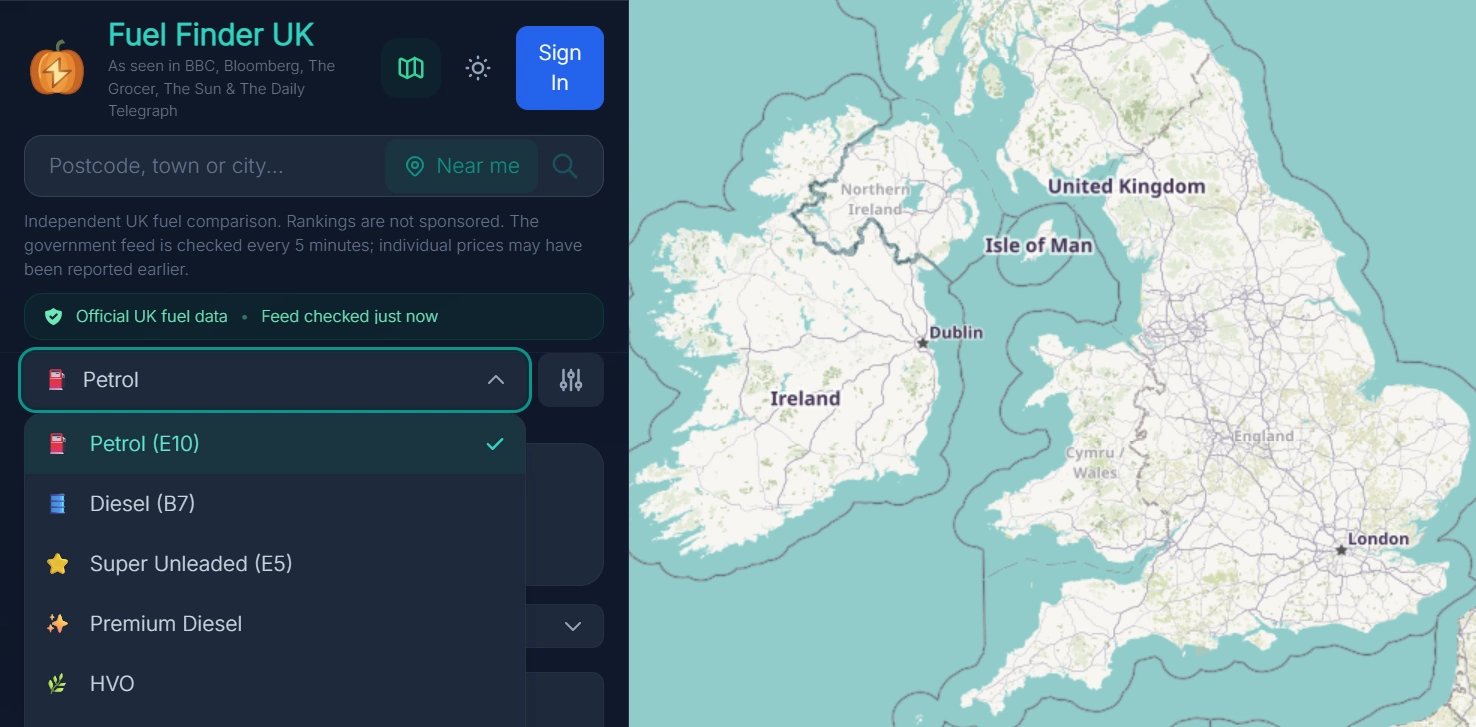 |
Screenshot of the UK government's Fuel Finder website. (Screen capture)
In China, gasoline and diesel prices are controlled under the 2016 Petroleum Price Management Regulation by the National Development and Reform Commission (NDRC). Under this mechanism, price ceilings for gasoline and diesel are adjusted every 10 working days, based on global crude oil price movements.
On Global Times, Lü Zhichen, Deputy Director of the Center for Price, Cost, and Certification at the NDRC, explained that this mechanism has three main characteristics. First, it uses a basket of international crude oil prices as a reference, rather than a single type.
Second, the adjustment amount is determined by comparing the average price of the basket over the most recent 10 working days with the average price of the previous cycle, rather than relying on short-term fluctuations. Finally, the mechanism allows for regulation based on price thresholds. In certain situations, the Government can intervene with control measures.
The gasoline and diesel prices announced by the NDRC represent the maximum retail prices and are calculated per ton. "This price is determined based on international crude oil prices, taking into account domestic average refining costs, taxes, reasonable circulation costs, and an appropriate profit margin", the 2016 regulation states.
Subsequently, provincial price management agencies announce local price ceilings, converted to liters. These prices may vary between regions due to transportation costs and other factors. Retail petroleum businesses can determine their specific retail prices, provided they do not exceed the maximum retail price applicable in their locality.
In the event of unexpected incidents, the NDRC states it will direct major state-owned oil and gas companies, including CNPC, Sinopec, and CNOOC, to ensure full production and distribution of petroleum products, maintain stable market supply, and strictly implement national price policies.
Local authorities are required to tighten supervision, inspect the market, and strictly handle violations of price policies. Consumers are also provided with a platform to report any violations related to fuel prices.
Meanwhile, Malaysia maintains uniform gasoline and diesel prices nationwide. The country's government directly manages retail prices through the Automatic Pricing Mechanism (APM). The APM is designed for the Government to monitor the impact of global crude oil prices and adjust fuel prices to ensure public welfare.
According to the Department of Statistics Malaysia, retail fuel prices have been adjusted weekly since 4/2017. The Ministry of Finance announces the applicable prices for each fuel type (subsidized and non-subsidized), or by region. For example, diesel prices are announced separately for Peninsular Malaysia and Sabah, Sarawak, and Labuan. These prices are then fixed at gas stations across the country.
Ha Thu (compiled)