Hugo Boss is significantly reducing its reliance on air freight to optimize costs and minimize emissions. Yves Müller, chief financial and operating officer, stated on 10/3 during the Q4 earnings call that air freight currently accounts for a single-digit percentage of the company's total transport needs. This marks a decrease from the double-digit average observed in 2024. The company's long-term objective is to reduce this figure to zero, utilizing air transport only in exceptional circumstances.
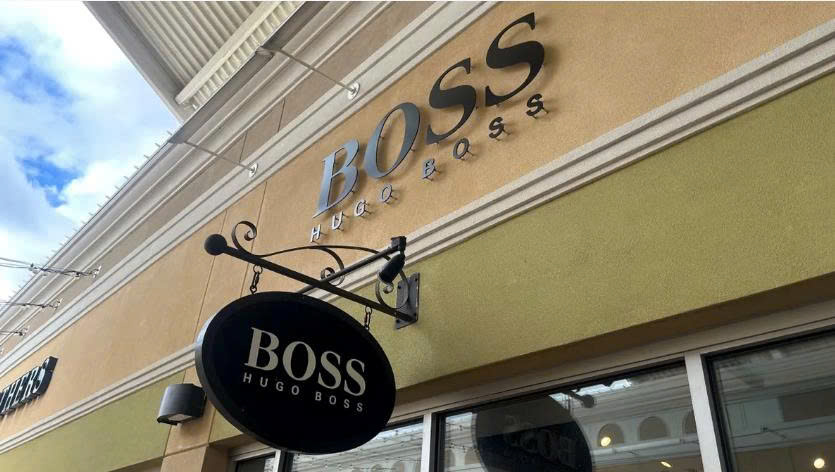 |
A Boss by Hugo Boss store in Simpsonville, Kentucky. Photo: Supply Chain Dive |
In addition to adjusting its transportation methods, Hugo Boss also seeks to improve its gross profit margin, which decreased by 20 basis points in the 2024-2025 period. The company expects to boost efficiency by optimizing its supply chain and streamlining its product portfolio to strengthen brand positioning. According to its 2025 annual report, the company maintains a strategy of "prioritizing sea freight" within its logistics network. This reduction in air freight dependence not only helps save costs but also contributes to cutting greenhouse gas emissions from shipping.
The company plans to leverage a flexible supply chain, digital twin technology, and nearshoring trends to meet operational demands without heavy reliance on air freight.
However, increasing sea freight also carries inherent risks. The company's report indicates that attacks on cargo ships in the Red Sea region have compelled many shipping lines to reroute, thereby extending transit times and increasing logistics costs.
The company warns that if geopolitical tensions in the Middle East continue to escalate in 2026, important shipping routes could face disruptions, putting pressure on global transport capacity and overall shipping costs. Daniel Grieder, CEO of Hugo Boss, stated it is too early to fully assess the impact of the Middle East situation on the company's business operations.
Ngoc Minh (according to Supply Chain Dive)