E10 RON 95-III bio-gasoline will be widely available from 1/6, replacing RON 95-III mineral gasoline on the market. E5 RON 92 gasoline will continue to be sold until the end of 2030.
E10 is a type of bio-gasoline blended with 10% fuel ethanol (bio-alcohol) and 90% mineral gasoline. This fuel has been piloted by the Vietnam National Petroleum Group (Petrolimex) and Vietnam Oil Corporation (PVOIL) in some provinces and cities since 8/2025.
Bui Ngoc Bao, Chairman of the Vietnam Petroleum Association (VINPA), noted that feedback from users primarily concerns E10's characteristics. Ethanol has stronger cleaning and solvent properties than mineral gasoline. When used, it can dissolve and carry away long-accumulated deposits in the fuel pump and injector systems, particularly in vehicles that have not been maintained or cleaned for extended periods.
According to the VINPA Chairman, public concerns are understandable. However, he affirmed that scientifically and based on practices in many countries, E5 and E10 gasoline do not damage engines if vehicles meet technical requirements and are properly maintained.
He suggested that older vehicles, manufactured before 2000 and using carburetors, should undergo basic maintenance before switching to E10 gasoline. This check could include cleaning the fuel supply system, replacing the fuel filter, and adjusting the carburetor to ensure more stable vehicle operation.
To prevent potential issues, VINPA recommends that owners of vehicles manufactured before 2000 continue using E5 RON 92 gasoline. For newer vehicles with electronic fuel injection systems, users should regularly clean the fuel system.
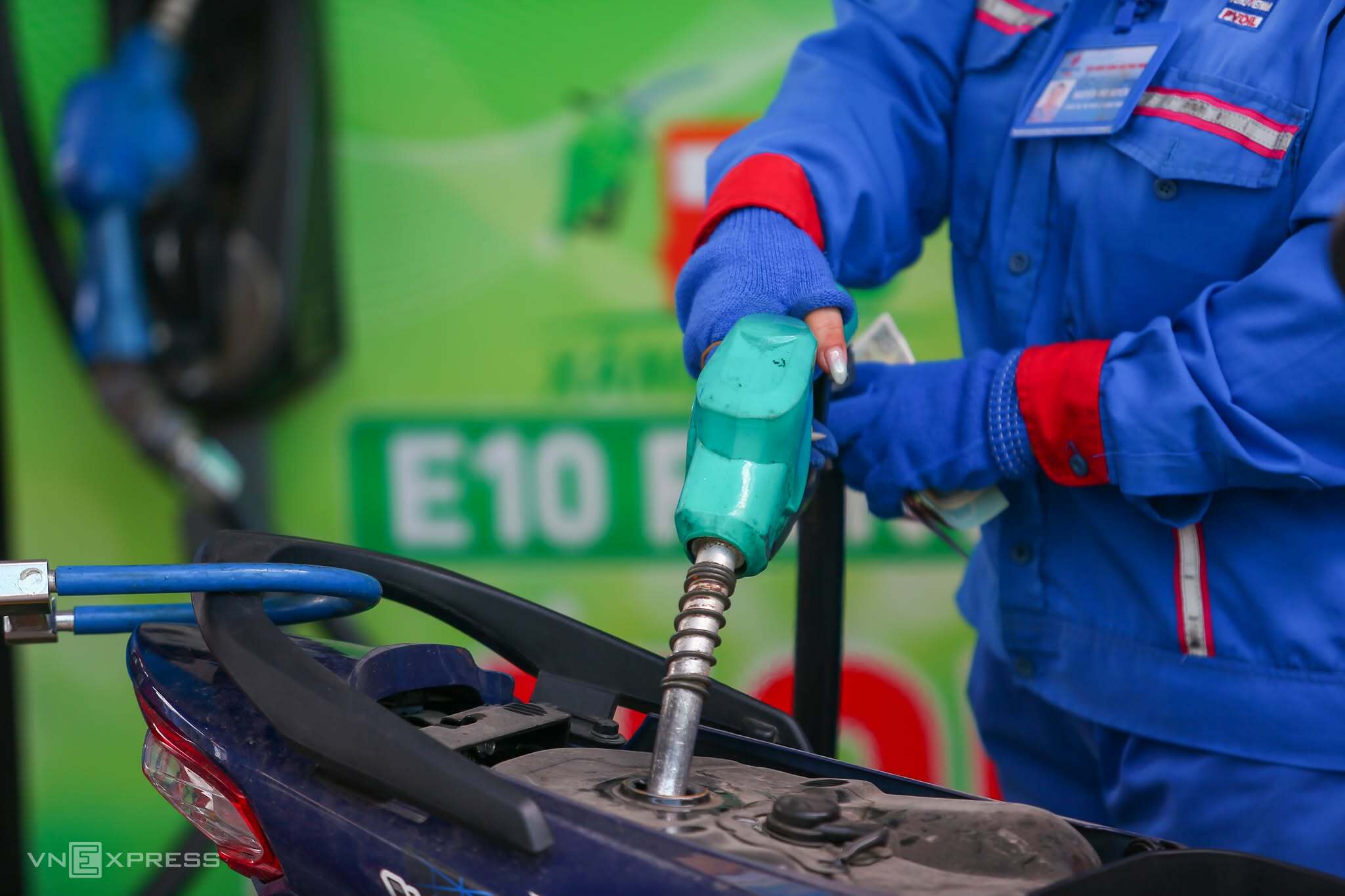 |
A gas station employee fuels a customer's vehicle, 5/2026. Photo: Pham Chieu |
Many manufacturers, through the Vietnam Automobile Manufacturers' Association (VAMA), have also assessed vehicle compatibility with E5 and E10 gasoline. Most vehicle models produced from around 2010-2011 onwards can use E10. On many modern car models, information about compatibility with E5, E10, and even E20 is noted on the fuel cap.
Vietnam is not a pioneer in using biofuels. The US, Brazil, many European countries, and Southeast Asian nations like Thailand and the Philippines have used E10 gasoline for many years, with some now transitioning to E15 or E20.
Vietnam's biofuel program was established in 2012. After nearly 10 years of E5 gasoline sales, Bao believes that the operator has sufficient practical grounds to proceed with the widespread implementation of E10.
Previously, Deputy Minister of Industry and Trade Nguyen Sinh Nhat Tan stated that preparations for the E10 gasoline roadmap are largely complete. This includes ethanol supply, blending capacity, and the retail distribution system, aimed at avoiding market disruptions.
Regarding supply, with a gasoline consumption demand of about 1 million m3 per month, the required amount of E100 ethanol is approximately 100,000 m3. Of this, domestic production accounts for about 25,000 m3 per month, with the remainder imported from countries like the US and Brazil for blending.
Currently, half of the primary petroleum businesses (13 companies) have invested in bio-gasoline blending systems. Their total capacity exceeds 1 million m3 per month, surpassing the national consumption demand.
Bui Ngoc Bao also addressed concerns about whether additional additives are necessary when using E10. He stated that this solution is not mandatory, as the fuels on the market are already formulated by manufacturers according to technical standards.
Some additives can support injector cleaning, anti-oxidation, or improve engine performance. However, their use must be of the correct type and follow manufacturer guidelines. He cautioned, "People should not arbitrarily use unverified additives, as they may solve one problem but create other issues for the fuel system."
Phuong Dung